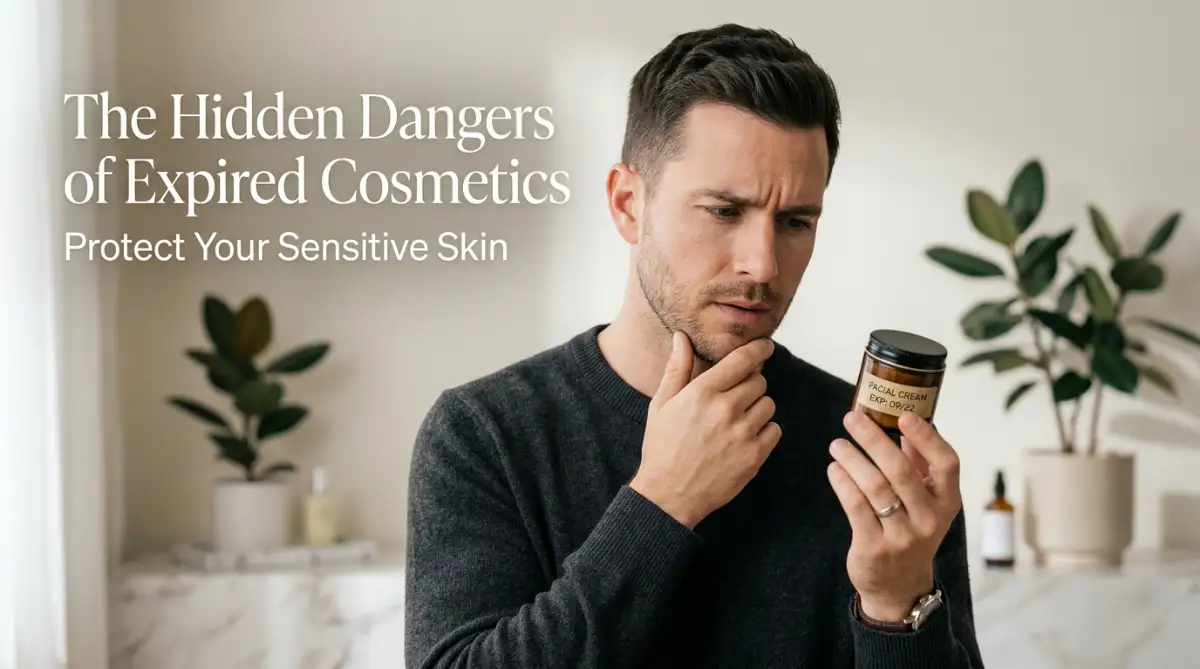
Waking Up to a Skincare Nightmare: The Unseen Enemy in Your Drawer
Picture this for a moment. You have a highly anticipated event coming up this weekend. You want to look your absolute best, so you dig deep into your makeup drawer to find that expensive, high-end foundation you bought for special occasions.
You apply it, and your skin looks flawless under the bathroom lights. You feel confident, happy, and completely ready to take on the day. But the next morning, the reality sets in, and it is far from pretty.
You look in the mirror and see red, angry patches across your cheeks. Tiny, painful bumps have surfaced along your jawline. Your skin feels tight, itchy, and heavily inflamed.
Your initial thought is probably to blame your new cleanser or something you ate last night. You might even feel a deep sense of frustration, wondering why you spend so much money on a good skincare routine if your face is just going to break out anyway.
The mental toll of dealing with sudden skin issues is heavy. It drains your self-esteem and makes you want to cancel your plans and hide under the covers. But what if the culprit was not your diet or your daily face wash?
What if the real enemy was sitting right there in your makeup bag all along? That beloved foundation you saved for a rainy day was actually expired. Applying it to your face was like spreading a microscopic layer of toxic waste over your delicate pores.
For people with sensitive skin, this scenario is a harsh and recurring reality. We often form deep emotional attachments to our favorite cosmetic products. We ignore the warning signs because we simply do not want to throw away something that cost us good money.
However, holding onto these expired items is secretly sabotaging your skin barrier. Today, I am going to show you exactly what happens when old makeup meets sensitive skin, and how you can stop this vicious cycle right now.
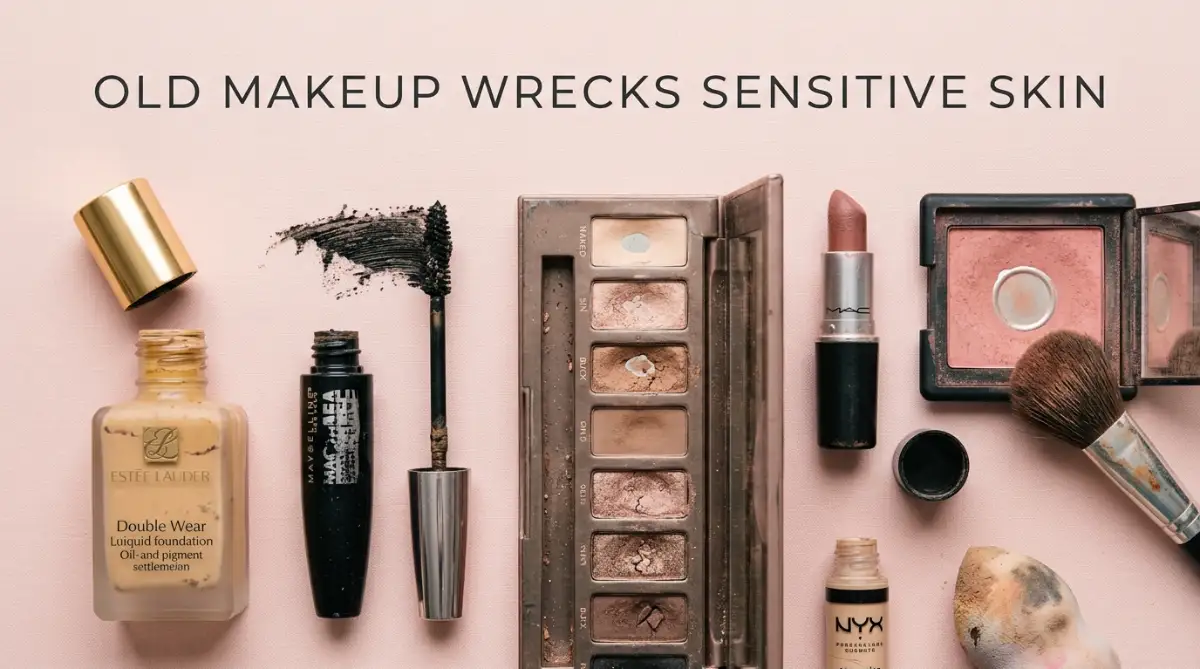
What Actually Happens Inside That Old Bottle of Foundation?
To fix this problem, we need to understand the hidden science behind cosmetic degradation. You see, makeup is not designed to last forever. Like the fresh food sitting in your refrigerator, beauty products have a very specific shelf life.
When you open a brand new bottle of liquid foundation, it is perfectly balanced. The preservatives are actively working to keep the formula safe, stable, and completely clean. But the moment air hits that formula, a tiny invisible timer starts ticking.
The Microscopic Petri Dish Effect
Let us talk about bacteria. Every single time you dip your fingers into a jar of moisturizer, or pull the wand out of a mascara tube, you introduce new germs to the product. Over time, the preservatives in the makeup slowly lose their strength.
Once those preservatives fail, your expensive cosmetic product turns into a literal petri dish. Dark, moist environments like liquid foundation bottles and mascara tubes are the perfect breeding grounds for harmful bacteria. Staphylococcus and E. coli are just two of the nasty bugs that can rapidly multiply in your old makeup.
Imagine leaving a glass of milk on your kitchen counter for a week. You would never dream of drinking it, right? Applying a two-year-old liquid concealer to your face is essentially doing the exact same thing to your skin.
When you spread this bacteria-filled mixture onto your sensitive skin, your immune system immediately goes into high alert. The body recognizes these germs as foreign invaders. This sudden immune response is exactly what causes the intense redness, swelling, and painful acne cysts you see in the mirror.
Chemical Separation and Intense Oxidation
Bacteria is just one part of the hidden danger. The physical ingredients inside your makeup also break down over time through a process called oxidation. If you have ever watched a sliced apple turn brown on a plate, you have witnessed oxidation firsthand.
When the chemical structure of your makeup changes, it stops acting like a beauty product and starts acting like an active irritant. The oils and water inside the formula will naturally separate.
When these ingredients separate, the pH level of the product completely changes. Sensitive skin requires a very specific, slightly acidic pH level to remain calm and healthy. Smearing an oxidized, separated product across your face instantly disrupts your natural acid mantle.
Without this protective acidic layer, your skin cannot hold onto moisture. This is exactly why your face feels extremely dry, tight, and flaky after using an old cosmetic item. You are basically stripping away your natural defenses.
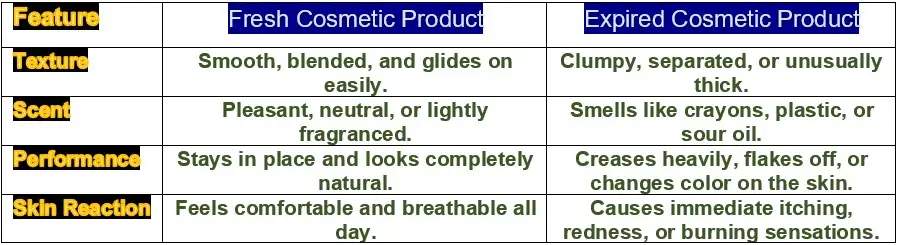
A Clear Look: Fresh vs. Expired Makeup
To make things easier to understand, let us look at exactly how a product changes from the day you buy it to the day it expires.
Why Sensitive Skin Reacts So Violently to Old Ingredients
You might wonder why your best friend can use an old eyeshadow palette for five years without a single problem, while your face breaks out instantly. The answer lies in your skin barrier.
People with sensitive skin naturally have a thinner, more fragile outer layer. Think of your skin barrier as a brick wall. The skin cells are the bricks, and the natural oils are the mortar holding everything tightly together.
In a healthy barrier, this wall keeps moisture locked inside and keeps harmful bacteria and pollution out. But in sensitive skin, that mortar is naturally weaker. There are tiny, microscopic cracks in your protective wall.
When you apply an expired cosmetic filled with broken-down chemicals and bacteria, those irritants slip right through the cracks in your barrier. They penetrate deep into the lower layers of your skin, causing massive internal inflammation.
This is why the reaction is so fast and so aggressive. Your skin is literally fighting a battle underneath the surface, trying to push those foreign invaders back out.
Myth vs. Reality: The Truth About Makeup Expiration
The Myth: "Powder products like eyeshadows and blushes never expire because they do not contain water."
The Reality: While it is true that powders last longer than liquids, they absolutely still expire. The oils from your makeup brushes transfer directly onto the powder surface every time you use them. Over time, these transferred oils go completely rancid and harbor bacteria, which will easily trigger an eczema or acne flare-up on sensitive skin.
The Myth: "If I just spray my old makeup with rubbing alcohol, it becomes perfectly safe to use again."
The Reality: Rubbing alcohol might kill the surface bacteria, but it does nothing to fix the chemical breakdown of the product. The separated oils, degraded pigments, and oxidized ingredients will still cause severe allergic reactions and contact dermatitis.
The Shelf-Life Reality Check for Everyday Beauty Products
Now that we understand the severe risks, we need to talk about timelines. Different types of cosmetics have very different expiration windows. Knowing these rules can save you from a lot of painful dermatologist visits.
Mascara and Liquid Eyeliners (3 to 6 Months)
This is the most dangerous category in your entire makeup bag. The dark, wet environment inside a mascara tube is a paradise for bacteria. Using an expired eye product can lead to severe eye infections, painful styes, and chronic pink eye. If your mascara smells weird or feels dry and clumpy, throw it in the trash immediately.
Liquid Foundations and Concealers (6 to 12 Months)
Since these products cover your entire face, an expired bottle will cause massive, widespread damage. The moment a liquid foundation starts to separate or changes its original color, it is dead. Pumping this onto a makeup sponge and pressing it into your skin is a guaranteed recipe for cystic acne.
Lipsticks and Lip Glosses (1 to 2 Years)
Your mouth introduces a lot of bacteria to your lip products. Because lipsticks contain heavy waxes and oils, they will eventually go completely rancid. If your favorite lipstick suddenly smells like old cooking oil or feels gritty when you apply it, the ingredients have broken down.
Pro Insight: The Secret Symbol You Are Ignoring
Did you know there is a tiny cheat code printed on almost every cosmetic product you own? Look at the back of your foundation bottle or eyeshadow palette. You will see a small icon that looks like an open jar with a number inside it, such as "12M" or "24M".
This is called the PAO (Period After Opening) symbol. It tells you exactly how many months the product is safe to use from the exact day you break the seal. However, most of us completely forget when we actually opened the product.
Pro Tip: Take a thin permanent marker and write the opening date directly on the bottom of the bottle. This takes two seconds but will permanently protect your face from accidental bacterial infections.
Actionable Steps to Audit Your Beauty Drawer Today
Reading about these hidden dangers is just the first step. To truly protect your sensitive skin, you need to take immediate, physical action. I want you to walk over to your makeup bag today and perform a ruthless audit.
Step 1: The Smell Test Strategy
Gather all your liquid and cream products on a table. Open each one and take a deep breath. You are looking for any sharp, sour, or chemical odors. If your foundation smells like old plastic, or your lipstick smells like a box of childhood crayons, the formula is heavily oxidized. Throw it away without any guilt.
Step 2: The Texture and Color Evaluation
Squeeze a small drop of your older liquid products onto the back of your hand. Does the water separate from the color? Are there weird, gritty lumps in a formula that used to be silky smooth? Has your bright peach blush turned into a dull, muddy brown? These are massive red flags. Chemical separation means the product will actively damage your acid mantle.
Step 3: The Brush and Sponge Purge
We cannot talk about expired makeup without talking about the tools you use to apply it. You could buy a brand new, expensive foundation today, but if you apply it with a filthy, six-month-old makeup sponge, you will still break out. Beauty sponges trap dead skin cells and deep moisture, making them dangerous mold factories. Wash your brushes weekly, and replace your blending sponges every three months without fail.
Protecting your sensitive skin is not just about buying the most expensive calming serums. Sometimes, the best skincare routine is simply knowing when to let go of old, toxic products that are quietly working against you.
When you finally clear out the expired junk, your skin will have a chance to breathe, heal, and rebuild its natural defenses. You will notice less redness, fewer mystery breakouts, and a much calmer complexion overall.
Mastering Your Beauty Inventory: Long-Term Habits for a Glowing Complexion
Throwing away your expired products is a fantastic first step. However, keeping your sensitive skin safe over the long term requires a complete shift in how you handle your cosmetics.
We need to treat our daily beauty items with the same respect we give to our fresh groceries or our daily medications. If you want to maintain a calm, redness-free face, you must establish a few non-negotiable habits starting today.
Stop Storing Your Makeup in the Bathroom
This is perhaps the most common and damaging habit in the beauty community. Think about what happens when you take a hot, steamy shower. Your bathroom instantly turns into a warm, humid sauna.
When you keep your expensive foundations and delicate powders in this environment, you are actively destroying them. The constant shifting from cold to hot temperatures causes the chemical formulas to break down at double the normal speed.
The heavy humidity also creates condensation inside the caps of your cosmetic bottles. This trapped moisture acts as a direct food source for dangerous mold and bacteria. To keep your formulas stable, you should store your everyday makeup in a dry, cool place like a bedroom vanity or a dedicated acrylic drawer set in your closet.
If you want to read more about how temperature fluctuations degrade preservatives, I highly recommend checking out these official FDA guidelines on cosmetic shelf life. It is an eye-opening read that will completely change how you organize your space.
The Cosmetic Spatula Rule
How often do you dip your bare fingers directly into a jar of expensive night cream or a pot of gel eyeliner? Even if you just washed your hands, your fingertips carry natural oils, microscopic dirt, and dead skin cells.
Every single dip deposits these contaminants directly into the product. Over a few weeks, these contaminants multiply, turning your favorite soothing cream into a harsh irritant.
The solution is surprisingly simple and very cheap. Buy a pack of tiny cosmetic spatulas or clean makeup scoops. Use these tools to extract the product from the jar, and wash the spatula with antibacterial soap immediately after using it.
By keeping your fingers entirely out of the jar, you protect the integrity of the preservatives. This one small change will drastically reduce your weekly breakouts and keep your skin barrier intact.
Treat Your Skincare Like a Financial Asset
Think of your vanity as an investment portfolio. You spend your hard-earned money on these items, expecting a good return on investment in this case, healthy, glowing skin.
Just as you would carefully plan your digital assets by reading up on how to design a balanced crypto portfolio from scratch, you must manage your beauty investments with discipline and tracking.
Do not rely on your memory to know when an item expires. Keep a simple note on your phone or use a dedicated beauty inventory app. Log the exact date you open a new bottle of foundation or a fresh tube of mascara. Set a calendar reminder on your phone for six months down the road to check that specific product.
This level of organized tracking takes away all the guesswork. You will never have to wonder if a product is safe to use, because your calendar will tell you the exact truth.

The Dangerous Beauty Traps Slowly Destroying Your Face
Even with the best intentions, it is incredibly easy to fall into emotional traps when dealing with expensive cosmetics. We trick ourselves into believing that certain products are the exception to the rule.
When you have sensitive, easily irritated skin, taking these seemingly harmless shortcuts will always backfire. Let us look at the most common, yet highly damaging, mistakes you might be making right now without even realizing it.
The "Discontinued Holy Grail" Trap
We have all been there. You finally find the perfect shade of peach blush or the exact foundation match for your undertone. Then, a few months later, the brand suddenly stops making it.
Panic sets in. You buy three backup bottles online and promise yourself you will make them last forever. Two years later, you are still scraping the bottom of that old bottle.
Holding onto discontinued makeup is a massive health hazard. Just because you cannot buy it anymore does not mean the chemical expiration clock stops ticking. Applying a three-year-old discontinued foundation is guaranteed to trigger severe contact dermatitis.
It is always better to spend time finding a modern, fresh alternative than to force your skin to endure rancid oils and degraded pigments. Your skin health is always worth more than a discontinued color match.
The Mascara Resurrection Mistake
This is a terrifyingly common practice that lands people in the doctor's office every single day. When a tube of mascara starts to dry out and get clumpy, many people will add a few drops of tap water, eye drops, or even saliva to the tube.
They pump the wand up and down to mix it, thinking they just saved twenty dollars. In reality, they just created a biological weapon for their eyes.
Tap water contains heavy minerals and completely different bacteria than what the mascara's preservatives were designed to handle. Saliva is even worse, packed with digestive enzymes and oral bacteria. Mixing these foreign liquids into a dark, warm tube causes an immediate and aggressive bacterial bloom.
Using this contaminated mixture can easily scratch your cornea or lead to severe infections. You can verify this risk by reviewing clinical warnings regarding eye makeup safety published by professional ophthalmologists. If your mascara is dry, it means the product is dead. Throw it in the trash bin where it belongs.
The "Scrape the Top Off" Fallacy
Powder products like eyeshadows and pressed bronzers often develop a hard, shiny film over time. This happens when the oils from your face transfer from your brush onto the powder.
A lot of beauty enthusiasts think they can simply grab a butter knife, scrape off that top shiny layer, and the product beneath will be brand new and perfectly safe. This is completely false.
Think about a loaf of bread. If you see a tiny spot of green mold on one slice, you do not just cut off the green part and eat the rest. You throw the whole loaf away, because the invisible root system of the mold has already spread throughout the bread.
Makeup works exactly the same way. The bacteria and rancid oils have completely soaked through the entire pan of powder. Scraping the surface only exposes you to a fresh layer of contamination.
Taking risks with expired products is simply poor risk management. Much like learning how to design a balanced crypto portfolio from scratch requires avoiding bad trades to protect your wealth, avoiding these common beauty mistakes protects your delicate facial barrier from irreversible damage.
Sharing Products With Friends
Getting ready for a night out with your best friends is incredibly fun. You are playing music, sharing stories, and inevitably passing around lipstick shades or trying out your friend's new concealer wand.
While sharing is caring in most areas of life, it is a strict hazard in skincare. Everyone has a completely different microbiome—the unique community of natural bacteria living on their skin.
Your skin is perfectly used to your own microbiome. However, when you borrow a friend’s concealer wand, you are introducing their specific facial bacteria directly onto your face.
For someone with a robust, thick skin barrier, this might not cause an issue. But for a person with sensitive, easily inflamed skin, this foreign bacteria will trigger an immediate acne breakout or allergic reaction. Always bring your own cosmetic bag, and kindly refuse any offers to share cream or liquid products.
Your Immediate Action Plan: Reclaiming Your Natural Glow
Dealing with constant skin irritation can feel overwhelming, but you now have the exact knowledge needed to fix the root cause. You are no longer guessing why your face suddenly turns red or why those painful bumps keep appearing along your jawline.
Your skin is an incredibly smart and resilient organ. The moment you stop bombarding it with expired, degraded chemicals, it will immediately start repairing itself.
Start the Detox Tonight
Do not wait until the weekend to clean out your beauty collection. Tonight, grab a trash bag and dump your makeup bag onto a clean towel.
Be ruthless in your decisions. If you cannot remember the year you bought that liquid blush, it goes in the trash. If that expensive concealer has a strange, watery separation at the bottom of the tube, throw it away.
It might hurt financially for a few minutes, but the peace of mind you will feel afterward is completely worth it. You are not losing money; you are investing in a healthier, happier future for your face.
Sometimes, hitting the reset button is exactly what we need to move forward. Taking control of your personal habits, much like exploring how to design a balanced crypto portfolio from scratch, gives you a sense of empowerment and clarity.
The Beauty of a Minimalist Routine
Moving forward, try adopting a more minimalist approach to your beauty routine. Instead of buying ten cheap, highly trendy products that you will never finish before they expire, invest in three or four high-quality staples.
When you own fewer items, you use them up much faster. This naturally ensures that the formulas touching your face are always fresh, potent, and safe.
Wash your brushes this weekend with a gentle, antibacterial soap. Wipe down the inside of your cosmetic storage bags with a disinfecting wipe. Create a clean, organized space that makes you feel good every time you sit down to get ready.
You deserve a skincare and beauty routine that builds your confidence, not one that causes you stress and physical discomfort. By respecting the shelf life of your cosmetics, you are taking a massive, positive step toward the clear, calm complexion you have always wanted.
Health & Medical Disclaimer:The information provided in this article is for educational and informational purposes only and does not constitute professional medical advice. If you are experiencing chronic skin irritation, severe acne, or any signs of a skin infection, please consult a board-certified dermatologist or healthcare professional immediately. Never disregard professional medical advice or delay seeking treatment because of something you have read on this website.