
The Midnight Panic: Why We Sabotage Our Own Success
Imagine it is 11:30 PM on a Sunday night. You have a massive project due first thing in the morning. Instead of sleeping, you are staring at a completely blank screen, your heart racing with heavy anxiety.
You actually had an entire week to finish this single assignment. Yet, you spent the last five days organizing your email folders, watching random cooking videos, and suddenly deciding your kitchen needed a deep clean.
Does this exact scenario sound deeply familiar to you? If you are nodding your head, you are absolutely not alone.
We often label ourselves as "lazy" when we push important things off until the last possible second. We carry around a heavy burden of shame, wondering why we cannot just sit down and do the work like a normal, functioning person.
But here is the honest, scientific truth. Chronic procrastination has absolutely nothing to do with poor time management. It is actually a protective shield your brain builds to avoid deeply uncomfortable emotions.
When you look at a massive task, your brain perceives it as a literal threat. You feel overwhelmed, deeply bored, or terrified of failing. So, your mind actively searches for a quick escape route to make you feel better in the present moment.
You watch a funny video because it gives you an instant hit of happy hormones. For exactly ten minutes, you feel completely fine. But when the video ends, the panic returns immediately, and the heavy guilt is twice as bad as before.
This endless loop of delaying, panicking, and feeling guilty destroys your daily peace of mind. It drains your mental energy, ruins your sleep schedule, and slowly damages your self-confidence over time.
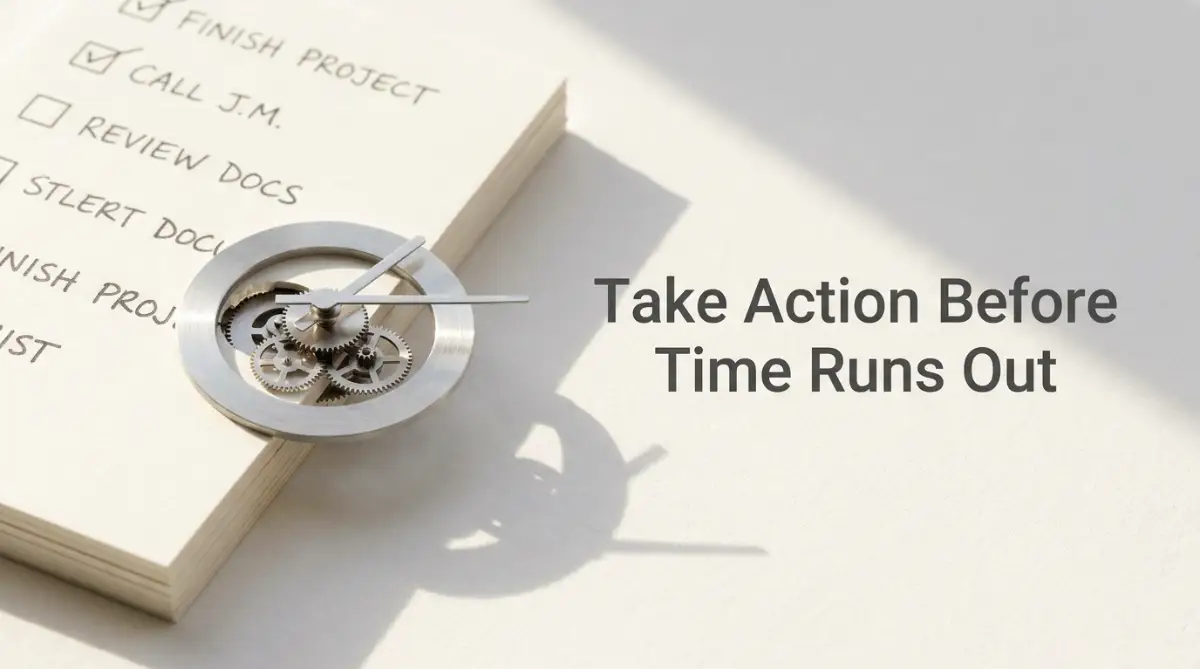
Rewiring The Brain: Shifting from Panic to Action
To break this highly stressful cycle, we have to stop fighting our clocks and start working directly with our brain chemistry. You cannot simply download another productivity app and expect your deep habits to change overnight.
We need to properly address the root cause of the constant delay. The secret lies in making the "start" completely painless. Once you remove the mental fear of starting, the actual work becomes surprisingly easy to handle.
Let us explore a few deeply psychological, yet highly practical methods you can use right now in your own home. These specific steps are designed to gently bypass your brain's natural alarm system.
The Emotional Friction Theory
Before we look at physical actions, we need to understand a mental concept called emotional friction. Think of emotional friction as an invisible brick wall standing directly between you and your work desk.
When a task feels too big, the wall gets taller. When you are afraid your work will not be perfect, the wall gets thicker.
Your goal is not to climb over this massive wall. Your primary goal is to take a hammer and knock out one single tiny brick at the bottom.
Myth vs. Reality: The "Discipline" Trap
- The Myth: Highly successful people never procrastinate because they are born with massive amounts of self-discipline.
- The Reality: Willpower is exactly like a smartphone battery; it drains quickly throughout the day. Productive people do not rely heavily on willpower. They build smart systems that make starting extremely easy, requiring almost zero discipline.
Lowering the Bar to Absolute Zero
One of the absolute best ways to bypass your internal resistance is to lower your expectations. We often freeze in place because we expect our very first attempt to be totally flawless.
Perfectionism is the best friend of procrastination. If you demand immediate perfection from the very first minute, your brain will simply refuse to start.
Instead, you must give yourself permission to do a terrible job. Tell yourself, "I am going to write the worst first draft in human history, and that is completely fine."
By intentionally lowering the bar, you instantly remove the fear of failure. You are no longer trying to write a masterpiece; you are just putting random, messy words on a page. You can always edit a bad draft later, but you cannot edit a blank page.
Expert Insight: The 5-Minute Bargain
When you feel the strong urge to run away from a boring task, make a simple bargain with yourself. Set a timer on your phone for exactly five minutes. Tell your brain you only have to work until the timer goes off. If you still want to quit after those five minutes, you are totally free to walk away guilt-free. In 90% of cases, the simple act of starting builds enough momentum to keep you actively working.
The Swiss Cheese Method for Overwhelming Projects
When you look at your daily to-do list and see a massive item like "Finish Annual Tax Report," your brain instantly enters panic mode. That task is simply too large to digest all at once.
This is where the famous Swiss Cheese Method comes in handy. Imagine your large project is a solid block of cheese. Your daily job is to simply poke tiny holes in it until the entire block falls apart.
Instead of trying to eat the whole block in one sitting, you focus on the smallest possible action. You break the giant project down into ridiculously small micro-steps.
Let us look at a quick comparison between a bad task list and a highly effective micro-action list.
Comparing Task Management Styles
Notice how the right column requires almost no mental effort at all? Opening a document takes three seconds. Moving three cups takes ten seconds.
When tasks are this ridiculously small, your brain does not trigger a stress response. You quietly slip past your own mental defenses. And usually, once your running shoes are actually on your feet, you decide to go for that healthy run anyway.
Designing an Environment That Forces Focus
You can have the absolute best intentions in the world, but if your work environment is full of easy distractions, you will always lose the battle. Your physical environment always wins against your personal willpower.
If your smartphone is sitting right next to your keyboard, facing up, you are openly inviting failure. Every single time the bright screen lights up, your brain gets a tiny, powerful spike of curiosity.
"Who texted me? Is it an important email? Maybe someone liked my recent photo."
Even if you do not physically pick up the phone, your deep focus is already broken. Research shows it takes an average of twenty minutes to fully regain deep concentration after a single tiny interruption.
Actionable Steps to Redesign Your Workspace:
- The Room Change: Put your phone in a completely different room while you sit down to work. The physical distance creates a massive mental barrier. If you have to stand up and walk down the hall to check social media, you are much less likely to do it.
- Visual Cleanliness: Clear your entire desk of everything except the one single project you are working on right now. Visual clutter in your room translates directly into mental clutter in your head.
- Digital Blockers: Use simple, free browser extensions to block your favorite distraction websites for a set period. Make it totally impossible to open social media when you should be typing.
By designing a physical environment that easily supports your goals, you are basically putting yourself on autopilot. You do not have to try hard to avoid common distractions because the distractions are completely gone from the room.
Understanding Your Personal Energy Cycles
Another major reason we constantly delay tasks is that we try to do the hardest work at the exact wrong time of day. We completely ignore our natural biological rhythms.
Every single human being has natural peaks and deep valleys of energy throughout a 24-hour cycle. Some people are incredibly sharp and focused at 6:00 AM. Others do their absolute best creative thinking directly after dinner.
If you are naturally a late-night person, trying to force yourself to write a complex analytical report at 8:00 AM is a recipe for complete disaster. Your brain is naturally foggy, your energy is extremely low, and the work feels physically impossible.
Pay very close attention to how your body feels throughout the day. Track your daily energy levels for just three simple days.
- When do you feel most alert and happy?
- When do you start craving extra sugar or coffee?
- When do you naturally want to close your eyes and take a nap?
Once you correctly identify your personal high-energy windows, you must protect them intensely. Schedule your most difficult, brain-heavy tasks strictly during these specific hours.
Save your low-energy times for totally mindless administrative work, like sorting old emails or organizing your computer files. Matching your task difficulty directly to your natural energy level makes the daily work flow much faster.
The True Power of Self-Compassion in Productivity
Here is a scientific truth that might deeply surprise you. People who quickly forgive themselves for procrastinating actually stop delaying tasks much faster than people who constantly punish themselves.
When you beat yourself up for wasting time, you create strong negative emotions. And as we learned earlier, negative emotions are the exact root trigger for even more procrastination.
You accidentally create a terrible self-fulfilling prophecy. You feel incredibly bad for delaying, which makes you stressed, which makes you delay even more just to escape the stress.
How to Practice Productive Forgiveness:
The very next time you catch yourself randomly scrolling through videos instead of working, do not call yourself lazy. Take a deep breath and quietly say, "I am feeling stressed right now, and I got distracted. That is totally okay. I will close this window and try again."
Speak to yourself the same way you would speak to a close friend who is struggling with a hard day. This simple act of kindness instantly removes the shame. It resets your emotional state and allows you to happily get back to work without the heavy baggage of ongoing guilt.
This specific shift in perspective is essential for long-term success. It turns a massive failure into a tiny, temporary speed bump. You simply acknowledge the mistake, adjust your course, and keep moving forward toward your goals.
Long-Term Behavioral Shifts for Unbreakable Consistency
We have discussed how to remove the immediate fear of starting. But how do you ensure you do not fall right back into your old habits next week? Building lasting consistency requires changing the very way you view yourself and your time.
You need to shift away from quick fixes and start building deep psychological frameworks. This is not about forcing yourself to work harder. It is about actively engineering a lifestyle where doing the work feels completely natural.
Let us explore some high-level, expert strategies that actually rewrite your daily behavioral patterns.
The Psychology of "Identity" Over "Action"
Most people try to solve their chronic delay by focusing purely on the action. They say, "I am going to study for three hours today." This approach almost always fails because it relies completely on your daily mood.
Behavioral scientists suggest a much stronger method: shifting your core identity. Instead of focusing on the specific task, you focus on the type of person you wish to become.
You tell yourself, "I am a professional who respects deadlines." Or, "I am the type of student who prepares ahead of time."
When you adopt a new identity, your brain naturally wants to prove that identity is true. You stop fighting yourself because the positive action simply aligns with who you believe you are.
Engineering Artificial Urgency
Have you ever noticed how you can clean your entire house in thirty minutes when you find out a friend is coming over? That sudden burst of energy is caused by absolute, undeniable urgency.
A famous concept called Parkinson’s Law states that work expands to fill the time available for its completion. If you give yourself an entire month to write a short report, it will take exactly one month.
You can use this psychological quirk completely to your advantage. You must create strict, artificial deadlines and make them highly public.
Tell your business partner, "I will email you the first draft by 4:00 PM on Tuesday." By actively involving another human being, you create real social pressure. Your brain will automatically shift into high gear to protect your social reputation.
Pro Tip: If you want to dive deeper into how deadlines affect our cognitive load, the University of North Carolina Learning Center provides excellent research on task management. Their studies show that external accountability is one of the highest predictors of task completion.
Mastering the Art of "Temptation Bundling"
Sometimes, a task is just terribly boring, and no amount of positive thinking will make it fun. When you face these highly tedious chores, you need a strategy called temptation bundling.
This simply means linking an activity you love doing with an activity you actively avoid doing. You pair the pain with an immediate, guaranteed reward.
For example, you only allow yourself to listen to your favorite true-crime podcast while you are doing the weekly laundry. Or, you only drink your favorite expensive coffee while you are answering difficult client emails.
Over a few weeks, your brain actually starts looking forward to the boring task. You slowly train your mind to associate the heavy work directly with the positive dopamine rush of your favorite treat.
Protecting Your Mental Foundation
Constantly carrying around a heavy list of unfinished tasks creates an invisible layer of deep anxiety. You might smile and act normal, but your subconscious mind is constantly worrying about what you are avoiding.
This hidden stress slowly degrades your physical and mental health over the years. It is remarkably similar to the slow, unseen destruction caused by silent rooftop damage the hidden cost of bad solar mounting. You do not notice the problem from the ground, but the foundation is quietly rotting away until it suddenly collapses.
By taking small, daily actions, you release that hidden mental pressure. You fix the invisible leaks in your mind before they turn into a total mental breakdown.

The Hidden Traps That Destroy Your Progress
Even when you start making great progress, your brain will constantly try to trick you back into old comfort zones. It is incredibly clever at inventing new excuses to avoid hard work.
Understanding these common pitfalls is the only way to avoid them. Let us look closely at the specific mistakes that pull smart people backward.
The "Productive Delay" Illusion
This is arguably the most dangerous trap because it genuinely feels like real work. Productive delay happens when you actively avoid your main priority by doing smaller, less important chores.
You might spend three hours redesigning your perfectly color-coded calendar instead of actually studying for your exam. You feel exhausted and busy, so you convince yourself you had a great day.
But at the end of the night, the most important task remains completely untouched. You have successfully tricked yourself into feeling productive while actually running away from your real goals.
How to escape this trap: Every single morning, physically write down your "One Big Thing." This is the single task you must complete today, no matter what happens. Do not allow yourself to touch any minor chores until that one massive priority is finished.
Relying on "Future Motivation"
How often have you told yourself, "I am too tired today, but tomorrow I will wake up early and feel highly motivated"? This is a massive lie we confidently tell ourselves every single day.
We view our "future self" as a completely different human being. We assume "Tomorrow Me" will have endless energy, zero stress, and perfect discipline.
But when tomorrow actually arrives, you feel exactly the same as you do right now. Relying on future motivation is like completely trusting a safety net without checking what your standard homeowners insurance will not cover. When reality finally hits, you find out you are totally unprotected and unprepared.
You cannot wait for the perfect mood to arrive. Action actually creates motivation, not the other way around. You have to start moving your hands first, and the positive feelings will eventually follow.
The Extreme Burnout Cycle
When people constantly put things off until the last minute, they force themselves to pull all-night work sessions. They drink five cups of coffee, panic intensely, and type furiously for ten hours straight.
This extreme method puts an unbelievable amount of physical stress on your nervous system. According to medical publications strictly focused on the physiological effects of stress, chronic last-minute panic actively weakens your immune system over time.
When you push your mind to the absolute breaking point, a total system crash becomes inevitable. Recovering from that level of deep mental burnout is just as chaotic and painful as safely recovering corrupted data from water-damaged smartphones. You risk losing your health, your peace, and your quality of work.
Question & Answer: Navigating the Slump
Q: What should I do when I completely fail and waste an entire day?
A: Do not punish yourself. A single bad day absolutely does not erase your previous progress. Acknowledge the failure, drink a glass of water, get a good night of sleep, and start completely fresh the next morning.
Q: Is it normal to feel physical anxiety when trying to start a big project?
A: Yes, it is a very natural biological response. Your brain misinterprets the hard task as a physical threat. Use deep breathing for two minutes before you open your computer. This physically signals to your nervous system that you are completely safe.
Your Personal Blueprint for Immediate Action
We have covered exactly why your brain fights you, how to bypass that resistance, and the specific traps you need to avoid. You now possess a highly effective toolkit for changing your daily life.
But reading about productivity is just another clever form of delay unless you actually apply the knowledge. You have to take this information off the screen and bring it into your physical reality today.
Let us simplify everything into a clear, actionable roadmap you can use right away.
Do's and Don'ts of Beating Delay
Do This:
- Do break things down: Chop every single project into laughably small, five-minute steps.
- Do forgive yourself quickly: Treat your daily mistakes with deep kindness instead of heavy guilt.
- Do manage your environment: Physically remove your phone from the room when you need deep focus.
- Do use temptation bundling: Pair your most dreaded tasks with your absolute favorite treats.
Don't Do This:
- Don't wait for inspiration: Never wait to "feel ready" before you start typing or working.
- Don't demand perfection: Give yourself absolute permission to do a very messy, terrible first draft.
- Don't hide from deadlines: Stop working in secret. Tell your friends exactly when your work will be finished.
A Final Message to Guide Your Journey
Breaking a lifelong habit of delay is not a perfectly straight line. You will have incredibly productive weeks, and you will have messy, disorganized days.
The goal here is absolutely not flawless perfection. The true goal is simply building forward momentum.
Every single time you choose to take action instead of scrolling on your phone, you are voting for a better version of yourself. You are slowly proving to your brain that you are highly capable, strong, and reliable.
You hold the power to completely change your story. Take a deep breath, pick the smallest possible task on your list, and simply begin. Your future self will be incredibly grateful for the hard work you put in today.
Disclaimer: The information provided in this article is designed for educational and self-improvement purposes only. It is not intended to serve as a substitute for professional mental health advice. If chronic procrastination is severely impacting your daily functioning, career, or personal relationships, please consider consulting a licensed therapist or psychological professional.