
Actionable Takeaways for Your Claim:
-
Go to a doctor on the exact same day of your accident, even if you feel perfectly fine.
-
Never give a recorded statement to the other driver's insurance agent.
-
Make every single social media account fully private and stop posting entirely.
-
Wait until your doctor says you are completely healed before signing any settlement papers.
The Hidden Trauma After the Accident: A Personal Reality Check
Let me guess: you thought the hardest part was surviving the crash, but now you are drowning in medical bills and confusing phone calls. I have seen so many honest people accidentally ruin their own injury claims just because they wanted to be polite to the insurance guy. You don't need a law degree to protect your money, but you do need to know the hidden rules of the game. Let's fix those mistakes before they cost you thousands.
Instead of getting the time to heal, you are forced into a stressful game of chess with giant corporate entities. Your mental peace is completely destroyed the moment the phone starts ringing. The insurance agents sound incredibly friendly on the other end of the line, asking how you feel and offering quick solutions.
But what most people do not realize is that these friendly conversations are carefully designed traps. They prey on your vulnerability when you are tired, scared, and in pain. Every word you say out of mere politeness is recorded and used to build a case against you.
You start to question your own memory of the event. The mounting financial pressure makes you desperate for any kind of relief, leading to terrible, rushed decisions. People lose sleep wondering how they will afford groceries when their paycheck shrinks because of missed work hours.
The Psychology of the "I'm Fine" Trap and Treatment Delays
Right after an accident, your body does something amazing but highly deceptive. It floods your system with adrenaline to help you survive the trauma. Because of this natural biological response, you might step out of your wrecked car and genuinely tell everyone that you feel fine.
This immediate polite response is the first major blow to your legal rights. Insurance companies absolutely love it when you decline medical attention at the scene. They will pull up the police report later and point out that you claimed no injuries.
You might go home, take a hot shower, and think the soreness will fade away by morning. Three days later, you cannot turn your neck, and your lower back feels like it is on fire. You finally go to the emergency room or a specialized doctor.
That three-day gap is exactly what the defense team will use to destroy your credibility. They will argue that if you were truly hurt in the crash, you would have demanded an ambulance right away. They will try to convince a jury that you injured your neck at the gym or by sleeping wrong during those three undocumented days.
To protect your rights, you must seek medical evaluation immediately. Even if you only feel a slight stiffness, let a licensed medical professional document your condition. A doctor's visit on the same day creates a clear, undeniable timeline connecting the accident directly to your physical pain.
Never play the tough guy or girl after a traumatic event. Your health is your priority, and a medical record is the absolute foundation of your future financial recovery. Without immediate medical documentation, your words hold almost no legal weight.
Why Your Friendly Insurance Adjuster is Actually Your Biggest Threat
We are socially conditioned to be polite, cooperative, and helpful when someone asks us questions. When the at-fault driver's insurance adjuster calls you, they will use a warm, empathetic, and comforting voice. They will ask you how your day is going and if you are feeling a bit better.
Do not fall for this psychological manipulation. These individuals are highly trained negotiators whose sole job performance is measured by how much money they save their company. They are calling to gather ammunition against you, not to help you pay your bills.

Never give a recorded statement without legal representation present. The adjuster will ask leading questions designed to confuse you or make you admit partial fault. They might ask, "You didn't see the car coming because you were looking away for just a second, right?"
If you say "yes" just to get them off the phone, you have practically ruined your case. In many states, if you are found even slightly at fault, your compensation can be drastically reduced or completely wiped out. You have the absolute legal right to decline a recorded statement until you speak with an attorney.
Quick Myth vs. Fact:
-
Myth: Saying "I'm sorry" at the scene just shows you have good manners.
-
Fact: Insurance companies legally twist your apology into an admission of guilt. Keep your answers short and stick only to the basic facts.
I used to think being overly polite to the insurance agent would make them process my check faster. My biggest mistake was answering their casual question about how my weekend went, which they later used to claim I was physically active. Always remember that every single friendly chat is actually a formal evidence-gathering session.
If they call you, simply tell them you are not prepared to discuss the details of the accident right now. Give them your basic contact information and tell them your attorney will be in touch shortly. This creates a solid boundary that protects your legal interests.
The Social Media Illusion: Documenting Your Own Downfall
In today's highly connected society, our first instinct is to pull out our phones and update our friends about our lives. You might post a photo of your damaged car with a caption saying, "Thankfully, I walked away with just a few scratches!"
That innocent post is a golden ticket for the defense lawyers. Even if you meant that you were glad you survived, they will use your exact words to prove your injuries are minor. Defense investigators actively monitor the social media accounts of injury claimants.
They are looking for any inconsistency between your legal claims and your public life. If you claim you have severe back pain but you are tagged in a photo smiling at a friend's birthday party, they will use it against you. A jury does not see the pain you endured before or after that photo was taken; they only see a happy, seemingly healthy person.
Watch how defense attorneys secretly monitor your online activity to destroy your case.
The smartest action you can take is to make all your social media profiles completely private immediately after an accident. Better yet, stop posting entirely until your case is fully resolved. Do not discuss your medical treatments, your legal case, or your physical pain online.
Even private messages and closed group posts can sometimes be subpoenaed during a lawsuit. Warn your family members and close friends not to tag you in their photos or post updates about your health. A strict code of digital silence is your best shield against corporate investigators.
Real-Life Privacy Checklist Before You Settle:
Understanding the "Blanket Medical Release" Danger
Within a few days of the incident, you will likely receive a thick envelope in the mail from the insurance company. Inside, there will be a form asking for your signature to authorize the release of your medical records. They will tell you this is necessary so they can pay your hospital bills quickly.
This is one of the most dangerous pieces of paper you will ever encounter. Often, these are "blanket authorizations," meaning they give the insurance company the right to look at your entire medical history since you were born. They are not just looking at the records from the crash.
They will dig through your past ten years of medical visits looking for any previous complaints of pain. If you went to a chiropractor five years ago for a slightly sore back, they will find it. They will then argue that your current pain is just a "pre-existing condition" and refuse to pay you.
You should only ever authorize the release of medical records directly related to the specific accident in question. Do not sign anything without having an independent legal professional review the scope of the document. Protect your private health history from corporate fishing expeditions.
Failing to Document the Invisible Impacts of Your Trauma
When we think about evidence, we usually picture shattered glass, dented bumpers, and long hospital receipts. While physical evidence is highly important, many people completely forget to document the invisible toll the accident takes on their life. The law calls this "pain and suffering," and it often makes up the largest part of a fair settlement.
You might have severe anxiety every time you get behind the steering wheel now. You might be missing your child's soccer games because you cannot sit in the bleachers without shooting pain. These emotional and lifestyle losses have tremendous legal value, but only if you can prove them.
Start a daily pain journal the very first day you come home. Write down how you feel when you wake up, what medications you take, and what regular activities you are forced to skip. Be honest and specific about your physical limitations and emotional struggles.
A raw, detailed journal provides a powerful narrative that medical bills simply cannot show. It proves to a jury that you are a real human being whose quality of life has been stolen, not just a file folder full of invoices. This personal documentation transforms a cold legal claim into a compelling human story.
The Myth of the Quick, Generous Settlement
Let us break down a very common situation. You are sitting at home, worried about rent, when the insurance adjuster calls with an offer. They offer to pay your current medical bills and give you an extra couple of thousand dollars for your trouble, provided you sign a release today.
Myth: The insurance company realizes they are at fault and wants to do the right thing by paying you quickly.
Reality: They know your case is worth significantly more money, and they are trying to buy you out before you realize how bad your injuries truly are.
The moment you sign that settlement release, your case is permanently closed. If you discover you need surgery six months later, you cannot go back and ask for more money. The financial burden will fall entirely on your own shoulders.
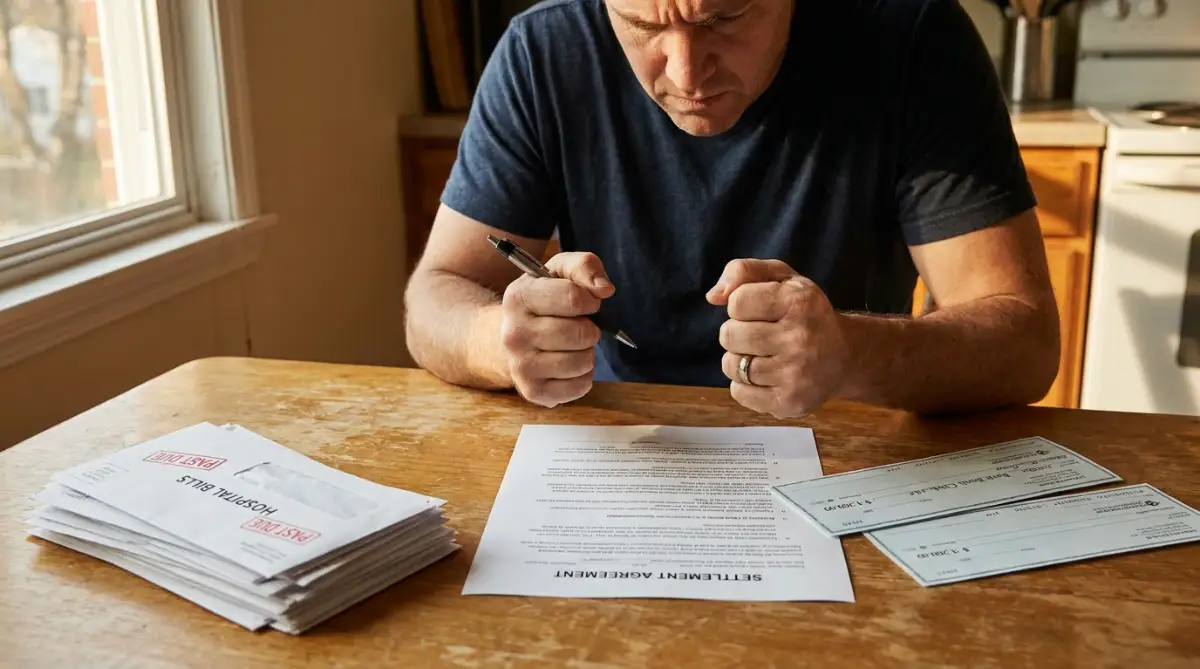
Never accept the first offer, especially if you are still undergoing medical treatment. You need to reach what doctors call "Maximum Medical Improvement" before you even consider discussing numbers. You must fully understand the lifelong physical and financial consequences of your injuries first.
Having patience is incredibly difficult when you are watching your savings account drain. However, rushing into a cheap settlement is a permanent mistake for a temporary problem. Always consult with a professional who can accurately calculate your future medical needs and lost earning capacity.
Strategic Actions for Long-Term Legal Protection
After surviving the immediate chaos of an accident, your focus must shift toward long-term legal strategy. Building a solid injury claim is not a sprint; it is a slow, methodical process that requires extreme attention to detail. The insurance companies have teams of lawyers working full-time to minimize your payout. You need to be just as organized and strategic to protect your financial future.
I learned early on that relying on memory is a terrible strategy when dealing with the law. A year from now, you will not remember exactly how much your neck hurt on a random Tuesday, or what the claims adjuster said during an unexpected phone call. You have to treat your recovery process like a professional pr