The Silent Anxiety of the Disappearing Paycheck
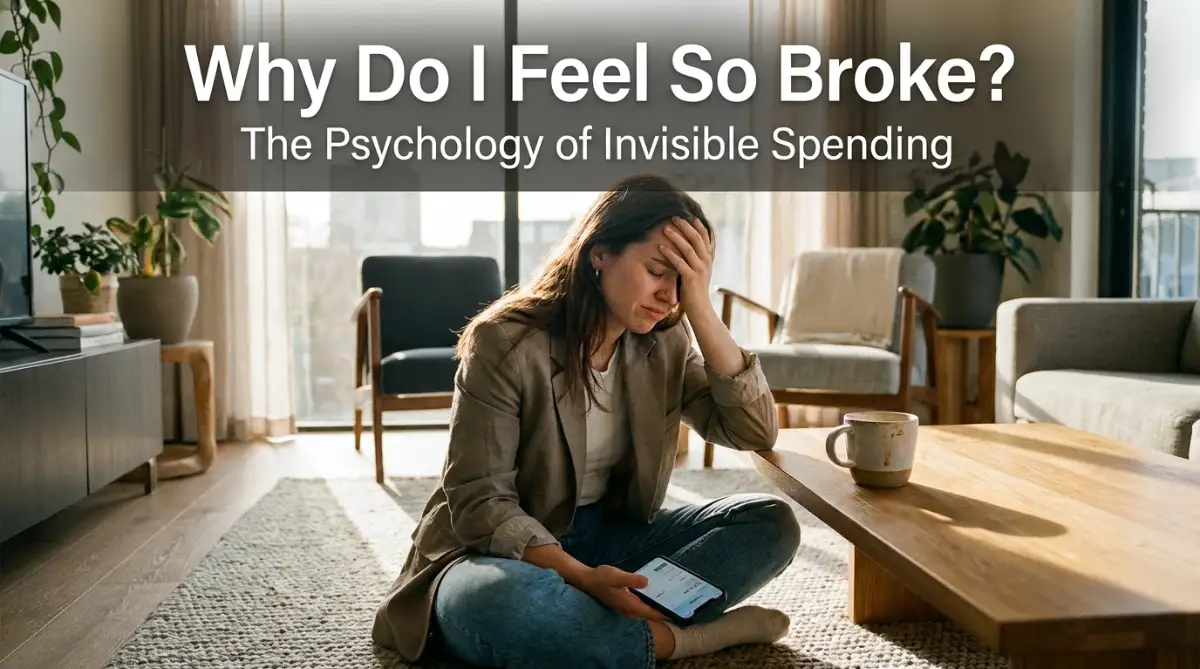
I clearly remember sitting on my living room floor, surrounded by nice furniture, practically holding back tears while looking at my bank account on my phone. I had just gotten a decent promotion at work, yet my account balance was somehow lower than ever before. I felt like a complete failure because I was making good money, but I still panicked every single time I swiped my debit card for basic groceries. I kept asking myself where all my hard-earned cash was actually going every month. It made absolutely no sense to me that my income was stable and growing, yet my financial stress was shooting through the roof.
The reality of earning a good living but still feeling completely broke is a very heavy, isolating burden. You work forty hours a week, pay your taxes, and on paper, you look like a highly successful adult. Yet, a constant sense of dread sits heavily on your chest from the moment you wake up. You secretly worry that one single emergency, like a flat tire or a medical bill, will completely destroy your life.
This hidden panic totally ruins your mental peace and drains the joy out of your daily existence. You start hiding your financial reality from your closest friends because you feel deeply ashamed of your situation. When a friend invites you out for a simple cup of coffee, your brain instantly goes into a terrifying panic mode. You smile and make an excuse to stay home, quietly isolating yourself to avoid spending ten dollars.
This constant mental loop of "not having enough" completely exhausts your physical body. You might find yourself snapping at your family over tiny expenses, or losing sleep because your brain refuses to shut off at night. Every single month feels like an endless marathon where the finish line keeps moving further away. You put in maximum effort just to end up exactly at zero by the time your next paycheck arrives.
People who have never experienced this specific type of stress simply do not understand the emotional weight it carries. They think making more money automatically solves everything, but that is a massive misunderstanding of human psychology. When your brain is wired for scarcity, the actual number on your paycheck stops mattering entirely.
You eventually reach a breaking point where you realize that math alone cannot fix this awful feeling. You become desperate to understand why your brain is actively working against your financial security. Finding a way out of this invisible mental prison becomes your absolute top priority for your own sanity.
Unpacking the Mind Games: Why Your Brain Thinks You Are Poor
To truly solve this massive problem, we have to look past the numbers and dig deep into human psychology. The feeling of being broke is rarely about the actual dollars in your bank account. It is usually a powerful mix of biological survival instincts, emotional triggers, and unconscious societal programming.
When you understand exactly how your mind tricks you, you take away its power over your daily life. You can finally stop blaming yourself and start building practical systems that protect your mental health. Let us break down the exact psychological traps that are making you feel completely empty, even on payday.
The Invisible Trap of Lifestyle Creep
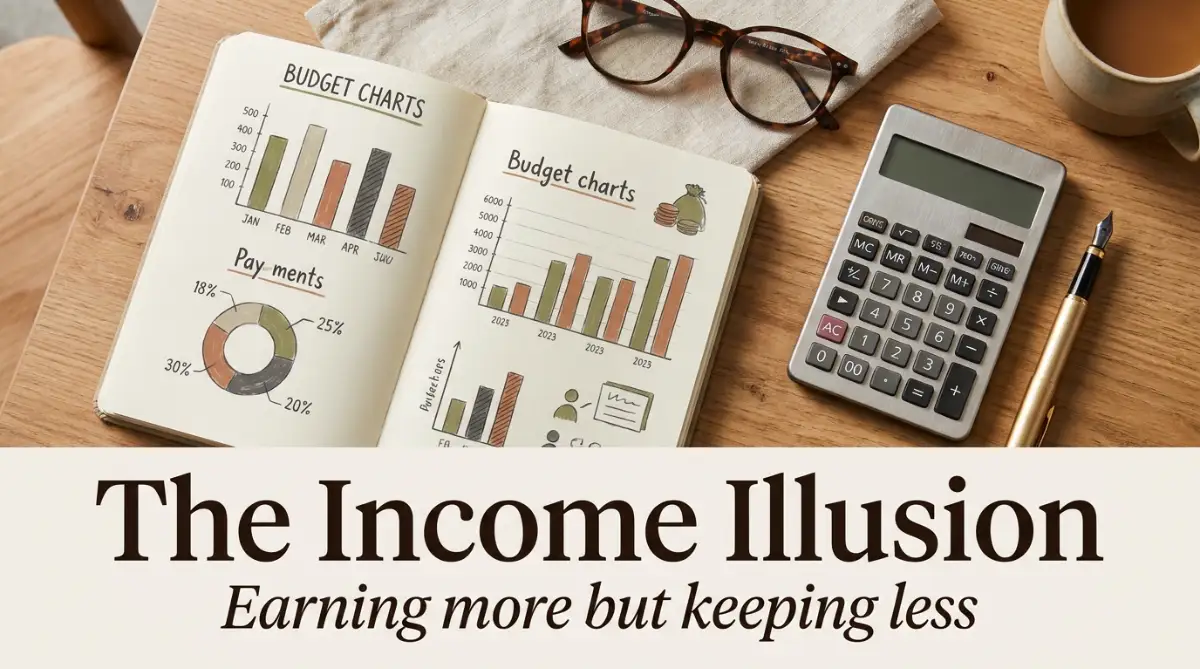
One of the biggest reasons you feel financially strained is a completely silent phenomenon called lifestyle inflation. Think of your budget like a bucket holding water, and your income is the water pouring in. Every time you get a raise, you unconsciously poke a new hole in the side of that bucket without realizing it.
You might decide to move into a slightly nicer apartment, buy higher-quality groceries, or subscribe to a few more streaming services. None of these choices seem dangerous on their own, and you easily justify them because you work so hard. But when you add all these tiny upgrades together, they completely swallow your entire new salary.
Your baseline for what feels "normal" shifts upward, making your new comfortable lifestyle feel like the absolute bare minimum. Suddenly, you are making twenty percent more than you did three years ago, but you feel exactly the same amount of stress. You are running on a financial treadmill, sweating heavily but never actually moving forward.
The Heavy Ghost of Past Financial Scarcity
For many people, the feeling of being broke is an emotional scar left over from childhood or past trauma. If you grew up in a household where money was tight, your developing brain learned that financial danger is always right around the corner. Your nervous system literally wired itself to stay in a permanent state of "fight or flight" regarding money.
Even when you grow up and secure a fantastic job, your brain refuses to turn off that ancient survival alarm. According to behavioral psychology, your amygdala—the fear center of your brain—cannot easily tell the difference between past poverty and present safety. It constantly scans your environment for threats, convincing you that a disaster is about to wipe you out completely.
This means that having ten thousand dollars in a savings account might not feel like enough to keep you safe. You look at that healthy balance and your traumatized brain immediately whispers, "What if it all goes away tomorrow?" You cannot enjoy your hard-earned stability because your mind is permanently trapped in a time when you truly had nothing.
The Comparison Trap in a Digital Era
We live in a society that constantly forces us to watch the absolute best moments of other people's lives on our screens. You might feel perfectly happy with your comfortable, reliable car until you open an app and see a former classmate buying a brand-new luxury vehicle. Instantly, your brain starts a highly toxic comparison game that you are guaranteed to lose.
You see influencers traveling to exotic islands, friends eating at expensive restaurants, and neighbors renovating their massive kitchens. Your brain completely ignores the fact that many of these people are drowning in massive credit card debt to afford those things. You only see the shiny end result, and it makes your own perfectly fine life feel totally inadequate and cheap.
This constant digital comparison creates a psychological gap between where you are and where you think you should be. You start spending money just to keep up an image, hoping it will finally make you feel successful. But buying things to impress strangers only empties your wallet faster, leaving you feeling even more broke and deeply unfulfilled.
[Watch This Before You Spend Another Dollar]
If you constantly wonder where your entire paycheck vanishes by the middle of the month, you need to understand the psychology of silent spending. Watch this breakdown to see exactly how to stop your brain from emptying your wallet.
Parkinson's Law: Why More Money Disappears Faster
There is a very famous principle in economics and time management known as Parkinson's Law. Simply put, this law states that a task will expand to fill the time you give it. Amazingly, human beings apply this exact same psychological rule to their personal finances without even trying.
If you have two thousand dollars sitting in your checking account, your brain will magically find exactly two thousand dollars worth of "emergencies" or desires. You suddenly notice your shoes look a bit old, or your car needs a premium wash, or you absolutely must try that new steakhouse. The money is there, so your mind creates an urgent demand to consume it completely.
This happens because most people leave all their money sitting in one giant pile in their main checking account. When you open your banking app and see a large number, your brain incorrectly registers it as "free money to spend." You forget that part of that money needs to cover rent, part is for groceries, and part should be saved for the future.
Pro Tip: I realized my biggest mistake was automatically upgrading my phone and my car the exact same month I got a raise, thinking I naturally 'deserved' it. Now, I force myself to wait thirty full days before increasing my standard of living after any income bump. This tiny, forced pause completely stopped my impulsive lifestyle inflation and saved me thousands of dollars.
Mental Accounting and The Illusion of Wealth
Another massive reason you feel broke is due to a cognitive bias known as mental accounting. We tend to assign different emotional values to money depending on exactly where it came from or where it is going. For example, people often treat a tax refund or a work bonus completely differently than their regular paycheck.
You might blow a five-hundred-dollar bonus on a designer jacket because it feels like "free money" in your head. But when it comes time to pay a fifty-dollar utility bill, you suddenly feel incredibly stressed and broke. The money is exactly the same, but your brain categorized the bonus as fun and the bill as painful.
This flawed mental sorting system leads to terrible financial decisions that drain your resources quickly. You end up overspending on categories that bring you temporary joy while feeling paralyzed by your basic living expenses. It creates a chaotic environment where you always feel like you are running out of the "serious money" needed to survive.
The Heavy Burden of Unseen Obligations
Sometimes the feeling of being broke is actually rooted in very real, but highly invisible, financial drains. Over the last decade, our society has shifted heavily toward a subscription-based model for almost everything. You no longer buy a movie once; you pay fifteen dollars a month forever just for the privilege of watching it.
These small, automatic charges are what financial experts call "death by a thousand cuts." Your brain does not register a ten-dollar charge as a threat, so you sign up for five different services without blinking. But when you add up the gym you never visit, the extra cloud storage, and the premium music apps, you are silently losing hundreds of dollars.
Because this money leaves your account automatically while you sleep, you never feel the physical pain of spending it. You wake up, check your balance, and feel an intense wave of confusion and panic because the math does not make sense. You feel broke because your money is being silently siphoned away by convenient digital traps you forgot you even set up.
Rewiring Your Brain for Financial Safety
Breaking out of this mental prison requires you to actively build safety nets that your anxious brain can actually see and trust. You cannot just tell yourself to stop worrying; you have to prove to your fear center that you are safe. This means entirely changing the way you interact with your money on a daily basis.
The very first step is to forcefully hide your own money from yourself to break Parkinson's Law. The moment your paycheck hits your main account, you must automatically route a portion of it to a completely different bank. If you do not see the money when you open your daily spending app, your brain will simply learn to survive without it.
This strategy, often called "paying yourself first," completely changes your psychological relationship with your income. By living on the smaller amount left over, you force your lifestyle to remain humble and manageable. Meanwhile, your hidden savings grow quietly in the background, building a massive wall of security between you and total disaster.
Master-Level Tactics to Outsmart Your Own Spending Habits
Understanding why your brain tricks you into feeling poor is only half the battle. To actually fix this exhausting problem, you need to build practical systems that protect your money from your own emotional impulses. You cannot simply rely on willpower to stop spending, because human willpower completely drains after a long, stressful day.
You need to establish a daily routine that operates entirely in the background of your life. This means changing the physical way you interact with your banking apps, your credit cards, and your online shopping accounts. When you remove the friction of saving and add friction to spending, your entire financial reality shifts positively.
The "Financial Thermostat" Analogy
Think of your brain like a digital thermostat mounted on the wall of your house. If the thermostat is permanently set to sixty degrees, the heater will constantly kick on to keep the room cold. Similarly, if your internal financial thermostat is set to "broke," your brain will always find ways to spend your money to maintain that stressful familiar state.
You have to actively reprogram that internal temperature setting. According to behavioral researchers focusing on consumer habits, breaking this cycle requires disrupting your daily visual triggers. The National Endowment for Financial Education (NEFE) research on behavioral change shows that changing your physical environment is the most effective way to reset your money habits.
Renaming Your Accounts for Emotional Attachment
Most people leave their banking accounts named with boring, generic titles like "Checking 1" or "Savings 2." This creates a massive emotional disconnect between you and your hard-earned money. Your brain does not care about protecting a random account number, so it easily justifies pulling money out for unnecessary purchases.
Log into your banking portal today and give every single account a highly specific, emotional name. Change "Savings 1" to "My Future Dream Home" or "My Absolute Peace of Mind Fund." When you actively try to transfer money out of an account called "Peace of Mind" to buy a pair of shoes, you will feel a sharp emotional resistance.
This tiny psychological trick forces you to remember your long-term goals before you make a short-term mistake. It connects your daily numbers to your actual human desires, making it much harder to sabotage yourself.
The 48-Hour Cool-Down Rule
Online retailers spend billions of dollars designing websites that make you buy things impulsively in under ten seconds. They use countdown timers, flashing discounts, and one-click purchasing buttons to bypass your logical thinking entirely. To fight back, you must implement a strict forty-eight-hour waiting period for any non-essential purchase.
When you see a jacket or a gadget you absolutely want, go ahead and put it in your digital shopping cart. But instead of clicking the checkout button, close the laptop completely and walk away for two full days. If you still desperately want the item after the time passes, and it fits your budget, you can buy it guilt-free.
Most of the time, the intense emotional desire will completely evaporate after a few hours of sleep. You will wake up realizing you did not actually need the item; you just wanted the temporary dopamine hit of buying something new.

The Invisible Traps That Drain Your Account Quietly
The journey to financial peace is unfortunately filled with hidden landmines that can easily blow up your progress. I see incredibly smart, hardworking people make the same emotional mistakes over and over again. You must become hyper-aware of these specific pitfalls so you do not accidentally destroy your own hard work.
The "I Earned This" Reward Disaster
We all have those incredibly brutal weeks at work where everything goes wrong and your boss is overly demanding. When Friday finally arrives, you feel completely drained and tell yourself, "I worked so hard, I deserve a massive treat." This single thought is the exact re