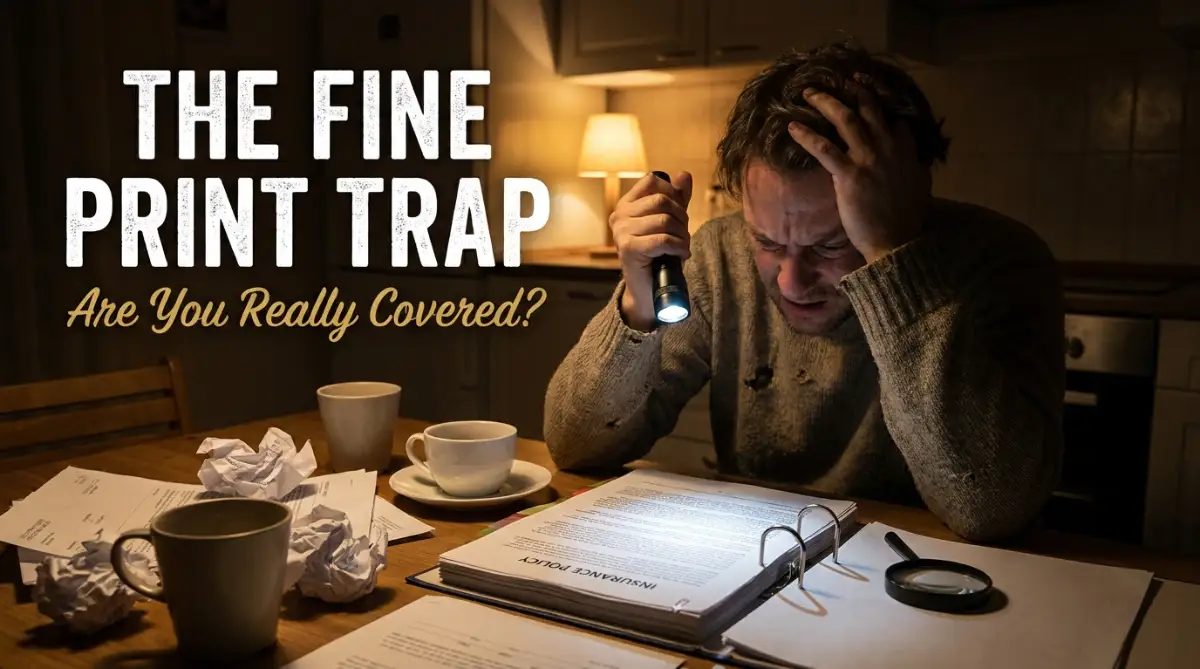
The Day My Safety Net Completely Disappeared
I still remember standing on the side of the busy highway, staring blankly at the crushed front bumper of my car. My hands were shaking, but I told myself to calm down because I had been paying my premium on time every single month. I honestly thought I was completely protected by my major insurance provider. When the tow truck finally drove away, I called my agent with total confidence, expecting them to handle everything smoothly. A few hours later, the mechanic handed me a repair bill for nearly four thousand dollars, and my agent casually explained that my specific problem was excluded in the tiny text at the bottom of page fourteen. My heart sank into my stomach.
That sickening feeling of financial betrayal is a nightmare that thousands of normal people experience every single day. We buy auto policies to buy peace of mind. We trust that if something terrible happens on the road, our savings accounts will remain safe.
But the reality is entirely different. Most everyday drivers are driving around with massive, invisible holes in their safety nets.
When you finally get into an accident and realize your policy does not cover the damage, the stress is completely overwhelming. You suddenly have to figure out how to pay rent, buy groceries, and somehow pull thousands of dollars out of thin air to fix your only mode of transportation.
This unexpected financial shock completely destroys your daily mental peace. You lose sleep worrying about debt, and you feel incredibly foolish for trusting a document you never actually read.
Why do we do this? We do this because insurance contracts are specifically written in a language that normal humans find incredibly boring and confusing. We just sign the dotted line, pay the bill, and hope for the best.
It is a massive gamble, and the house almost always wins. If you do not understand the rules of the game, you will eventually end up paying the price. We need to stop blindly trusting these companies and start protecting our hard-earned money.
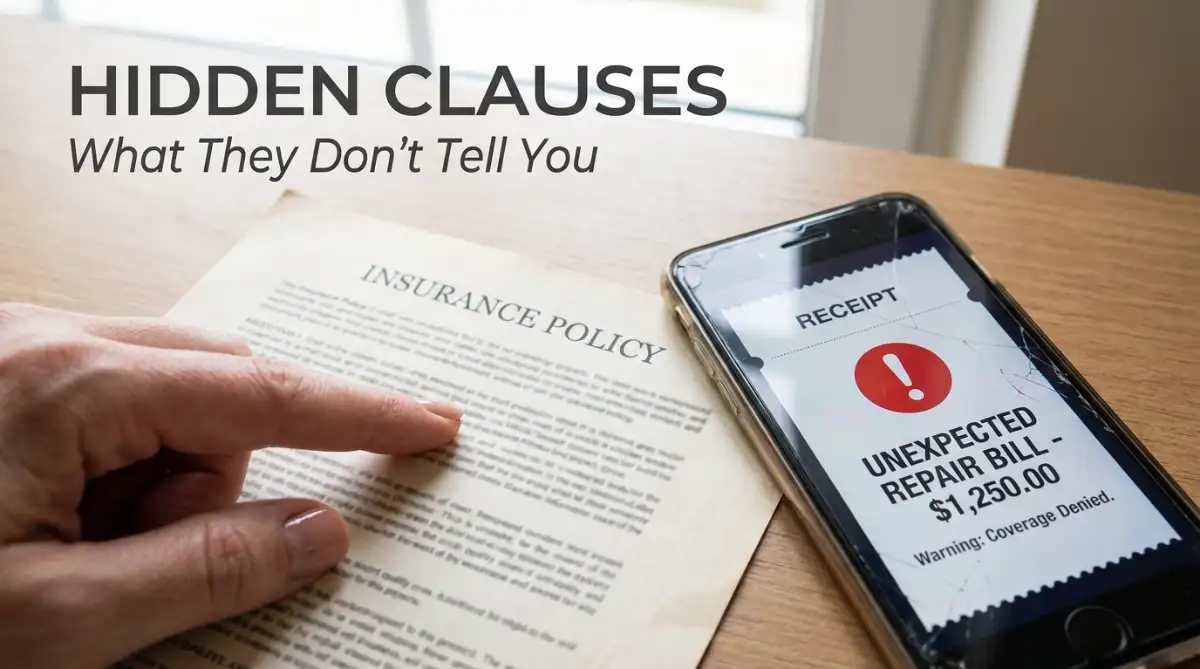
Decoding the Financial Traps in Your Contract
You do not need a law degree to understand your auto policy. You just need to know exactly where the traps are hidden. Insurance providers rely on your confusion to protect their own profit margins.
By taking just a few minutes to learn their specific language, you can save yourself from absolute financial ruin. Let us break down the exact mathematical and logical tricks hiding in your paperwork right now.
The Illusion of the "Full Coverage" Myth
If you ask ten random people on the street what kind of auto insurance they have, nine of them will say they have "full coverage." Here is a shocking piece of industry truth: full coverage does not actually exist as a real legal term. It is a marketing phrase designed to make you feel safe.
When you ask for full coverage, most agents will simply give you a mix of liability, collision, and comprehensive protection. This sounds great until you realize this package has strict dollar limits and dozens of specific exclusions.
Think of it like ordering an "all-inclusive" vacation package. When you arrive at the resort, you suddenly find out that the drinks, the premium food, and the pool towels cost extra. Your auto policy works the exact same way.
Having comprehensive and collision protection does not mean every single bad thing is covered. If you leave your laptop in your front seat and someone steals it, your auto policy will not pay for the computer. That falls under a completely different type of protection, but nobody tells you this until it is too late.
Actual Cash Value vs. Replacement Cost
This is arguably the most expensive mathematical trap hiding in your paperwork. If your car is completely totaled in a terrible accident, how much money will the insurance company actually give you? Most people assume the company will give them enough money to buy a brand new version of their car.
Unless you specifically requested something different, your policy almost certainly uses a formula called "Actual Cash Value" (ACV). This formula is designed to pay you as little money as legally possible.
Actual Cash Value means the company takes the original price of your car and subtracts the cost of depreciation. As you already know, a car loses a massive amount of its value the second you drive it off the dealer's lot.
If you bought a car for thirty thousand dollars three years ago, the insurance adjuster might decide the ACV is only fifteen thousand dollars today. They will hand you a check for fifteen thousand, leaving you completely unable to afford a reliable replacement vehicle.
Here is a visual breakdown of how claims adjusters actually calculate these numbers behind closed doors. Understanding their math will completely change how you negotiate your next policy.
The Sneaky "Aftermarket Parts" Clause
When your vehicle gets damaged, you naturally want it repaired with original parts made by your car's specific manufacturer. These are called Original Equipment Manufacturer (OEM) parts. They fit perfectly, they are highly reliable, and they keep your car running smoothly.
However, if you read the fine print in the repair section of your contract, you will likely find a very sneaky rule. Most standard policies state that the company is only required to pay for the cheapest available replacement parts.
These cheap parts are called aftermarket or salvage parts. They are essentially generic knock-offs made by random third-party factories.
If you take your car to the shop and demand original manufacturer parts, the mechanic will tell you your insurance company refused to pay the higher price. You will then have to pay the massive price difference entirely out of your own pocket.
Here is a Pro Tip straight from my own expensive lesson: A few years ago, a shopping cart smashed into my side door. I told the body shop to use original factory parts, assuming my insurance would cover it easily. When I picked up the car, I was handed a massive bill for the price difference because my policy clearly stated they only fund generic aftermarket parts. I always explicitly ask my agent to add an "OEM Parts Endorsement" to my policy now, and it only costs a few extra dollars a month.
Minimum Liability Limits Will Ruin Your Savings
Every state has a law requiring drivers to carry a minimum amount of liability protection. Liability is the money your insurance pays to other people if you cause an accident and injure them or damage their property.
Many drivers simply ask their agent for the cheapest possible legal policy. The agent will gladly give you the state minimum limits, which might be as low as ten thousand dollars for property damage.
Ten thousand dollars sounds like a lot of money until you actually think about the cars driving on the road today. What happens if you skid on wet pavement and rear-end a brand new electric vehicle or a luxury SUV?
A minor scratch on a luxury car's bumper can easily cost fifteen thousand dollars to fix because of all the built-in sensors and cameras. If your policy only covers ten thousand dollars, the other driver's lawyer will personally sue you for the remaining five thousand dollars.
They can literally come after your personal savings account, your home equity, and even garnish your future paychecks. Buying the minimum legal limit is the absolute fastest way to invite a massive lawsuit into your life. You should always carry significantly more liability protection than the state requires.
The Phantom Rental Car Coverage
Imagine your car is severely damaged and needs to sit in a mechanic's shop for three entire weeks. How are you going to get to work? How are you going to pick up your kids from school?
Most people naturally assume their premium policy will provide a free rental car while their main vehicle is being repaired. This is a very dangerous assumption.
Rental reimbursement, also known as "loss of use" coverage, is almost always an optional add-on. If you did not explicitly ask for it and pay a few extra dollars a month for it, you do not have it.
Even if you do have it, there are strict limits hidden in the text. The policy might only pay thirty dollars a day for a rental car.
Have you tried to rent a car for thirty dollars a day recently? It is virtually impossible. You will end up paying the difference out of pocket every single day your car is in the shop. You must always read the specific daily dollar limit for your rental protection.
The Gap Insurance Nightmare
Let us talk about a specific scenario that ruins the finances of young drivers and new car buyers. When you buy a brand new car, you usually take out a large loan from the bank.
As we discussed earlier, cars depreciate in value incredibly fast. Within six months, the actual cash value of your car might drop to twenty thousand dollars, but you might still owe the bank twenty-five thousand dollars on your loan.
If you total the car in a crash, your auto policy will only pay the actual cash value of twenty thousand dollars. The bank, however, still demands their full twenty-five thousand dollars immediately.
You are now left without a car, and you still owe the bank five thousand dollars for a vehicle that no longer exists. This massive financial hole is a brutal reality for thousands of people every year.
To prevent this, you need a specific clause called Gap Insurance. It literally covers the gap between what the car is worth and what you currently owe the bank.
Myth vs. Reality in the Fine Print
Sometimes, seeing these traps side-by-side is the easiest way to understand the danger. Let us look at a clear comparison of what we think our policy says versus what the lawyers actually wrote.
This simple breakdown shows exactly why making assumptions will drain your bank account. You cannot rely on common sense when dealing with legal contracts. You must rely on the exact words printed on the page.
The Hidden Deductible Multiplier
Everyone knows they have a deductible. This is the amount of money you have to pay out of your own pocket before the insurance company starts paying the rest of the bill.
If you have a five-hundred-dollar deductible, you expect to pay exactly five hundred dollars when you get into an accident. But the fine print often contains a very nasty surprise regarding how deductibles are applied.
Deductibles generally apply per incident, not per year. If you slide into a fence on Tuesday, you pay five hundred dollars. If a tree branch falls on your car on Thursday, you have to pay another five hundred dollars.
Even worse, some policies have split deductibles. They might charge you five hundred dollars for a collision, but they might charge you a thousand dollars for comprehensive claims like theft or hail damage.
You must read the specific numbers attached to each individual type of protection. Do not just look at the big number on the front page of your summary document.
Step Therapy for Auto Repairs
In the medical world, there is a terrible practice called step therapy. Insurance companies force patients to try the absolute cheapest, oldest medication first, and they only pay for the good medication if the cheap one fails.
Auto insurance companies have adopted a very similar strategy for fixing your car. Hidden deeply in your policy is a clause regarding "preferred repair networks."
If you take your car to a mechanic that you trust, the insurance company might refuse to guarantee the work. They will pressure you heavily to use their specific network of approved mechanics.
These approved mechanics often have strict contracts with the insurance company to keep repair costs as low as mathematically possible. They are highly motivated to rush the job and use cheap materials.
While you legally have the right to choose your own mechanic in most states, the insurance company will make the process incredibly difficult. They will delay payments and demand extra inspections if you go outside their preferred network.
By knowing this trick exists, you can stand your ground and demand high-quality repairs from a mechanic who actually cares about your safety.
Advanced Strategies to Outsmart the Insurance Industry
Now that you understand the hidden legal traps, it is time to flip the script and take absolute control of your financial protection. You cannot rely on an agent to voluntarily point out the weak spots in your contract. Their job is to sell you a product, but your job is to fiercely protect your own bank account.
If you want to guarantee long-term safety, you have to start thinking like an insider. Let us look at some highly effective, proactive habits that smart drivers use to force insurance companies to pay out fair claims.
The Power of the "Declarations Page" Audit
Every single time your policy renews, the company will mail you a thick stack of confusing papers. Most people simply toss this envelope into a drawer and forget about it entirely. This is a massive mistake because companies often change tiny details during renewal periods.
Instead of reading all forty pages of legal jargon, you only need to aggressively review the first two pages, known as the Declarations Page. This document is the absolute holy grail of your policy.
It clearly lists exactly what is covered, the exact dollar limits, and your exact deductibles. Sit down with a highlighter and compare this year's Declarations Page to last year's. If you notice any sudden drops in coverage limits or mysterious new fees, you must call your provider immediately for an explanation.
If you ignore these sudden changes, it is exactly like ignoring the silent, hidden damage on your property. The problem will slowly grow out of sight until it eventually costs you a massive amount of money to fix.
Documenting Your Vehicle's Pre-Crash Value
If you ever need to argue with an insurance adjuster about the actual cash value of your destroyed car, you need hard proof. An adjuster will naturally assume your car was in completely average, or even poor, condition before the crash. They do this to justify giving you a much smaller settlement check.
To completely destroy their argument, you must keep a highly organized digital folder containing proof of your car's true value. Take high-quality photos of your car's pristine interior and shiny exterior every six months. Keep every single receipt for new tires, upgraded sound systems, and routine mechanical maintenance.
When the adjuster tries to lowball you, you simply present this mountain of solid evidence. According to consumer protection research published by the Consumer Federation of America, policyholders who provide strong maintenance documentation consistently receive significantly higher settlement payouts. Do not just blindly accept their first offer; treat the negotiation like a formal business transaction.
Requesting the "OEM Endorsement"
As we discussed earlier, most companies will force you to use cheap, generic replacement parts if you get into a crash. This is completely unacceptable if you drive a newer vehicle or a highly specialized car. You want original factory parts to ensure your car remains safe and holds its resale value.
You must specifically call your agent today and ask them to add an "Original Equipment Manufacturer (OEM) Endorsement" to your active policy. This single sentence legally forces the insurance company to pay for brand-name factory parts during any covered repair.
Yes, it will cost you a few extra dollars every month. However, it will save you thousands of dollars in hidden out-of-pocket costs when you actually need a major repair. It is a tiny investment that provides massive, tangible peace of mind.
Escaping the "Preferred Network" Trap
When you report an accident, the claims agent will immediately try to steer you toward their specific list of approved body shops. They will make it sound incredibly convenient, promising faster service and less paperwork. This is a psychological trick designed to save the insurance company money, not to provide you with the best service.
You must remember that you have the absolute legal right to choose your own trusted mechanic. Do not let the claims agent bully you into using a shop that you do not feel comfortable with.
If they threaten that the repair will take longer at your chosen shop, politely stand your ground. Find a highly-rated, independent mechanic who works directly for you, not for the insurance giant. A trusted independent mechanic will aggressively fight the insurance company to ensure your car is repaired safely and correctly.
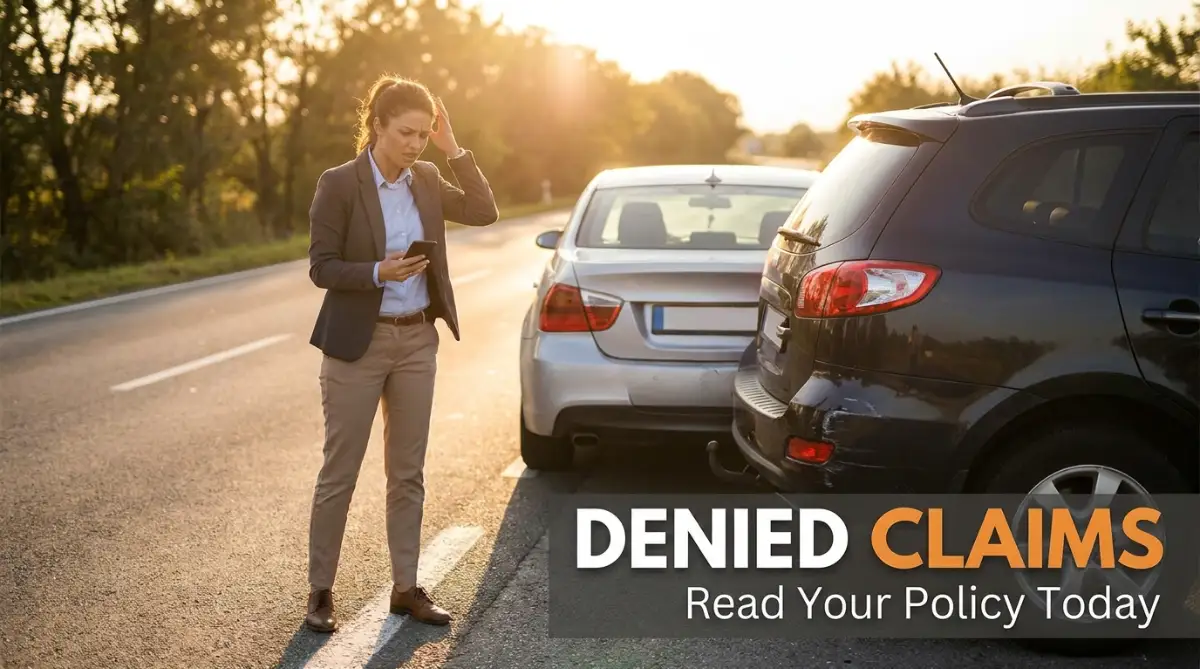
The Pitfalls That Devastate Normal Drivers
Even when armed with good information, many drivers still manage to ruin their own coverage through completely avoidable mistakes. The insurance industry loves these common errors because it gives them a perfectly legal excuse to deny your claim entirely.
Let us look at the specific, emotionally devastating mistakes you must completely eliminate from your life.
Lying About How You Use Your Vehicle
With the rise of the gig economy, thousands of people are using their personal cars to deliver food or drive passengers for extra cash. Because they want to keep their premiums low, they intentionally "forget" to tell their insurance provider about this new side hustle. They assume the company will never actually find out.
This is arguably the most dangerous financial game you can possibly play. Standard personal auto policies strictly exclude any kind of commercial or delivery driving. If you get into a terrible accident while delivering a pizza, the insurance investigator will easily discover the truth.
The moment they find out you were working, they will immediately deny your entire claim and likely cancel your policy for fraud. You will be held personally responsible for all the medical bills and property damage you caused. To avoid this absolute nightmare, you must purchase a specific rideshare or commercial endorsement. It is infinitely cheaper than facing a massive personal lawsuit.
Assuming "Full Coverage" Protects Your Belongings
We touched on this briefly, but it is a mistake that causes massive emotional distress. People routinely leave expensive laptops, expensive tools, and designer bags inside their locked vehicles. When a thief smashes the window and steals everything, the driver confidently calls their auto insurance provider.
The claims agent will politely explain that the auto policy will gladly pay to fix the broken window, but it will pay absolutely nothing for the stolen items. This shocking reality often leaves people in tears, completely unable to replace their stolen work equipment.
If you want your personal property protected, you actually have to file a claim through your homeowners or renters insurance, not your auto policy. This means you will have to pay two completely separate deductibles just to recover from a single break-in.
If you are carrying expensive equipment, never leave it visible in your car. It is just as careless as leaving your digital identity completely exposed to online hackers.
Ignoring the "Permissive Use" Clause
A friend asks to borrow your truck to move some furniture, and you gladly hand over the keys. You assume that because you have great insurance, your friend is fully covered while driving your vehicle. This is a terrifying assumption that can ruin friendships and drain bank accounts.
You must aggressively read the "Permissive Use" section of your specific contract. Some modern policies strictly state that coverage only applies to drivers who are explicitly named on the actual document.
If your policy features this strict exclusion, and your friend causes a massive pileup on the highway, your insurance company will refuse to pay a single dime. You and your friend will be left facing a catastrophic legal battle entirely on your own.
Never hand your keys to anyone outside your immediate household without first confirming exactly how your permissive use clause is written. You would never dream of letting a stranger access your private network, so do not let unverified drivers operate your most dangerous physical asset.
Letting Your Coverage Lapse for Just One Day
Sometimes money gets incredibly tight, and you might consider skipping an insurance payment just to buy some extra time. You figure a few days without coverage will not really matter. This is a massive trap that companies use to drastically increase your future rates.
The second your policy lapses, you become entirely legally and financially vulnerable. If you cause a crash during that specific window, your life is financially ruined.
Furthermore, when you finally try to buy a new policy, the companies will see the lapse on your record. They will instantly categorize you as a "high-risk" driver and easily double or triple your monthly premium.
If you are struggling to make a payment, call the company immediately and ask for a hardship extension. Do not just delay the problem out of fear; attack it head-on before it becomes a permanent stain on your record.
Burning Questions About Auto Policies
What exactly does "comprehensive" coverage actually protect?
Comprehensive coverage protects your vehicle from damage that does not involve crashing into another car. It generally covers unpredictable events like severe hail damage, hitting a deer, a tree falling on your roof, or your car being stolen. It does not cover normal mechanical breakdowns or wear and tear.
Why did my premium suddenly go up if I have not had any accidents?
Insurance rates are often calculated based on regional risk, not just your personal driving history. If your specific city experiences a massive increase in car thefts, severe weather events, or uninsured drivers, the company will raise rates for everyone in that zip code to cover their massive losses.
Do I really need to buy the expensive rental car insurance at the counter?
If you already carry comprehensive and collision coverage on your personal auto policy, that protection usually extends to any standard car you rent for personal use. However, you should always call your agent before you travel to absolutely verify this, as every state and policy has slightly different rules.
Will my insurance pay if a friend crashes my car?
This heavily depends on your specific "permissive use" clause. If your policy allows permissive use, your insurance will usually act as the primary coverage, meaning your rates will go up if your friend is at fault. If your policy strictly excludes unlisted drivers, the claim will be completely denied.
How can I lower my monthly bill without losing important coverage?
The safest way to lower your premium is to voluntarily increase your deductible. If you raise your deductible from five hundred to one thousand dollars, your monthly bill will drop significantly. Just ensure you actually have that thousand dollars sitting safely in an emergency savings account.
Your Personal Action Plan for Protection
Navigating the hidden legal maze of an auto insurance contract is incredibly frustrating, but it is an absolute necessity for protecting your family's financial future. You now understand that "full coverage" is a dangerous illusion, and you know exactly how the actual cash value formula is designed to cheat you. More importantly, you have the exact tools to demand better protection and avoid the devastating mistakes that ruin normal drivers.
The absolute worst thing you can do right now is close this page and simply forget everything you just read. Your safety net is currently full of holes, and you have to take immediate action to fix it.
I strongly encourage you to pull your policy documents out of the drawer tonight and spend just fifteen minutes reading the Declarations Page. Take absolute control of your coverage, ask your agent the tough questions, and never let a massive corporation use fine print to steal your peace of mind.
Disclaimer: The information provided in this blog post is strictly for educational and informational purposes only and does not constitute official legal, financial, or professional insurance advice. Insurance laws and policy terms vary drastically by state and individual provider. You should always thoroughly read your specific contract and consult with a licensed insurance professional before making any changes to your coverage. I am not responsible for any denied claims or financial losses you may incur.
![A Proven Blueprint for Examining Pet Coverage [Protect Your Wallet]](https://pixeljournals.com/storage/uploads/blogs/1787175835_a-proven-blueprint-for-examining-pet-coverage-protect-your-wallet.webp)
![Proven Strategies to Audit Your Property Coverage Today [Without Fear]](https://pixeljournals.com/storage/uploads/blogs/1785360026_proven-strategies-to-audit-your-property-coverage-today-without-fear.webp)