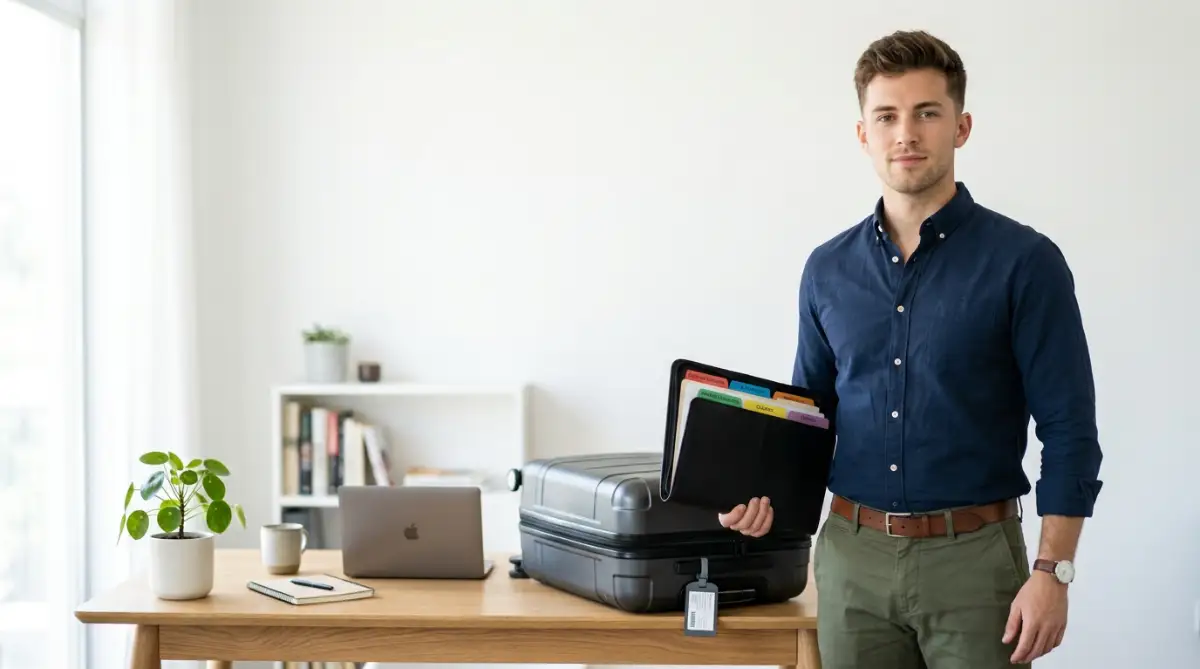
The Day I Was Locked Out of My Own Room
I will never forget the terrible feeling in my stomach on my very first day of college. I had spent three weeks carefully buying bedsheets, mini-fridges, and desk lamps. I was standing in front of my new assigned room, holding two incredibly heavy boxes, sweating completely through my favorite shirt.
The resident advisor sitting at the front desk looked at me with a completely blank face. She told me I could not get my room key because I was missing a single piece of paper. It was my official vaccination record.
Panic completely took over my entire body. My parents had already driven two hours back home, and my digital medical portal was locked out because I forgot my password. I had to sit in the hot hallway for four hours, watching every other student happily unpack their bags and meet their new roommates.
I felt so incredibly foolish. I had spent hundreds of dollars on fancy room decorations but forgot the absolute basic requirements to actually enter the building.
This absolute nightmare happens to thousands of ordinary families every single semester. You spend so much energy worrying about who your roommate will be, that you completely forget the legal side of moving away from home.
Missing a simple document does not just cause a small delay. It destroys your mental peace on a day that is already packed with heavy emotions. You find yourself arguing with tired campus workers, calling your parents in a total panic, and holding up a line of angry people behind you.
When you do not prepare your official papers properly, you instantly feel like a failure before classes even start. You feel like a child who still needs their parents to handle adult responsibilities.
But you do not have to experience this awful situation. You can walk onto that campus feeling completely powerful and prepared. We just need to change how you look at the boring, administrative side of your big moving day.
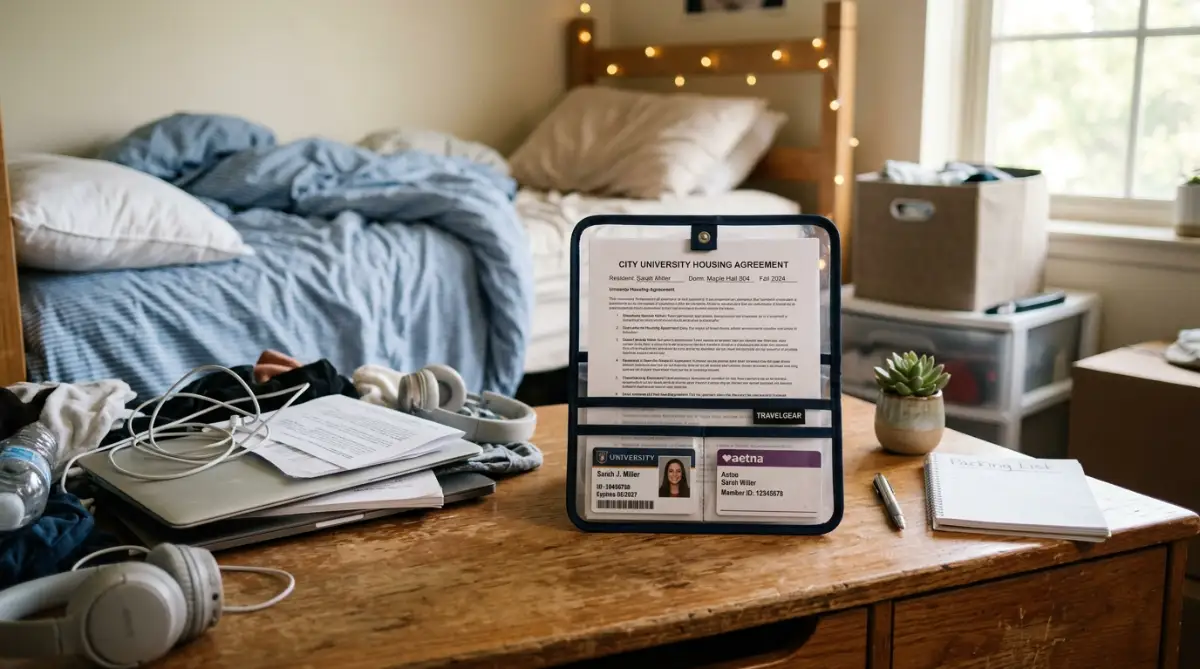
Building Your Bulletproof Campus Paperwork Strategy
Most students treat their important papers like garbage. They throw a folded birth certificate into the bottom of a backpack and hope it survives the car ride. This is a massive mistake.
You need to treat your documents like a physical passport for a brand-new country. Without them, you simply cannot cross the border into your new independent life.
Let us break down exactly what you need to gather, how to protect it, and why each specific paper matters so much.
The Core Identification Stack
Your standard driver's license is simply not enough for a modern university experience. When you move to a new town or a new state, you are basically establishing a new legal footprint.
You might think you only need your ID to buy a movie ticket or show the campus police. But what happens when you want to apply for a highly paid on-campus job at the library?
Federal employment laws require you to prove your exact citizenship and identity. If you only have your driver's license, the campus job office will completely reject your application.
You must bring your original Social Security card or your official physical passport. Without these, you cannot legally be added to any university payroll system.
Here is a quick pro tip from my own painful experience. I made the terrible mistake of bringing my original Social Security card and leaving it loosely in my unlocked desk drawer for months. You should always buy a tiny, heavy fireproof lockbox for your closet to store these highly sensitive papers safely.
Medical Security and Emergency Readiness
Your health is the most unpredictable part of moving away from your family. You will be living in close quarters with hundreds of other students, which means you will eventually get sick.
Many students just take a blurry photo of their parent's insurance card and assume that is enough. It is not enough. When you are standing in a local urgent care clinic at two in the morning with a high fever, the receptionist needs the physical card.
They need to scan the back of the card to find the specific billing addresses and group numbers. If you only have a blurry photo, they might force you to pay the entire medical bill out of your own pocket right then and there.
If you are completely confused about how to properly pack and store these sensitive papers without ruining them, you need to watch this amazing visual guide. It completely changed the way I organize my important life records!
You also need a printed copy of your complete immunization records. Universities are terrified of massive health outbreaks in their buildings.
If there is a sudden measles outbreak on campus, the health center will instantly check your records. If they cannot prove you are vaccinated, they can legally force you to leave the dormitory and stay in a hotel at your own expense.
The Medical Privacy Trap for Young Adults
There is a massive legal shift that happens the moment you turn eighteen years old. Your parents instantly lose all legal rights to view your medical information or make health decisions for you.
This sounds like great freedom, but it is actually highly dangerous in an emergency. Imagine you get into a severe car accident near campus and you are unconscious in the hospital.
When your terrified parents call the hospital, the doctors are legally forbidden from telling them if you are alive or dead. This law is known as HIPAA, and hospitals take it extremely seriously.
To fix this, you and your parents need to sign a legal document called a Medical Power of Attorney or a HIPAA release form before you leave home. Keep a printed copy in your folder and give one to your parents. This simple piece of paper allows doctors to speak to your family if you ever get hurt.
Housing Agreements and Move-In Confirmations
Technology is amazing until the exact moment you actually need it to work. On move-in day, thousands of students and parents arrive on campus at the exact same time.
Because everyone is trying to use their phones to find directions and text friends, the local cell phone towers get completely overwhelmed. The campus Wi-Fi usually crashes due to the massive traffic.
When you walk up to the housing desk, you will not be able to load your email to show your room assignment. The worker will ask for your confirmation number, and you will just stare at a loading screen on your phone.
Always print out your official lease agreement, your room assignment email, and your proof of housing deposit. Having these physical papers in your hand means you can bypass the technology failure and get your room key instantly.
Managing Your Academic Paperwork
You might wonder why you need printed academic papers when everything is on the university web portal. The answer is simple: massive campuses are incredibly confusing to navigate.
During your first week, you will be walking miles across campus trying to find strange building names and room numbers. Your phone battery will drain much faster than normal because you are constantly using GPS maps.
When your phone dies at noon, you still have three classes left to attend. If you have a printed copy of your class schedule in your backpack, you know exactly where to go.
You should also print out the name, office number, and direct email address of your assigned academic advisor. If you realize a class is too hard on the first day, you need to contact them immediately to drop the course before the deadline passes.
Financial Aid and Banking Proof
The financial aid office handles millions of dollars every single week. Because human beings run these offices, they make administrative mistakes very frequently.
You might arrive on campus and find out your meal plan was deactivated because the system says you owe a thousand dollars. You know your scholarship covers this, but the worker at the desk only sees what the computer shows them.
If you have a printed copy of your official Financial Aid Award Letter, you have instant proof. You can physically show the worker the exact amount you were awarded, forcing them to fix the computer error immediately.
You should also bring a few physical paper checks tied to your checking account. Even in our modern digital world, some campus offices or local landlords still refuse to accept credit cards for security deposits.
Securing Your Vehicle on Campus
Bringing a car to a university is a massive responsibility that comes with endless rules. Campus parking enforcement is notoriously strict, and they love writing expensive tickets.
You must bring your physical vehicle registration and your current car insurance card. If you get pulled over by the campus police for speeding, they will demand these documents.
More importantly, print out your approved campus parking pass receipt before you arrive. Sometimes the physical stickers run out, and you need to leave the printed paper on your dashboard so they do not tow your car away on the very first night.
Accommodations and Special Support Letters
If you had special learning accommodations in high school, like extra time on tests or a quiet testing room, that help does not automatically follow you to university.
You have to actively register with the campus disability support office. They will not just take your word for it; they require highly detailed, official paperwork from your doctors or your previous high school counselors.
Bring the original copies of your medical diagnoses or your Individualized Education Program (IEP) reports. Handing these directly to the support office ensures your professors are legally required to give you the help you deserve from day one.
The Strategy of Digital Redundancy
While having physical papers is the ultimate protection against technology failure, physical papers can also be lost, stolen, or destroyed by a spilled cup of coffee.
You must create a system of digital redundancy. This means having a secure backup of everything you just packed.
Spend one hour at home using your smartphone camera to scan every single document we just discussed. Save these scans as clear PDF files, not just blurry photo album pictures.
Upload these PDFs to a highly secure cloud storage account that requires two-factor authentication. Never store these images locally on your phone without a password lock.
If your backpack gets stolen on a city bus, your physical papers are gone. But because you have a secure digital backup, you can simply walk into the campus library, log into your cloud account, and print out fresh copies of your entire life.
By taking this highly logical, layered approach to your personal documents, you completely eliminate the hidden anxiety of moving away from home. You are no longer relying on luck; you are relying on a bulletproof system that protects your health, your money, and your academic future.
Master-Level Document Security for Long-Term College Life
Getting through your first move-in day successfully is a huge accomplishment. But simply surviving the first week does not mean your paperwork journey is over. You will need these exact same records constantly throughout your entire academic career.
Many freshmen make the mistake of hiding their important folders under their beds and totally forgetting about them. When sophomore year starts, they realize their medical cards have expired and their housing contracts are completely lost.
If you want to maintain a stress-free university life, you must build a long-term security habit. Let us look at some expert-level strategies to keep your identity and your records completely safe while living in a shared space.
Upgrading to Bank-Level Digital Protection
We previously talked about scanning your physical papers into a cloud storage system. However, simply dropping photos into a basic Google Drive folder is not enough protection for your Social Security number.
College campuses are massive targets for digital hackers. When you connect your laptop to the library network, you are sharing a connection with thousands of strangers. This is exactly why you must understand the hidden dangers of using free airport wi-fi on vacation, because a public university network carries the exact same risks.
You need to use a dedicated, encrypted password manager to store your digital PDF scans. These programs lock your files behind heavy military-grade encryption. Even if someone steals your laptop while you are getting coffee, they cannot access your medical history.
Always check the security of the websites you use when submitting these files to your professors or campus administration. Just like knowing what happens when your e-commerce SSL expires helps you avoid bad shopping websites, checking for secure web connections protects your academic identity from being stolen online.
Handling Address Changes Like a True Professional
Moving into a dormitory means you suddenly have a new legal mailing address. Most students completely ignore this fact and let their important mail go to their parents' house.
This creates a massive delay when your bank tries to send you a replacement debit card. It also causes heavy confusion when the federal government tries to send your financial aid refund checks.
You must officially update your mailing address with your bank, your employer, and the United States Postal Service the exact week you move in.
Do not put this off until next month. If you struggle with putting off boring administrative tasks, you need to learn how to stop delaying tasks and beat chronic procrastination forever. Handling your address change immediately will save you from missing highly sensitive letters.
Navigating the FERPA Privacy Wall
Once you become a university student, your academic records become strictly confidential under federal law. This law is called the Family Educational Rights and Privacy Act, or FERPA.
According to the official U.S. Department of Education guidelines, your professors and advisors cannot legally discuss your grades, your attendance, or your tuition bills with your parents.
This sounds like a great boundary, but it can actually cause huge problems if your parents are the ones paying your tuition. When they call the billing office to ask why a fee was charged, the office will simply hang up on them.
To solve this, you need to sign a specific FERPA waiver form at the campus registrar's office. You can choose exactly which information your parents are allowed to see. Keep a printed copy of this signed waiver in your physical folder so you can prove you authorized them to help you with the bills.
Protecting Your Identity from Dorm Scams
When you move into a huge building filled with new people, you will encounter many strange offers. People will knock on your door asking you to sign petitions, join clubs, or apply for credit cards.
College freshmen are the number one target for identity theft because they have clean credit histories. You must guard your physical documents fiercely.
Never write your Social Security number on a club signup sheet. Be extremely careful when applying for local part-time jobs around the campus area.
Scammers often post fake job flyers on dorm bulletin boards just to collect student data. You must educate yourself on how to spot fake remote jobs and protect your identity before you ever hand your ID cards to a stranger.
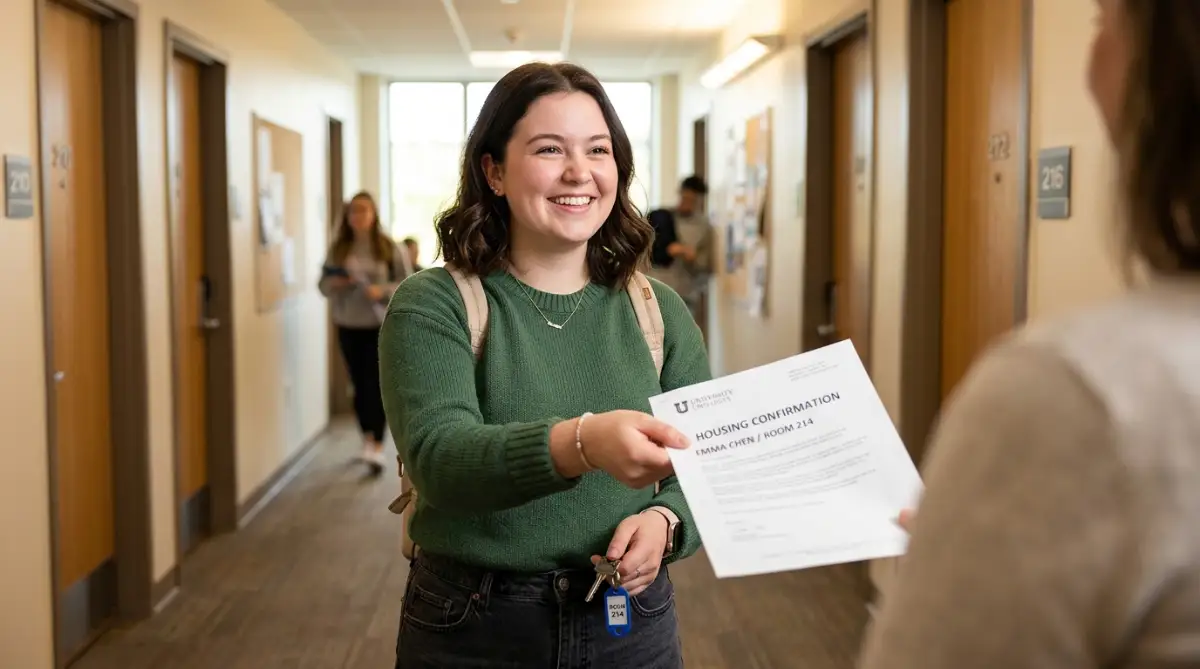
The Dangerous Traps of Moving Day Paperwork
Even highly prepared students can fall into hidden traps on the actual day they move in. The sheer excitement and chaos of carrying heavy boxes can make you forget all your logical planning.
When you make a mistake with your official paperwork, the consequences are incredibly heavy. Let us look closely at the most common disasters students face and exactly how you can avoid them.
Trap 1: Packing Your Folder in the Wrong Place
Imagine standing in a massive parking lot in the hot sun. Your car is completely packed with boxes, bags, and loose pillows.
You walk up to the housing tent to get your keys, and the worker asks for your physical ID and your printed housing agreement. Suddenly, your heart drops.
You realize you packed your document folder at the very bottom of the heaviest box, which is currently sitting in the deepest part of your car trunk. You now have to unpack your entire car in the middle of a busy parking lot just to find one single piece of paper.
The Real-Life Solution: Never put your document folder inside a moving box. Treat it exactly like an airplane boarding pass. You must carry it in your personal backpack or a small shoulder bag that stays firmly attached to your body the entire day.
Trap 2: Trusting the "Friendly" Roommate Too Soon
You might meet your new roommate on the first day and instantly become best friends. You decide to leave your important folders lying openly on your shared desk because you trust them completely.
This is a terrible security risk. Even if your roommate is a wonderful person, they will inevitably invite their own friends over. They will host study groups, and people will be walking in and out of your room constantly.
Your dorm room is basically a public train station during the first few weeks of school. Leaving your physical birth certificate or medical cards in the open is an open invitation for disaster.
Just like you would understand why you should never leave your smart speaker microphone turned on to protect your verbal privacy, you must lock away your visual privacy. Always store your documents inside a locked drawer or a personal fireproof safe that only you can open.
Trap 3: Ignoring Local Campus Policies
Many students think they know the rules because they read one email from the university three months ago. But large universities update their health and housing policies constantly.
For example, the Centers for Disease Control and Prevention (CDC) often changes the recommended guidelines for living in crowded spaces. Your university might suddenly require a brand-new meningitis vaccine form just days before you arrive.
If you ignore the final reminder emails, you will show up with outdated papers. The housing office will absolutely deny your entry until you go to a local pharmacy and get the required shot.
Always check your official student email portal every single morning during the two weeks before your move-in date. Print out any new policy updates and add them straight into your physical folder.
Trap 4: Bringing the Wrong Type of Financial Documents
When students open their first local bank account near campus, they often bring the wrong proof of residency. You cannot just tell the bank teller you live in a specific dorm room.
They need highly official proof before they will open an account or issue a credit card. Many students try to use personal letters from their parents as proof, which the bank instantly rejects.
Do's and Don'ts for Banking Proof:
- Do bring your official printed housing contract signed by the university.
- Do bring a recent utility bill if you are renting an off-campus apartment.
- Do Not bring a piece of junk mail or a magazine subscription as proof of address.
- Do Not rely on a digital screenshot; banks heavily prefer printed, official letters.
Trap 5: The "My Parents Have It" Mindset
This is the biggest psychological trap for new college students. Because your parents have managed your doctor appointments and school registrations for eighteen years, you naturally expect them to handle this too.
You might assume your mother packed your medical cards in her purse. But when she drives away and you suddenly need to visit the campus clinic, you have absolutely nothing.
Moving into a dorm is the official start of your adult independence. You have to take full physical ownership of your own identity.
Force yourself to sit down with your parents a week before you leave. Go through every single document together, and physically take the papers out of their hands and put them into your own secure folder.
Your Action Plan for a Flawless Move-In Experience
Moving away to university is one of the most exciting, scary, and beautiful transitions you will ever make in your life. You are stepping into a world where you get to make your own choices and build your own future.
Handling this mountain of paperwork might seem incredibly boring, but it is actually your first real test of adulthood. When you organize these records perfectly, you prove to yourself that you are fully ready for this massive responsibility.
You completely remove the fear of getting rejected at the housing desk. Instead of stressing about lost files, you get to spend your first day making friends, decorating your room, and exploring your beautiful new campus.
Take a deep breath, buy a good quality organizer, and start gathering these papers today. If you want to keep improving your life skills and protecting your personal data, you should frequently browse the latest helpful guides available on our main page. Staying informed is the best way to protect your peace of mind.
My final thought for you: I remember the heavy embarrassment I felt sitting in that dorm hallway, waiting for my parents to rescue me from my own mistake. But I also remember the incredible confidence I felt the following year when I walked up to the desk, handed them my perfectly organized folder, and got my keys in exactly two minutes. I know this process feels overwhelming right now, but I promise you have the focus and maturity to handle this perfectly.
Common Questions About College Move-In Paperwork
Do I really need to bring my original physical birth certificate?
It is highly recommended to leave your original birth certificate at home in a safe and bring a certified copy instead. You will only need this document if you plan to get a new passport or apply for specific federal jobs on campus.
What is the safest way to store my passport in a shared dorm room?
The absolute best method is purchasing a small, heavy fireproof lockbox that comes with a combination lock. Place this box inside your closet or under your bed, and never share the combination with your roommates or friends.
Does the university health center need my physical insurance card?
Yes, most campus clinics require you to present your physical medical insurance card during your very first visit. They need to verify the group numbers and copy the back of the card to process your billing correctly.
How do I protect my personal documents from my new roommates?
Establish clear boundaries on day one and never leave your important folders sitting openly on your desk or bed. Always store sensitive mail, banking statements, and ID cards in a locked drawer immediately after you use them.
Can I just show my housing contract on my smartphone?
You should never rely entirely on your phone for move-in day. Campus internet networks frequently crash due to heavy traffic on the first day, so having a printed physical copy guarantees you will get your room keys without any delays.
Disclaimer: This blog post is for educational and informational purposes only. The strategies discussed are based on general university policies and personal experiences. Campus rules vary heavily by state and institution. Please consult your specific university's housing and health departments for their official, up-to-date document requirements.