
The Hidden Cost of "I Will Just Do It Tomorrow"
I clearly remember sitting in my dorm room staring at a blank laptop screen at 3 AM. My eyes were burning, my hands were shaking slightly, and a massive essay document stared back at me. I had exactly five hours before my final paper was due to my professor. Panic completely took over my body as I realized I had wasted an entire week doing absolutely nothing productive.
I promised myself I would never let this happen again. But to my absolute horror, just two weeks later, I found myself in the exact same stressful spot. My mental peace was completely gone, and I felt like a massive failure.
This is the harsh reality for almost every single university student today. You start the semester with fresh notebooks and big goals, promising to stay on top of your reading list. But within a few weeks, the endless pile of assignments, part-time jobs, and social expectations crash down on you like a heavy wave.
Ordinary students are constantly fighting a losing battle against the clock. When you fail to manage your daily hours, you do not just lose time; you lose your mental health. The constant anxiety of missed deadlines follows you to bed, ruining your sleep and making you wake up exhausted.
You start skipping meals, ignoring your friends, and feeling guilty whenever you try to relax or watch a movie. The worst part is the heavy guilt that sits in your chest. You know exactly what you need to do, but you just cannot seem to force yourself to start doing it.
This endless cycle of delaying tasks and feeling terrible about it drains your confidence completely. It makes you feel like you are not smart enough for higher education, even though the real problem is just a broken daily system.
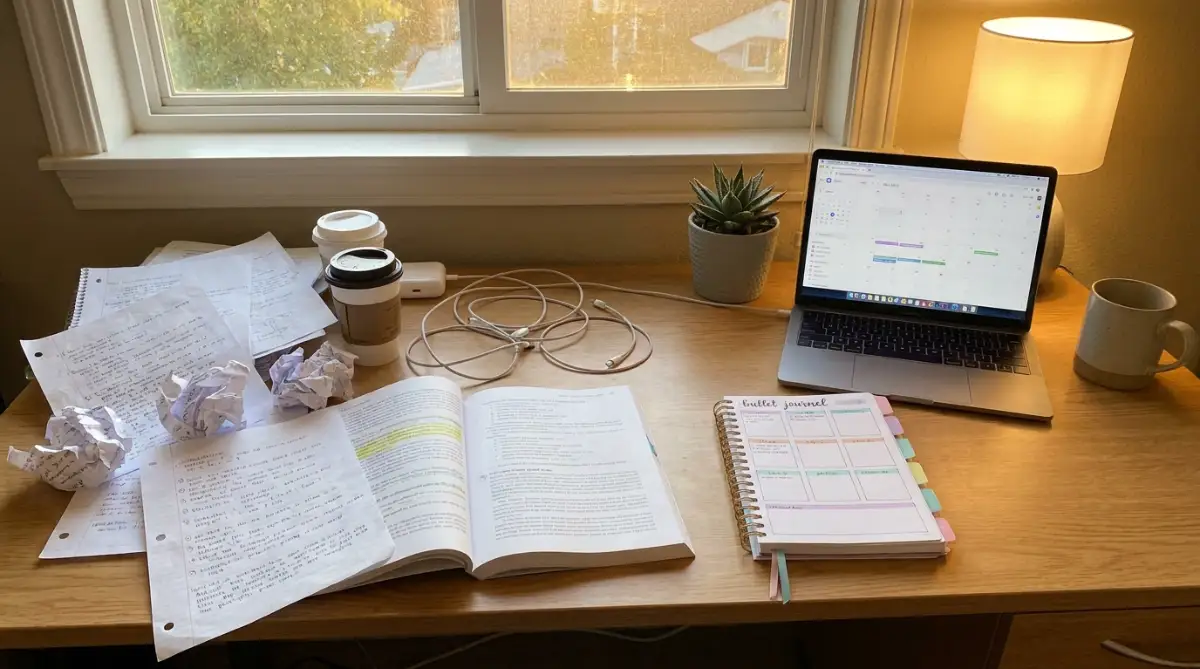
The Science of Taking Back Control of Your Day
Many students think they need to work harder or sleep less to get good grades. This is completely false. The secret to academic success is not about pushing yourself to exhaustion.
It is about building smart, reliable systems that do the heavy lifting for you. We need to look at logical, science-backed ways to fix this broken routine so you can finally breathe again.
Let us break down exactly how you can turn your chaotic university life into a smooth, highly productive journey starting today.
Align Your Tasks with Your Daily Energy Levels
Most guides tell you to manage the hours on your clock. But science tells a completely different story about human focus. You actually need to manage your personal energy, not just your available minutes.
Think about how you feel at 8 AM versus how you feel at 3 PM after a heavy lunch. Your brain does not work at the same speed all day long. Cognitive science shows that humans have natural peaks and drops in their mental sharpness.
If you try to write a complex research paper when your energy is at its lowest, a one-hour task will easily take you three hours. You will get frustrated and end up browsing social media instead.
Identify your peak focus windows. Are you a morning person who thinks clearly before the sun comes up? Or does your brain suddenly wake up at 9 PM when the campus gets quiet?
Once you find your best two hours, protect them fiercely. Never use this high-energy time to reply to basic emails or clean your room. Save those easy chores for when you are tired and feeling lazy.
The Realistic Approach to Time Blocking
You have probably heard of keeping a schedule, but simple to-do lists actually set you up for failure. A list tells you what to do, but it never tells you when to do it. This is why you stare at a list of ten things and feel instantly paralyzed by fear.
Instead of writing a list, you need to block out specific chunks of time on your calendar. Treat your study sessions exactly like an important doctor appointment. You would never just skip a doctor appointment because you "did not feel like going."
Create a visual map of your week using a free digital calendar. First, put in your fixed commitments like classes, your part-time shift, and sleep. The empty spaces left behind are your actual available working hours.
If you are struggling to understand how to block your week properly, you need to watch this amazing visual breakdown. It completely changed the way I look at my empty calendar slots!
When you block your time, be highly realistic. Do not schedule four hours of straight reading without any breaks. Your brain will simply refuse to cooperate, and you will end up hating the process.
Here is a quick pro tip from my own experience. My biggest mistake was trying to schedule every single minute of my day without leaving any room for walking between classes or grabbing a snack. Once I started adding a 15-minute empty buffer between my daily tasks, my stress levels dropped instantly.
Mastering the Art of "Dead Time"
University life is full of strange gaps in your day. You might have 45 minutes between a biology lecture and a math seminar. Most students spend this time sitting on a bench and scrolling through funny videos on their phones.
We call these small gaps "Dead Time." If you add up all these tiny gaps, they easily equal two or three hours of lost time every single day.
You can completely change your academic performance by using these small pockets of time wisely. You do not need to start a massive essay during a 20-minute bus ride.
Instead, use that bus ride to read a single chapter summary. Use the 15 minutes before class starts to review the notes from last week. If you knock out these tiny tasks during the day, your evenings become completely free for true relaxation.
Destroying the Perfectionism Trap
One of the biggest reasons students delay their work is a hidden fear of not being perfect. You might tell yourself that you need four completely free hours, a clean desk, and the perfect cup of coffee before you can start writing.
This is a dangerous lie your brain tells you to avoid doing hard work. The truth is, conditions will almost never be perfect in a busy student environment.
You need to embrace the concept of the "ugly first draft." Give yourself full permission to write a terrible, messy, and totally wrong first version of your assignment.
Once there are words on the paper, the fear goes away. It is always much easier to fix bad writing than it is to stare at a completely blank page.
Myth vs Reality in Student Productivity
It is very easy to get confused by all the advice you hear around campus. Let us clear up some common misunderstandings right now.
The Myth: You need to study for six hours straight to remember the material.
The Reality: The human brain starts losing focus after about 45 to 90 minutes. Taking small, intentional breaks actually helps your brain store information better.
The Myth: Multitasking makes you get things done faster.
The Reality: Switching between watching a show, texting friends, and reading a textbook lowers your IQ temporarily. You end up doing all three things very poorly.
The Two-Minute Rule for Campus Chaos
As a student, you are constantly bombarded with tiny requests. You get a notification to pay a small library fine, an email to confirm a meeting, or a reminder to print a single sheet of paper.
These tiny tasks pile up in the back of your mind. They create a heavy mental weight that distracts you from your main studies.
This is where you apply the brilliant Two-Minute Rule. If a new task pops up and it takes less than two minutes to finish, do it right that exact second.
Do not write it down on a list. Do not tell yourself you will do it tonight. Just pay the fine, send the quick reply, or print the paper instantly. This keeps your brain clean and focused on bigger, heavier academic challenges.
Setting Up a Digital Fortress
Your smartphone is the single greatest threat to your academic success. Technology companies spend billions of dollars engineering apps to steal your attention.
When you sit down to study, putting your phone face down on the desk is not enough. Just knowing the phone is there drains your mental energy because a part of your brain is waiting for it to buzz.
You must build a digital fortress around your study time. Put your phone in a completely different room, or inside a bag that is zipped shut and placed out of reach.
Use website blockers on your laptop to temporarily lock yourself out of social media sites while you work. When you remove the option to be distracted, doing the actual study work becomes your only available choice.
The "Buffer Zone" Strategy for Group Projects
Nothing ruins a good schedule faster than a group project. You can plan your own time perfectly, but you cannot control when your classmates will finish their parts.
Waiting until the last minute because someone else is being lazy is a massive source of student anxiety. You need to protect yourself by creating artificial deadlines.
If the professor wants the project on Friday, tell your group the final review is happening on Wednesday. This creates a two-day "Buffer Zone."
If things go wrong, or someone gets sick, you still have 48 hours to fix the disaster without staying awake all night. Taking early control of group deadlines makes you a natural leader and protects your own grades.
Tracking Your Inputs vs Outputs
There is a huge difference between being busy and being productive. Many students sit in the library for eight hours and feel very proud of themselves.
But if you ask them what they actually finished, they have nothing to show for it. They spent eight hours highlighting a book, picking matching pens, and chatting with friends.
Here is a simple breakdown of how you should view your daily efforts:
Always measure your success by what you actually produced, not by how many hours you sat in a chair. A focused student can finish in two hours what a distracted student takes six hours to do.
The Sunday Reset Routine
The most successful students do not wake up on Monday morning wondering what they need to do. They start their week on Sunday afternoon.
Take exactly thirty minutes every Sunday to look at the upcoming week. Check your class syllabus, review your work shifts, and look at your personal appointments.
Write down the top three most important goals for the week. Knowing exactly what is coming gives you a sense of calm and power. It completely removes the Sunday night anxiety that so many students face.
When Monday morning arrives, you do not have to think or stress. You just wake up, look at your pre-made plan, and start moving forward.
Why Sleep is Your Ultimate Productivity Tool
There is a very toxic culture in universities that glorifies sleep deprivation. Students brag about staying awake for 48 hours on pure caffeine to finish a project.
Science completely rejects this behavior. When you sleep, your brain is not just turning off. It is actively working to organize and store everything you learned that day.
If you study complex biology for four hours and then only sleep for three hours, your brain throws away most of the information. You literally waste your own studying time by not sleeping.
Make sleep a non-negotiable part of your time management system. A well-rested brain works twice as fast as a tired brain. By prioritizing your rest, you will actually need less time to study the next day because your memory will be incredibly sharp.
Through these scientific and logical changes, you can slowly rebuild your daily habits. It is not about becoming a robot who works 24/7. It is about working so smartly that you actually have more free time to enjoy the beautiful moments of your university experience.
Next-Level Strategies for Long-Term Academic Success
Getting your daily schedule under control is only the first part of the battle. If you want to keep your stress levels low for the entire semester, you need a long-term plan.
Many students start the month with amazing energy but completely burn out before mid-term exams. You have to build systems that protect your mental energy when things get heavy.
Let us look at some highly effective, expert-level habits that will keep you on track without destroying your peace of mind.
The Power of Habit Stacking
Motivation is a terrible tool because it completely disappears when you are tired. If you rely on motivation to start reading your textbooks, you will fail constantly.
Instead, you need to use a psychological trick called habit stacking. You already have strong daily routines, like drinking morning coffee or brushing your teeth.
You can easily attach a brand-new study habit directly to an old, automatic habit. For example, tell yourself that the moment you pour your morning coffee, you will open your laptop and read one single page of notes.
Because the coffee habit is already automatic, your brain does not resist the new study habit. If you want to dive deeper into building these automatic routines, I highly recommend learning how to stop delaying tasks and beat chronic procrastination forever.
It is the easiest way to trick your brain into doing hard work without feeling the usual resistance.
Protecting Your Morning Mental Space
How you spend the first hour of your day completely decides how the rest of your day will go. Most students wake up and instantly grab their smartphones to check messages.
This is a massive mistake that floods your brain with cheap dopamine and instant stress. When you read stressful news or see an angry email from a professor, your focus is instantly ruined.
You need to actively protect your morning mental space. Wake up, drink a glass of water, and spend at least 30 minutes offline before looking at any digital screen.
This simple offline morning routine keeps your mind calm and prepares you for deep, focused studying later in the day.
Managing Digital Distractions Like a Pro
We carry small supercomputers in our pockets that are designed to steal our attention. You cannot trust your own willpower when your phone is constantly buzzing with social media alerts.
You have to take extreme measures to protect your focus during study sessions. Use aggressive website blockers on your laptop and put your phone in another room entirely.
Privacy and digital hygiene go hand-in-hand with good study habits. Just like learning why you should never leave your smart speaker microphone turned on to protect your home privacy, you must shut down digital noise to protect your brain.
When you study in public places, be careful about your digital security. Connecting to public networks at campus cafes can be risky. You must protect your academic files from hackers, similar to understanding the hidden dangers of using free airport wi-fi on vacation.
Always use safe networks so a computer virus does not delete your final research paper.
The Weekly "Brain Dump" Protocol
Your brain is meant to generate brilliant ideas, not to act as a messy storage cabinet. When you try to remember every single deadline, your anxiety goes through the roof.
To clear this mental fog, you need to perform a complete "Brain Dump" every single Friday evening. Take a blank sheet of paper and write down literally everything that is bouncing around in your head.
Write down the essays due next month, the emails you forgot to send, and even the groceries you need to buy. Getting these thoughts out of your head and onto a physical paper brings instant relief.
According to cognitive research from Harvard University's Academic Resource Center, writing tasks down actively reduces working memory load. This simple practice helps you sleep much better on the weekends.
Treating Your Studies Like a Corporate Job
One of the best mindset shifts you can make is treating your university degree like a strict 9-to-5 job. When you work at a real job, you do not randomly decide to watch movies under your desk.
You show up, you do the heavy work, and then you clock out and go home. You need to apply this exact same discipline to your academic schedule.
Set clear working hours for yourself, such as 9 AM to 5 PM. During these hours, you are either in class, reading in the library, or completing assignments.
When 5 PM hits, you close your books and completely step away from your student identity. This creates a hard boundary between your work life and your personal relaxation time.
Smart Part-Time Work Management
Many university students have to balance a part-time job alongside their heavy course load. This makes managing your daily hours extremely complicated and stressful.
If you are looking for ways to make money online to save travel time, you must be incredibly careful. Scammers love targeting busy students with fake job offers.
Always value your precious time and learn how to spot fake remote jobs so you do not lose your savings. Find work that offers flexible hours and respects your academic deadlines.
Never let a minimum-wage campus job destroy your grades or steal your required sleeping hours.

The Dangerous Traps That Destroy Student Productivity
Even the smartest students fall into hidden traps that completely ruin their daily routines. Recognizing these mistakes early is the only way to avoid academic disaster.
Let us look closely at the most common blunders that quietly destroy your mental peace and lower your grades.
The Illusion of "Productive Procrastination"
This is perhaps the most dangerous trap because it actually feels like you are doing great work. Productive procrastination happens when you do easy, unimportant tasks to avoid doing the hard, scary tasks.
You might spend three hours perfectly color-coding your study planner or organizing your computer desktop folders. You feel incredibly busy, but you have made zero progress on the ten-page essay due tomorrow morning.
You are just lying to yourself to avoid the discomfort of real studying. You must catch yourself when you start doing fake work and immediately pivot back to the ugly, difficult assignments.
Ignoring Small Knowledge Gaps
When you sit in a lecture and do not understand a specific concept, it is easy to just ignore it. You tell yourself you will figure it out later, but you never actually do.
This is a massive mistake that compounds over time. Just like the hidden cost of bad solar mounting causes invisible structural damage to a house, ignoring small academic gaps causes a complete mental collapse during finals week.
When you miss a small foundation in week one, the advanced concepts in week five will seem impossible to learn. You must ask questions and fix your confusion the exact same day it happens.
Visit your professor during office hours or ask a smart classmate to explain it over coffee. Do not let tiny misunderstandings grow into massive academic failures.
The Toxic "All-Nighter" Culture
There is a strange, toxic culture on university campuses where students actually brag about not sleeping. They wear their extreme exhaustion like a badge of honor.
Staying awake for 36 hours straight fueled entirely by energy drinks is a terrible way to learn. According to medical data from the Sleep Foundation on Memory Consolidation, lack of sleep literally stops your brain from forming new memories.
When you pull an all-nighter, your brain cannot store the information you just read. You walk into the exam hall completely confused, unable to recall basic facts.
Protect your sleep like it is the most valuable study tool you own, because it absolutely is.
Saying "Yes" to Every Campus Event
University life is full of amazing social opportunities, clubs, and parties. The fear of missing out drives many students to attend every single event they are invited to.
If you say yes to every party and club meeting, you are actively saying no to your study time and your mental rest. You end up stretching yourself so thin that you perform terribly in every area of your life.
You have to learn the powerful art of saying no without feeling guilty. Your true friends will completely understand when you need to stay in your room to finish a major project.
Refusing to Ask for Professional Help
Mental health struggles are incredibly common in higher education. The pressure to succeed can easily trigger severe anxiety and deep depression.
Many students try to hide their struggles, thinking they just need to work harder. They suffer in total silence while their grades slowly crash.
The American Psychological Association strongly recommends seeking campus counseling the moment you feel overwhelmed by academic stress. Do not wait until you have a complete breakdown to ask for support.
Your university has paid counselors and academic advisors whose only job is to help you survive this journey. Using these free resources is a sign of immense strength, not weakness.
Your Roadmap to a Stress-Free University Life
Managing your daily schedule is not about becoming a heartless machine that only reads books. It is entirely about creating enough space in your life to actually enjoy your university years.
When you build strong routines, you take the heavy pressure off your shoulders. You stop guessing what you should be doing and start following a clear, reliable path.
Remember that changing your daily habits takes real time and patience. You will have messy days where you fail to follow your plan, and that is completely normal.
The secret is to never quit after a bad day. Just wake up the next morning, forgive yourself, and start fresh with your organized calendar.
If you want to keep improving your daily systems, I suggest you frequently check out the latest insightful resources available on our homepage. Building a productive life is a lifelong journey of learning and adjusting.
My final thought for you: I spent my first two years of university completely stressed out, crying over missed deadlines and feeling like a total failure. But the day I finally started planning my hours and respecting my sleep, my entire life changed for the better. I know exactly how hard this journey is, but I also know you have the power to take complete control of your time starting this very minute.
Frequently Asked Questions About Student Productivity
How many hours a day should a university student actually study?
You should aim for about two to three hours of highly focused, deep studying outside of your regular classes. It is much better to do two hours of intense reading than five hours of distracted, lazy studying. Quality and focus always beat total time spent in a chair.
What is the best way to stop looking at my phone while studying?
The most effective method is physical distance. Put your phone in a zipped backpack in a completely different room so you cannot see or reach it easily. If you must keep it nearby, use aggressive app-blocking software that locks you out of social media for two straight hours.
How do I catch up if I have fallen weeks behind in my classes?
Do not try to read everything you missed in one single weekend because you will just panic. Talk to your professors honestly, identify the most important upcoming assignments, and focus entirely on those first. You have to secure your future grades before you worry about past readings.
Is it better to study early in the morning or late at night?
This depends entirely on your personal biology and natural energy levels. Pay close attention to when your brain feels the sharpest and most alert. Schedule your hardest, most complicated assignments during that specific time window, whether it is 6 AM or 10 PM.
How can I stop feeling so guilty when I take breaks to relax?
You must start viewing rest as an active requirement for good grades, not as a lazy reward. Your brain physically needs downtime to process complex information and prevent burnout. Schedule your relaxation time on your calendar just like a class, so you know it is fully approved and planned.
Disclaimer: This blog post is for educational and informational purposes only. The strategies discussed are based on general productivity principles and personal experiences. If you are experiencing severe academic anxiety or mental health issues, please consult with a licensed professional counselor or your university's health services department.