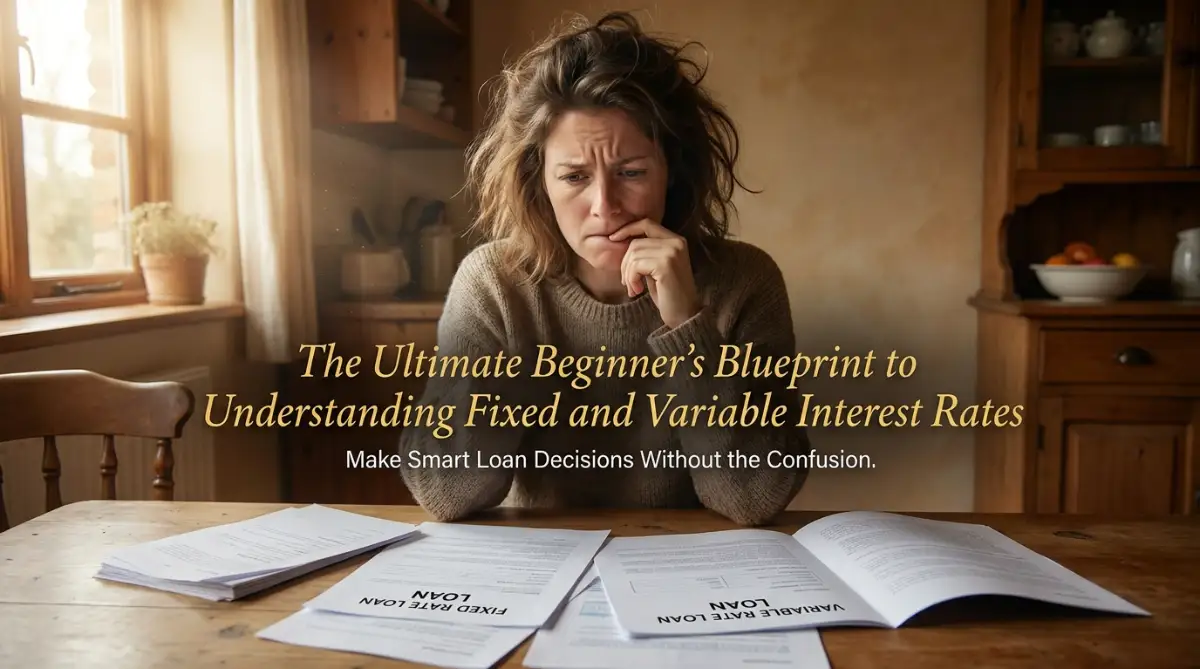
The Day I Almost Drowned in Loan Jargon
I remember sitting at my kitchen table, staring blankly at a massive stack of loan documents in front of me. My palms were sweating, and my heart was beating surprisingly fast for someone just trying to sign a piece of paper. The bank representative had just spent thirty minutes talking at me, throwing around words like "index fluctuations," "amortization," and "rate caps." I nodded along, pretending I understood everything perfectly. But deep down, I felt entirely lost, terrified that checking the wrong box would financially ruin me for the next thirty years.
This is the same quiet panic millions of normal people feel every single day when applying for a mortgage, a student loan, or a personal line of credit. You work incredibly hard for your money, and you just want to make a safe, smart choice for your family's future. Yet, the banking industry makes the simple act of borrowing money feel like you are trying to read a foreign language backward.
When you don't understand the real-world differences between your loan options, the mental toll is heavy. You lose sleep wondering if your monthly payment is suddenly going to skyrocket out of nowhere. You feel a constant, nagging anxiety every time the news mentions the economy or inflation. Financial peace of mind vanishes when you feel like you are not in control of your own debt.
It is incredibly frustrating to feel like the banking system is designed to keep you confused. Everyday families end up delaying buying a home or starting a business simply because the fear of making a massive money mistake paralyzes them. You start questioning your own intelligence just because you do not know how "the prime rate" works.
But I want you to take a deep breath right now. You do not need a degree in finance to master this topic and take control of your financial destiny.
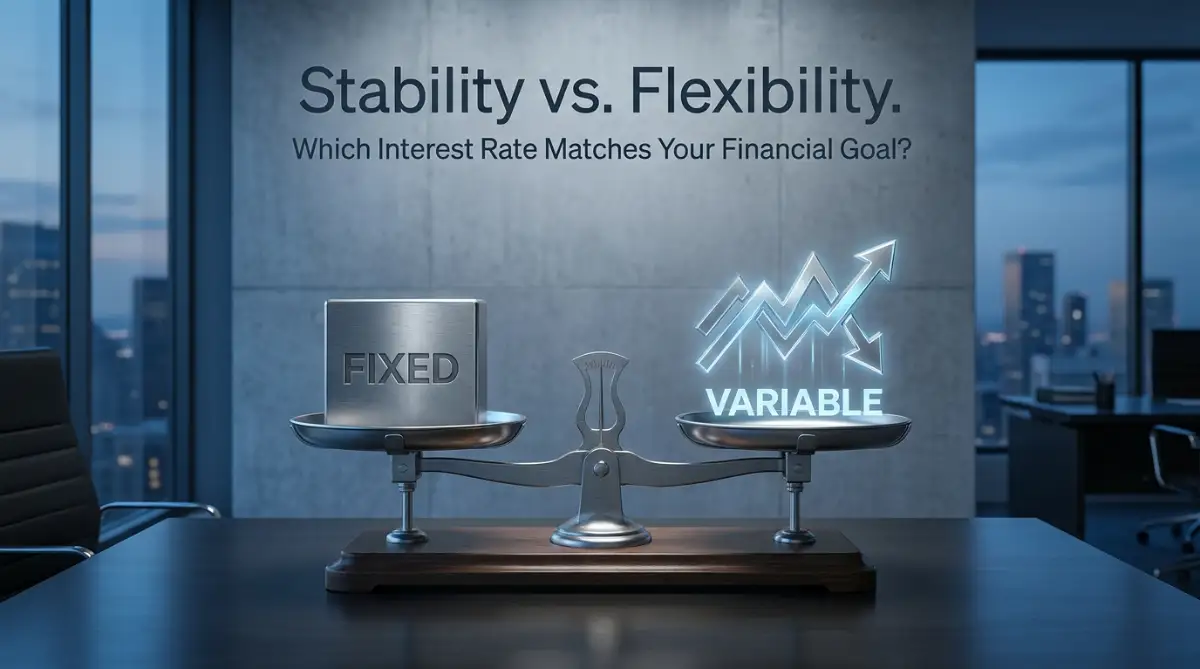
Stripping Away the Mystery: The Core Mechanics of Money
To fix this widespread confusion, we need to completely strip away the complex banking vocabulary. Let's look at interest rates through a very simple, everyday lens.
Think of an interest rate simply as the "rent" you pay to use someone else's money. If you borrow money from a bank, they want to be paid for doing you that favor.
The biggest choice you will ever make when borrowing money is deciding how you want to pay that rent. Do you want the cost to stay exactly the same forever, or do you want it to change based on the current mood of the economy?
The Umbrella vs. The Weather Forecast
To really lock this concept into your brain, let's use a simple analogy. Imagine you live in a city where the weather changes constantly.
A fixed interest rate is like buying a giant, heavy-duty umbrella for a set price. It might cost a little bit more upfront. However, whether it drizzles lightly or turns into a massive thunderstorm, you are completely protected. You know exactly what you have, and you never have to worry about the sky.
A variable interest rate is like relying on the daily weather forecast. On sunny days, life is amazing, and you carry zero extra weight. You save a lot of money and energy. But if a sudden, unexpected storm hits, you might find yourself paying an absolute premium just to stay dry.
Breaking Down the Fixed Rate Comfort Zone
When you choose a fixed rate, you are buying absolute, undeniable certainty. The bank agrees that the percentage they charge you will never go up and never go down for the entire life of your agreement.
If you take out a 30-year loan at a 5% fixed rate, your monthly payment will be the same on month one as it is on month three hundred and sixty. This brings an incredible amount of mental peace.
You can plan your family budget with absolute precision. You know exactly how much money will leave your bank account on the first of every single month. This makes things like planning for groceries, saving for college, and paying for vacations incredibly easy.
However, this total safety comes with a slight catch. Because the bank is taking on all the risk of the unknown future, they usually charge you a slightly higher starting price compared to other options. You are essentially paying a "premium fee" for the luxury of financial safety.
The Thrill and Chill of the Variable Rate
Now, let's look at the other side of the coin. A variable rate (sometimes called an adjustable rate) is totally different. The "rent" you pay for borrowing the money will move up and down based on a broader financial benchmark.
Banks tie these rates to public financial indexes. If the overall economy is doing poorly and the central banks lower their numbers, your loan gets incredibly cheap. Your monthly payment goes down, and you get to keep more of your hard-earned cash.
Because you are agreeing to share the risk of the unknown future with the bank, they will almost always reward you with a much lower starting rate. For the first few years, a variable loan can feel like an absolute steal.
But this is where the danger hides. If the economy gets hot and inflation rises, the central banks will pull the levers to increase overall rates. When they do this, your variable rate will climb right along with it.
Your required monthly payment will increase, sometimes by hundreds of dollars. If your personal household income hasn't increased at the same speed, this sudden jump in your monthly bills can cause severe financial pain.
A Quick Lesson From My Own Journey
I once chose a variable rate for a large personal loan simply because the initial monthly payment looked incredibly cheap on paper. I completely ignored how the market could change, and two years later, my monthly payment jumped by nearly 30%, heavily straining my budget. Always ask yourself if you can still afford the payment if the rate hits its absolute maximum limit.
Want to see a visual breakdown of how this actually looks on paper?
Watch this incredible short video that perfectly illustrates the math behind these two choices. It will make the numbers "click" in your mind instantly.
The "What If" Scenarios: Real Life Examples
To make this even more practical, let us walk through two completely different people making this choice. By looking at their lives, you can easily figure out which path makes the most sense for your own situation.
Scenario A: The Long-Term Planner
Meet Sarah. Sarah is buying a home where she plans to raise her future children and stay for the next twenty years. She works a steady job with a predictable salary.
Sarah hates surprises when it comes to her money. She wants to know exactly how much she can spend on her hobbies every month without accidentally bouncing a check.
For Sarah, the fixed option is the undisputed champion. Even if she ends up paying a few thousand dollars more in interest over three decades, the mental safety is worth every single penny. She can sleep soundly at night, totally immune to whatever the stock market or the economy is doing.
Scenario B: The Short-Term Strategist
Now, meet Mark. Mark is buying a small starter apartment. He knows for a fact that his job will force him to relocate to a new city in exactly four years.
Mark does not care what the economy will look like in ten years because he plans to sell this apartment long before then. He wants his current monthly expenses to be as low as humanly possible right now.
For Mark, the variable option is a brilliant strategic move. He takes advantage of the super-low introductory rate to keep cash in his pocket today. By the time the economy has a chance to potentially push his rate higher, he will have already sold the property and paid off the debt entirely.
Busting the Biggest Myths in Banking
When you talk to friends and family about money, you will hear a lot of opinions. Unfortunately, many of these opinions are based on outdated myths rather than actual facts. Let's clear the air and destroy these misconceptions right now.
Myth 1: Fixed is always the safest and best choice for everyone.
This is simply not true. While it is the most predictable, if you only plan to hold a loan for a very short time, a fixed rate can unnecessarily trap you into a higher monthly payment. You end up overpaying for long-term safety you never actually stick around to use.
Myth 2: Variable means your payment will change every single month.
People often imagine their bill wildly fluctuating from week to week. In reality, most adjustable loans only update their numbers at specific, pre-agreed times. For example, your rate might stay exactly the same for the first five years, and then only adjust once every twelve months after that.
Myth 3: You can never switch once you decide.
Many borrowers feel paralyzed by this choice, thinking it is a permanent life sentence. The truth is, refinancing exists for a reason.
If you start with a variable rate and suddenly feel uncomfortable with the direction the economy is heading, you can usually pay a fee to refinance your debt into a stable fixed option. You are rarely stuck forever, provided you maintain a healthy credit score.
A Quick Reference Guide: Side-by-Side Comparison
Sometimes, the easiest way to understand a complex choice is to look at the facts side-by-side. Use this simple comparison to summarize everything we just covered.
Understanding this simple table gives you more financial knowledge than a vast majority of everyday consumers. You are no longer flying blind when you walk into a banking office.
How to Check Your Own Financial Pulse
Now that you clearly understand the basic mechanics, how do you actually apply this to your own life today? It all starts with a brutally honest self-assessment.
You need to ask yourself a series of very specific questions before you sign any paperwork. The first question is all about your personal timeline.
How long are you realistically going to keep this specific debt? If you are buying a car that you plan to drive into the ground over the next ten years, stability is probably your best friend.
But what if you are taking out a small personal loan that you aggressively plan to pay off completely in just twelve months? In that case, taking advantage of a low variable rate might save you some quick cash.
The next question you must ask is about your emergency cushion. If your adjustable payment were to jump by two hundred dollars next year, would you still be able to buy groceries?
If that sudden jump would ruin your life and put you into credit card debt, you have your answer. You cannot afford the risk of the variable path, no matter how tempting the introductory offer looks.
Taking Back Your Power
The banking world thrives on confusion. When borrowers are confused, they just blindly accept whatever default option the loan officer slides across the desk.
But you are no longer that person. By simply understanding the mechanics of how the "rent" on your borrowed money works, you instantly take back your power.
You now know that a fixed option is like a reliable, steady anchor in a stormy sea. It protects you from the unknown and makes long-term budgeting a breeze.
You also know that a variable option is a sharp tool. If used correctly for short-term goals, it can save you a tremendous amount of money today.
The choice no longer has to be a terrifying leap into the dark. It is simply a matter of matching the right tool to your specific life situation. You now have the exact knowledge required to protect your hard-earned money and secure your financial peace of mind.
Mastering Your Debt: Advanced Moves to Protect Your Wallet
Now that we have stripped away the confusing banking vocabulary, it is time to look at the long game. Choosing your rate is only the very first step of your financial journey.
To truly win with your personal finances, you need a solid strategy to manage that debt over the coming years. The most successful borrowers do not just sign a paper and forget about it. They actively manage their money to keep maximum cash in their own pockets.
Let us explore a few advanced, high-level strategies that smart borrowers use to outsmart the banking system. These are the exact moves that can save you thousands of dollars over the life of your loan.
The Magic of the Hybrid Approach
Most people mistakenly believe they only have two extreme choices: absolute safety or total risk. But there is actually a middle ground that many banks do not openly advertise.
Depending on your country and your specific lender, you can sometimes request a split loan. This is where you divide your total borrowed amount into two separate pieces.
You put half of your debt on a fixed term for guaranteed stability. Then, you put the remaining half on an adjustable term to take advantage of cheaper introductory pricing.
This hybrid method gives you the best of both worlds. You get a safety net that protects your core budget, while still leaving a little room to save cash if the economy stays quiet. It is an incredibly smart way to balance your household risk.
Creating Your Own Financial Buffer
If you do decide to take a risk with a variable rate, you absolutely must create a personal safety net. The biggest mistake you can make is living paycheck to paycheck while holding unpredictable debt.
Here is a brilliant strategy used by financial experts. If your adjustable payment is currently very low, do not just spend that extra money on eating out or shopping. Instead, pretend your monthly bill is actually much higher.
Take the extra cash and put it straight into an emergency savings account. Build up a dedicated fund just for your loan.
When the economy eventually changes and your monthly payment spikes, you will not feel any panic. You will simply pull from that exact savings fund to cover the difference. Managing your budget properly means you stop relying on luck and start relying on solid planning.
Monitor the Market, But Do Not Obsess
If you have an adjustable loan, you need to keep a casual eye on where the economy is heading. However, you do not need to become a Wall Street stockbroker to do this.
You simply need to watch the big moves made by central banking authorities. A great habit is to set a calendar reminder every three months to quickly check the news. If you see headlines about rising inflation, that is a strong signal that your loan costs might go up soon.
To understand how national rates impact everyday people, you can read public resources from the Consumer Financial Protection Bureau (CFPB) regarding adjustable rate mechanics. These government resources are completely free and break down complex market shifts into plain English.
The goal here is not to stress yourself out daily. The goal is simply to avoid being blindsided when your bank sends you an updated billing statement.
Knowing When to Pull the Ejector Seat
One of your greatest powers as a consumer is the ability to refinance your debt. You are never completely trapped in a bad loan product if you have a strong credit score.
If you start with an adjustable rate and the market gets highly unstable, you can apply to switch to a fixed rate with a different lender. This locks in your payments before they spiral out of control.
However, timing is everything. Do not wait until your current payment is already causing you massive financial pain. If you start falling behind on payments, your credit score will drop, and other banks will refuse to help you.
Many people put off refinancing because the paperwork feels overwhelming. But you must learn to stop delaying difficult tasks when your financial security is on the line. Taking action early is the only way to protect your household from a future economic storm.
Overpaying the Principal
Here is a golden secret that banks absolutely hate. If your loan contract allows it without penalties, you should always try to pay a little bit extra directly toward your "principal" balance.
The principal is the actual core amount of money you borrowed, before they add their fees. Every time you reduce that core number, the bank has less money to charge you interest on next month.
If you have a variable rate that is currently super cheap, use that opportunity to aggressively attack the principal balance. By the time the overall market rates go up, your core loan will be so small that the rate increase will barely affect you.
You can even use free calculation tools provided by the U.S. Securities and Exchange Commission (SEC) to see exactly how much money you save by adding just fifty extra dollars to your payment. The math will genuinely shock you.

The Debt Traps That Keep Borrowers Awake at Night
Understanding how to win is great, but knowing how to avoid losing is even better. The lending industry is filled with hidden traps designed to squeeze maximum profit out of confused consumers.
When people rush through their loan paperwork, they often make terrible, long-lasting mistakes. Let us shine a bright light on the most dangerous pitfalls so you never fall into them yourself.
Falling for the "Honeymoon" Illusion
The absolute biggest trap in modern banking is the introductory teaser rate. Lenders will happily flash an incredibly cheap, single-digit percentage number on giant billboards to get your attention.
They make the initial monthly payment look so small that you feel like you are getting the deal of a lifetime. But this cheap phase usually only lasts for a very short period, sometimes just six to twelve months.
Once that honeymoon phase ends, the contract allows the bank to aggressively adjust your costs upward. People accept these deals assuming they will somehow figure out the higher payments later.
If an offer looks too perfect and flashy, it is almost always a trap. We see this deceptive marketing everywhere, from banking products to regular people falling for fake data entry remote job scams. You must always verify what happens after the initial promise fades away.
Ignoring the Hidden Structure Damage
When taking an adjustable rate, many borrowers completely ignore the "rate caps" listed in the deep fine print of their contract. A rate cap is the maximum limit your bank is legally allowed to raise your costs.
There are usually two types of caps: a periodic cap (how much it can jump in one single year) and a lifetime cap (the absolute maximum it can reach over the entire loan).
If you do not read this part of the contract, you are signing a blank check. A poorly structured loan is exactly like having silent rooftop damage from bad solar mounting. Everything looks perfectly fine on the outside, but the entire foundation is slowly rotting away above your head.
You must always ask your loan officer one specific question: "What is the absolute maximum dollar amount this monthly payment could reach in the worst-case scenario?" If you cannot comfortably afford that worst-case number, you should walk away immediately.
The Arrogance of Future Income
Another massive mistake people make is assuming their personal income will always steadily go up. They accept a risky variable loan today, telling themselves they will definitely get a big promotion by the time the rates adjust.
But life is highly unpredictable. Companies downsize, medical emergencies happen, and entire industries face unexpected recessions.
If your loan payments double exactly when you lose your primary source of income, you will face an immediate financial disaster. You should never base today's heavy debt decisions on money you have not actually earned yet.
According to guidelines from the Federal Trade Commission on managing consumer debt, responsible borrowing means planning for the unexpected. Always stress-test your household budget against a temporary loss of income.
Leaving Your Safety Up to Chance
Finally, simply trusting the bank representative to pick the best option for you is a massive error. The person sitting across the desk is a salesperson. Their primary job is to generate profit for their employer, not to protect your personal savings account.
If you sit back and let them choose your loan structure, they will often steer you toward the product that pays them the highest commission.
Leaving your long-term financial safety entirely up to a stranger is incredibly dangerous. It is just as risky as ignoring the hidden security threats of using free airport Wi-Fi with your banking apps. Eventually, your lack of personal security will cost you dearly.
You must act as your own biggest advocate. Read the documents, ask hard questions, and never sign anything until you feel one hundred percent confident in your choice.
Your Action Plan for Complete Financial Confidence
We have covered an incredible amount of ground today. You have successfully decoded the complex language of banking and learned the true difference between steady stability and market flexibility.
You now understand that a fixed option acts as an iron shield against economic chaos. It gives you the ultimate power to budget your life without fear of sudden surprises.
On the flip side, you learned that an adjustable option is a highly specific tool. When used carefully for short-term projects, it can unlock massive upfront savings.
Your Immediate Next Steps
To make sure you actually benefit from this knowledge, here is a simple checklist for your next big financial decision:
1. Define your exact timeline. Write down exactly how many years you plan to keep this specific debt before selling the asset or paying it off entirely.
2. Check your emotional stress tolerance. Be totally honest about how much sleep you would lose if your monthly bills suddenly went up by twenty percent.
3. Demand the worst-case scenario math. Force your lender to show you the absolute maximum payment allowed by the contract.
4. Protect your personal data. While applying for multiple loans, ensure you are keeping your digital identity safe. Do not leave your private information exposed, much like you shouldn't leave your smart speaker microphone turned on during sensitive family conversations.
5. Review your existing debt. If you already have loans, take thirty minutes this weekend to check your current statements. If you have an expired digital certificate on a website, it causes massive security warnings; similarly, ignoring your expired introductory loan rates will cause massive financial warnings in your bank account.
My Final Thoughts for Your Journey
I know firsthand how intimidating it feels to sit in that banking office with a pen in your hand, feeling completely overwhelmed by the paperwork. But my greatest realization was that the banking system is just a set of basic rules, and once I learned those rules, my fear completely disappeared. You absolutely have the intelligence and power to take total control of your money today. Stay curious, ask every single question that comes to your mind, and never let anyone rush you into a choice about your financial future!
Clearing Up Common Questions About Loan Rates
Can I switch from an adjustable rate to a fixed option later on?
Yes, you absolutely can switch your loan structure by going through a process called refinancing. However, it requires a new application, a good credit score, and you will usually have to pay new closing fees.
Why do loan officers push variable options so aggressively?
Banks love adjustable loans because it transfers the economic risk directly from them onto your shoulders. Plus, the super-low starting prices make it incredibly easy for salespeople to convince people to sign the contract quickly.
Does a stable fixed rate mean I can never pay off my debt early?
Not necessarily. Most modern contracts allow you to pay extra money toward your core balance without any penalty. Always double-check your specific paperwork for "prepayment penalty" clauses just to be totally safe.
How often will an adjustable interest rate actually change?
This depends entirely on the terms written in your specific contract. Most common loans have a locked period for the first few years, and then they legally adjust either once every six months or once a year.
What happens if the national economy crashes?
If you have a fixed loan, absolutely nothing happens to your payments—they stay the same. If you have an adjustable loan, your payments will likely drop significantly as central banks lower their rates to stimulate the economy.
Disclaimer: The content provided in this article is for educational and informational purposes only and does not constitute professional financial, legal, or tax advice. Interest rates, loan terms, and market conditions vary widely by location and individual credit profiles. Always consult with a certified financial advisor or a licensed banking professional before signing any loan agreements or making major financial decisions.
![Warning: Never Co-Sign a Family Loan Before Reading This [Step-by-Step]](https://pixeljournals.com/storage/uploads/blogs/1786290760_warning-never-co-sign-a-family-loan-before-reading-this-step-by-step.webp)