
The Silent Trap of Helping Someone You Love
I remember the exact afternoon my cousin asked me to co-sign his personal loan. He promised me again and again that he would make every single payment on time. I felt totally cornered because saying no felt like a massive betrayal to my own family. My hands were shaking a little when I signed the dotted line, hoping for the absolute best.
Fast forward a few short months, and my phone started ringing endlessly with unknown numbers. That one simple signature turned my peaceful daily life completely upside down, and I felt entirely alone.
The worst part of this entire situation was not just losing my hard-earned money. It was the heavy, suffocating feeling in my chest every single morning when I woke up.
When you put your name on someone else's debt, your mental peace completely disappears. You find yourself constantly checking your banking apps in a cold sweat. You start wondering if the collection agencies will call you while you are at work.
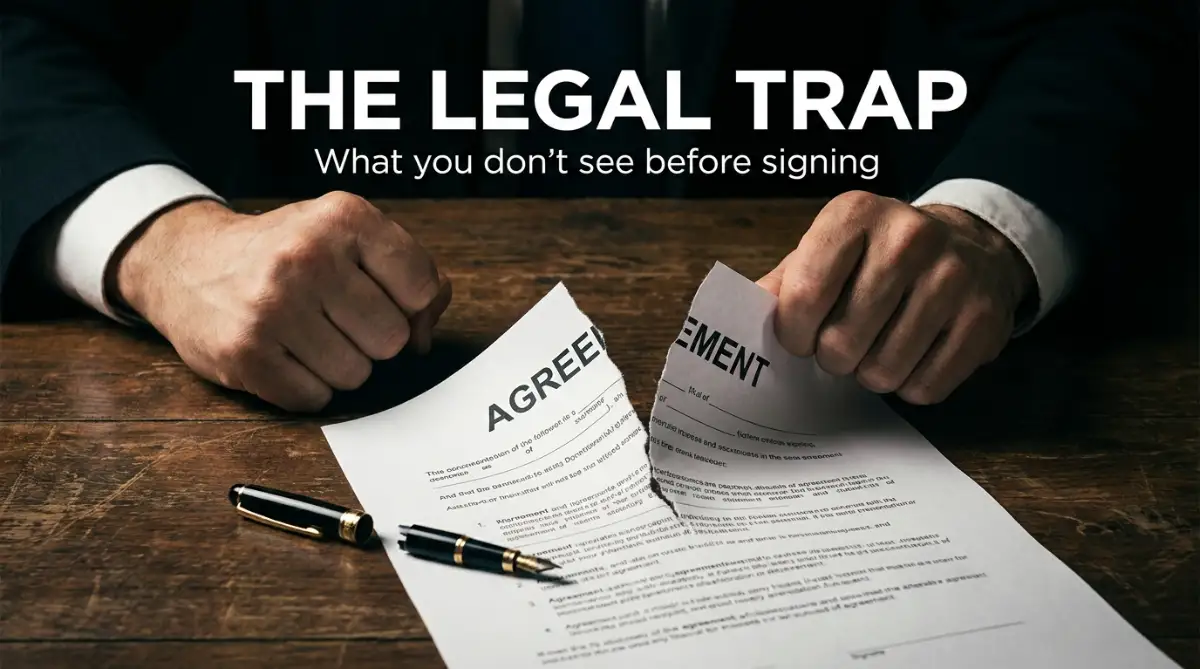
Ordinary people across the world are facing this exact nightmare every single day. They just want to help a brother, a child, or a cousin out of a tough spot. But without proper legal paperwork, they end up destroying their own lives.
Arguments break out at family dinners, and people stop talking to each other for good. Spouses start fighting because secret family loans threaten their own household savings. The emotional damage goes so much deeper than just a damaged bank account.
You slowly realize that the person you trusted most is now hiding from your phone calls. This leaves you carrying a massive financial burden that you never actually budgeted for.
What Actually Happens When You Take on Someone Else's Debt
Many people believe a very dangerous myth about this topic. They think that adding their name to a document is just like giving a basic character reference.
They assume the bank just wants a backup contact in case the main borrower forgets a payment. But the banking industry does not see it that way at all.
When you agree to help a relative get money, you are instantly becoming a co-borrower. You are telling the bank that if your relative pays late, pays half, or stops paying completely, you will cover it.
Myth vs Reality: The Banking Perspective
The Common Myth: The bank will go after my family member first, and only call me as a last resort.
The Harsh Reality: The bank sees you both as equal targets. They will go after whoever is easiest to reach and whoever has the most money in their accounts.
The moment the ink dries on that paper, you are legally chained to that specific amount of money. If your cousin decides to quit his job or buy things he cannot afford, you pay the price.
The financial institution does not care about your family loyalty or your good intentions. They only care about getting their cash back, plus all the extra interest fees.
The Immediate Shock to Your Financial Health
You might assume that your credit report stays perfectly clean as long as your relative pays on time. Unfortunately, the system works completely differently behind closed doors.
Even if the primary borrower is making perfect payments, that massive debt is now sitting on your personal record. This messes up a very important number called your debt-to-income ratio.
Let me explain this in the simplest way possible. If you make a solid monthly income, banks will usually trust you to borrow money for a house or a car.
But if you just signed for a massive family loan, the bank now thinks you have less money available. If you suddenly need to buy a car for yourself, you might get rejected entirely.
Your own financial plans are put on pause just because you wanted to do a nice thing. You lose your personal buying power, all while someone else gets to drive a new car or fund their business.
I learned the hard way that banks do not care about your family loyalty or emotional attachments. My best advice is to always ask yourself if you can afford to pay the entire monthly installment alone before you even hold the pen.
If the answer is no, you have absolutely no business putting your name on that paper.
The Hidden Fees You Never Agreed To
Things get much darker when the person you helped starts missing their scheduled dates. Most lenders will wait a few weeks before they actually send you a warning letter.
During that silent period, aggressive late fees and penalty charges start piling up very fast. Because your relative is hiding the truth from you, you have no idea this is happening.
By the time you finally get a letter in your mailbox, the original amount has grown much larger. Now, you have to pay the regular amount plus the penalty fees just to save your own reputation.
If you are feeling overwhelmed by a family member asking for a financial favor, watch this breakdown on how to say no without destroying your relationship.
The Legal Nightmare of Trusting Blood Without Paperwork
One of the biggest mistakes ordinary folks make is thinking that a verbal promise means something. Your brother might look you in the eyes and swear he will never let you down.
But the legal system operates on cold, hard proof, not warm family hugs. If things go wrong and you are forced to empty your savings to pay off the bank, you cannot sue your brother easily.
Without a secondary legal agreement drafted between the two of you, you are basically gifting them the money. The law will simply look at the original document and say you agreed to take the fall.
Let us look at a clear comparison of what happens when you decide to take this risk without safety nets.
If the debt goes fully unpaid, the collection agencies can take things to a completely different level. They can actually take you to court and get a judge to garnish your wages.
This means your employer will legally be forced to take money out of your paycheck before you even see it. Imagine the deep embarrassment of having your boss find out about your massive money problems.
They can even freeze your personal checking accounts without giving you a polite warning. Suddenly, you cannot buy groceries or pay your own electric bill because of someone else's irresponsibility.
Why Smart Money Management Requires Boundaries
Protecting your hard-earned wealth is not about being greedy or a bad family member. It is actually about survival and making sure you can take care of your own kids and spouse.
We are often taught that a good person always sacrifices themselves for their loved ones. But jumping into a sinking boat will just cause both of you to drown in the deep water.
You have to learn how to create a massive wall between your personal feelings and your financial decisions. The easiest way to start building this wall is to change the way you communicate.
When a relative approaches you with a sad story, you do not have to give an answer right away. Always buy yourself some time by saying you need to review your budget and talk to your spouse.
This short break removes the heavy emotional pressure of the exact moment. It gives your brain the quiet space it needs to look at the numbers logically.
Offering Alternative Support Without Borrowing
Saying no to the paperwork does not mean you have to turn your back on them completely. There are so many amazing ways to help someone get back on their feet without risking your future.
If they are struggling with basic living costs, you can offer to buy their groceries for the entire month. You can help them rewrite their resume so they can find a better-paying job quickly.
If you really want to help them financially, just give them a cash gift that you can easily afford to lose. If you have some extra cash sitting in a drawer, hand it over and never expect it back.
This keeps the relationship totally clean and completely removes the stress of tracking monthly installments. You become a true helper instead of becoming an angry, stressed-out money collector.
What If You Have Already Signed?
If you are reading this and you already put your signature on a document, do not panic just yet. You still have a few smart options to protect yourself from total disaster.
First, you need to demand total transparency from your relative immediately. Sit down with them and politely ask for the login details for the loan account.
You need to log in at least once a week to verify that the money is actually reaching the bank. Do not rely on them sending you a text message saying "everything is fine."
If you notice they are struggling to gather the money, you can jump in early and avoid the expensive late penalties. You might be annoyed, but paying a small portion early is much cheaper than dealing with a ruined record.
You should also start building an emergency backup fund just for this specific situation. Put a small amount of money away every single week so you have cash ready if they suddenly disappear.
The Heavy Burden of Ruined Relationships
Money issues have destroyed more families than almost any other problem in the world. When a financial agreement goes badly, it completely changes the way you look at your loved ones.
Every time they post a photo of a nice dinner on social media, you will feel a sharp pain of deep resentment. You will sit there thinking, "How can they afford a restaurant when I am paying their bank fees?"
Family gatherings stop being fun and turn into incredibly awkward, quiet situations. You will start avoiding birthday parties and holiday dinners just to avoid seeing their face.
The relative who owes you money will also start feeling very strange around you. Guilt usually makes people act highly defensive, and they might even start blaming you for their own stress.
They might twist the story and tell the rest of the family that you are being greedy and unreasonable. Suddenly, you are painted as the villain even though you are the one who lost everything.
This is exactly why mixing family and large amounts of money is a completely toxic combination. The love you share should never be tested by a monthly bank statement.
By keeping your money completely separate, you are actually protecting the love and respect you have for each other. You are ensuring that you can still sit at the same table and laugh together for many years to come.
It takes a lot of extreme courage to look someone in the eye and decline their request for money. But that short moment of awkwardness is worth a lifetime of secure financial peace.
Smart Boundaries to Protect Your Family and Your Wallet
If you are reading this, you probably want to be a supportive family member without destroying your own life. The good news is that you can absolutely help your loved ones without risking your personal savings.
You just need to shift your mindset from being a simple cash machine to acting like a professional advisor. The smartest financial decisions are always made with clear logic, not overwhelming guilt.
Setting firm boundaries is actually the highest form of love you can show your family. It prevents ugly arguments in the future and keeps your relationship completely honest. Let us look at exactly how you can manage these tough situations like a true expert.
Refusing the Signature While Still Offering Support
When your brother or cousin asks for your signature, your immediate answer should be a polite but firm no. You can gently explain that you have a strict personal rule against signing bank documents for anyone.
Blame it on your own strict budget, your accountant, or even your personal financial goals. You never have to apologize for protecting the money you worked so hard to earn.
Instead of putting your name on their paperwork, you can offer them safer alternatives. For example, you can help them look up federal consumer protection laws to understand their borrowing rights better.
You might also suggest they apply for a secured credit card using their own small cash deposit. This forces them to build their own credit history slowly without dragging your name into the mud.
The Promissory Note: Your Ultimate Safety Net
Sometimes, you might decide to skip the bank entirely and just lend your family member the cash from your own pocket. If you choose to do this, you must treat the situation like a real business transaction.
Never just hand over an envelope of cash and hope they remember to pay you back. You need to create a legal document called a promissory note before any money changes hands.
This simple piece of paper outlines exactly how much they borrowed, the monthly payment amount, and the final due date. It completely removes all the awkward guesswork and fuzzy memories from the equation.
You do not even need a highly expensive lawyer to create this basic document. You can easily find helpful templates on trusted platforms for drafting a formal promissory note that holds up in regular court.
Having this document signed shows your relative that you are taking this favor very seriously. It forces them to respect your money and treats the agreement as a strict priority, not just a casual family favor.
Regular Check-Ins Without Being Overbearing
If you do lend personal money directly, you need to set up an automatic repayment system right away. Do not wait for them to hand you physical cash at the next family barbecue.
Have them set up an automatic bank transfer that goes directly into your account on the same day every single month. This removes the extreme stress of you constantly texting them to ask for your money.
If a payment fails, address it within twenty-four hours calmly and professionally. Do not let three months go by just because you feel too shy to bring it up.
A simple text saying, "Hey, the automatic transfer did not go through today, let me know when it is fixed," is perfectly fine. Treating the situation professionally helps maintain a healthy distance between your money and your personal feelings.
Whenever you are dealing with contracts, it is highly recommended to practice evaluating a lending agreement to ensure there are no hidden surprises.

The Worst Missteps You Can Make With Family Money
Even the smartest people can make massive mistakes when their family members start crying or begging for help. When emotions run high, our logical brains tend to shut down completely.
People ignore massive red flags because they want to believe the absolute best about the people they love. Unfortunately, ignoring these clear warning signs will almost always lead to a massive financial disaster.
Let us break down the most dangerous traps you must avoid at all costs. Falling into just one of these traps can ruin your peaceful life for many years.
Hiding the Agreement from Your Spouse
This is easily the most destructive mistake you can ever make in your entire life. If you are married or sharing a household, your partner has a right to know about any major money moves.
Many people secretly sign for a relative's car or personal loan because they know their partner will say no. They think they can just keep it a secret until the amount is fully paid off.
But secrets like this always come to light, usually when a collection agency calls the house phone. When your spouse finds out you risked your shared future for a cousin, the trust is instantly broken.
Financial infidelity is one of the leading causes of messy divorces today. You must always have a completely open conversation with your partner before you even consider helping a relative.
It is just like ignoring the hidden terms and conditions in a major contract; the surprise at the end is never good.
Trusting Verbal Promises Over Past Behavior
We all want to believe that people can change their bad habits overnight. If your sister has a long history of quitting jobs and ignoring her bills, a new promise means absolutely nothing.
You cannot ignore years of bad money management just because she sounds highly sincere this time. Past behavior is always the most accurate predictor of how they will handle this new debt.
If a bank has already rejected them for a loan, you need to ask yourself why. The bank uses massive computers and deep background checks to see if a person is responsible.
If a billion-dollar institution thinks your relative is too risky, why would you put your own small savings on the line? Do not let temporary guilt blind you to the permanent reality of their poor choices.
You can read more excellent personal finance resources to help you better understand how lenders evaluate risk.
Co-Signing to "Fix" Their Irresponsibility
Some parents think that getting a loan for their adult child will magically teach them how to be responsible. They assume that having a shiny new car will motivate their child to finally keep a steady job.
This almost never works out the way you hope it will. By stepping in and saving them, you are actually removing the natural consequences of their bad actions.
They learn that whenever they mess up, you will always be there to open your wallet. This creates an endless cycle of extreme dependence that can last for decades.
True financial independence happens when people are forced to face their own messes and clean them up. By refusing to sign, you are actually giving them the gift of total accountability.
Ignoring How It Affects Your Own Borrowing Power
Most people completely forget that adding a massive new balance to their name affects their own plans. You might want to buy a new house, upgrade your car, or start a small business soon.
When you apply for your own funding, lenders will look very closely at your debt-to-income ratio calculations. They will count your relative's massive balance against your personal income.
You could easily get denied for a mortgage simply because you wanted to help your uncle buy a boat. Your own family's dreams should never be sacrificed to fund someone else's lifestyle.
Always put your own oxygen mask on first before you try to assist the person sitting next to you. If your own financial house is not perfectly secure, you have no business building a roof for someone else.
If things go totally wrong, you might have to seek legal defense against aggressive collectors to stop the harassing phone calls.
Failing to Prepare for the Worst-Case Scenario
When people put their name on a family contract, they always picture the best possible outcome. They imagine their relative making every payment smoothly while they sit back and relax.
But life is highly unpredictable, and bad things happen to good people all the time. Your relative could suddenly lose their job, get sick, or face unexpected life emergencies that drain their cash.
If they cannot pay, the bank will immediately knock on your door expecting the full amount. If you do not have the extra cash sitting in a bank account to cover the entire balance, you are playing a dangerous game.
You must always ask yourself, "Will I go bankrupt if I have to pay this entirely by myself?" If the honest answer is yes, then you absolutely cannot afford to take on this massive risk.
It is just like reviewing personal paperwork; you must know the exact worst-case scenario before you sign anything.
If you are ever harassed by collectors unfairly, you can look into reporting unfair debt collection practices to protect your peace.
Protecting Your Peace of Mind and Your Wealth
At the end of the day, your mental health and your family relationships are worth so much more than any amount of money. Mixing large bank balances with family dinners is almost always a recipe for disaster.
You have the total right to protect the money you wake up early every single day to earn. Saying no does not make you a bad relative; it makes you a smart and highly responsible adult.
There are countless ways to show love and support that do not involve signing a legally binding contract. Offer your time, offer your advice, and maybe offer a small cash gift if you can truly afford to lose it.
Keep your personal boundaries incredibly strong, and never let guilt dictate your major life choices. When you remove the stress of secret debts, your family connections will actually become much stronger and more genuine.
I know exactly how hard it is to look a family member in the eyes and tell them you cannot sign their papers. But my biggest relief came from knowing my own family's future was totally secure and protected. Always trust your gut, keep your finances separate, and prioritize your own household's peace of mind above everything else.
Common Questions About Family Debt and Co-Signing
What happens to my credit score if my family member pays late?
Even a single late payment will heavily damage your personal credit score almost immediately. The bank reports the negative mark to your exact profile, making you look highly irresponsible to future lenders.
Can I remove my name from the document later on?
It is extremely difficult to remove your name once the ink is dry on the original document. The only real way out is if the primary borrower fully refinances the entire balance under their own name.
Will the bank warn me before sending the account to collections?
Most modern banks are not required to give you special warnings before applying aggressive late fees. You will often only find out about the massive problem when debt collectors start calling your personal cell phone.
Can I sue my family member if I have to pay their balance?
You can technically try to take them to small claims court, but it is a very messy and expensive process. Without a proper legal promissory note signed beforehand, judges often view the payment as a personal gift rather than a stolen asset.
Does co-signing a loan count against my own borrowing limit?
Yes, the total outstanding balance is fully counted as your own personal debt by any future lenders. This can easily prevent you from getting approved for a home mortgage, a new apartment, or a car for yourself.
Disclaimer: The information provided in this blog post is for educational and informational purposes only and should not be considered professional legal or financial advice. Always consult with a certified financial planner or a licensed attorney before signing any legally binding contracts or making major financial decisions involving family members.