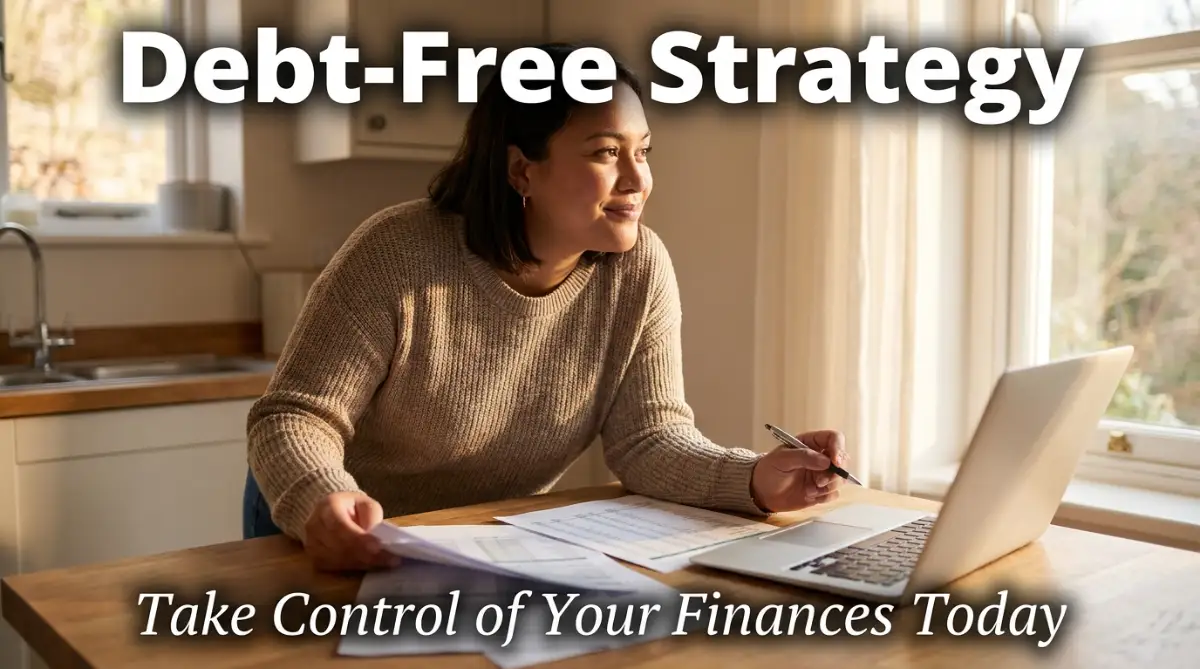
Drowning in Minimum Payments? I Have Been There Too
I still remember the exact moment my stomach dropped while opening my monthly statement. I stared at the screen, realizing that out of my massive monthly payment, almost all of it went strictly toward interest charges. I felt completely trapped, working incredibly hard every single day just to make rich banks even richer. My balance never seemed to go down, no matter how much overtime I worked or how many weekend plans I canceled. I felt like I was running on a treadmill that was slowly speeding up, and I was absolutely terrified of falling off.
Living with massive high-interest balances is a heavy, invisible burden that destroys your peace of mind. You start hiding your statements from your family because the guilt is just too much to handle. Every time your phone rings from an unknown number, your heart races because you instantly assume it is another collection agency.
This financial pressure bleeds into every single part of your life. You lose sleep staring at the ceiling, wondering how you will afford basic groceries next week. Your relationships suffer because money becomes a toxic, forbidden topic that always ends in an argument.
The worst part is the constant, nagging feeling of shame. You look around and assume everyone else has their lives figured out, while you are secretly drowning in compounding interest.
It feels like a dark cloud following you to work, to the dinner table, and straight into your bed at night. You try to convince yourself that things will magically get better next month, but deep down, you know the math is completely working against you.
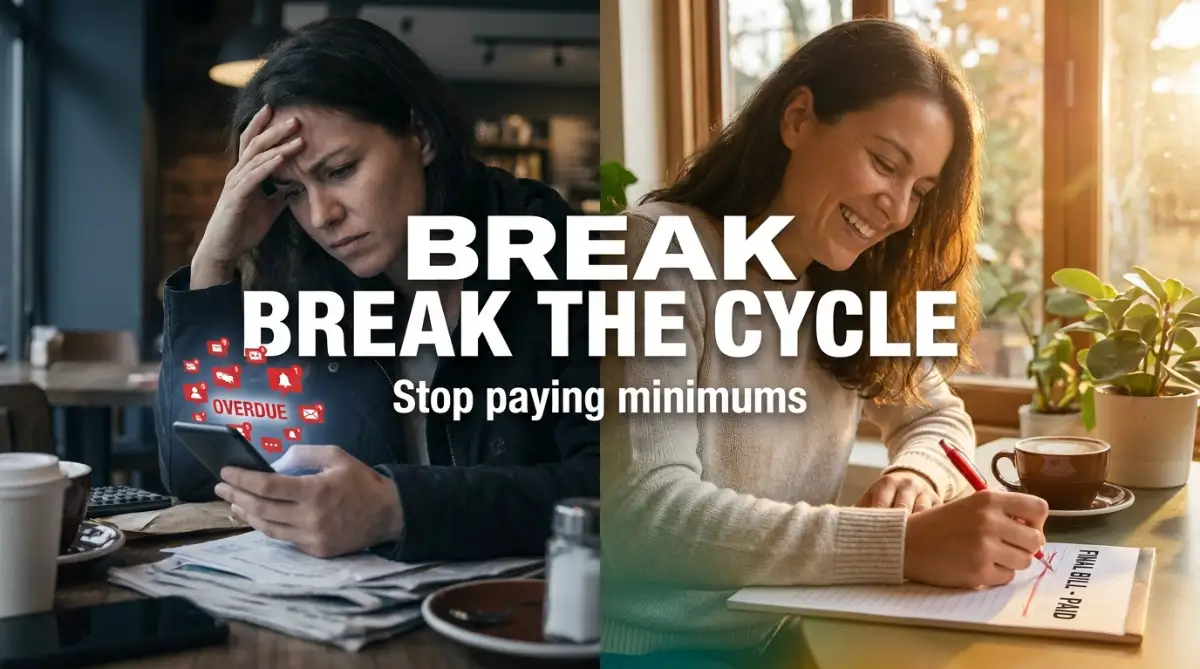
The Invisible Trap: How Banks Keep You Hooked Forever
Before we can fix this massive problem, we need to understand exactly how the system is designed to keep you stuck. Credit card companies love it when you only pay the minimum amount due.
They use a system called compound interest, which essentially means you are paying interest on top of your existing interest. It is a highly profitable mathematical trap designed specifically for them, not you.
Let me give you a very simple real-life analogy. Imagine you are trying to empty a bathtub using a tiny teacup. But at the same time, someone leaves the faucet running on full blast.
No matter how fast you scoop that water out, the tub is never going to empty. Paying only the bare minimum on your credit cards is exactly like using that tiny teacup.
The system wants you to stay in debt for decades. It is incredibly common for a small emergency purchase to double or triple in cost over time if you do not attack the principal balance aggressively. But do not worry, because we are about to turn off that running faucet permanently.
Step 1: Stop the Bleeding and Freeze Your Spending
You cannot get out of a hole if you are still actively digging it. The very first action you must take today is to stop using your credit cards completely.
This sounds incredibly obvious, but it is often the hardest mental block for people to overcome. You have to break the habit of swiping plastic for everyday convenience.
I remember trying to pay down my massive balance while still using my card for daily groceries just to get those silly reward points. It was a terrible mistake, and my debt literally never went down. I only started making real financial progress when I physically removed the card from my wallet, deleted it from my Apple Pay app, and switched entirely to a cash debit system.
Remove your saved card information from your favorite online shopping websites right now. Make it as inconvenient as possible to spend borrowed money.
If you want to buy something online, force yourself to get up, walk across the room, and manually type in a debit card number. This tiny bit of friction will stop so many impulse purchases.
Step 2: Face the Math Without Fear (The Audit)
Most people avoid looking at their total debt because the final number is too scary. But ignoring the monster under the bed does not make it go away.
Grab a notebook, make a cup of coffee, and log into every single one of your accounts. You need to write down three specific pieces of information for every card you own.
You need the total balance owed, the minimum monthly payment, and the exact Annual Percentage Rate (APR). Once you see everything on one piece of paper, the fear starts to fade.
It is no longer a scary unknown monster; it is just a simple math problem waiting to be solved. You can now clearly see which card is charging you the most money just for the privilege of holding a balance.
Watching your hard-earned cash disappear into interest charges is frustrating, but this simple trick can help you instantly slash your rates and keep more money in your pocket.
Step 3: Choose Your Attack Plan (Avalanche vs. Snowball)
Now that you have your list, you need a highly structured strategy to destroy those balances. Two incredibly popular methods actually work, and you need to pick the one that matches your personality.
The first method is called the Debt Avalanche. This is the mathematically smartest way to approach the problem.
With the Avalanche, you continue paying the minimum on all your cards, but you throw every single extra dollar at the card with the highest interest rate. Once that most expensive card is dead, you take all that money and move to the next highest rate. This method saves you the most money over time.
The second method is called the Debt Snowball. This approach focuses heavily on human psychology and motivation rather than pure math.
With the Snowball, you ignore the interest rates entirely and focus on the card with the smallest overall balance. You attack that tiny balance aggressively while paying minimums on everything else.
When you quickly wipe out that first small debt, you get a massive boost of dopamine and motivation. You then roll that payment into the next smallest balance, creating momentum just like a snowball rolling down a hill.
Step 4: The 15-Minute Phone Call That Saves Thousands
Did you know that you can simply ask your credit card company to lower your interest rate? Most people never even try because they assume the bank will say no.
But in reality, credit card companies operate in a highly competitive industry. They would much rather lower your rate temporarily than lose you entirely to a competitor or watch you default on the loan.
Call the customer service number on the back of your card. Be extremely polite, but be very firm about your situation.
You can say something like, "I have been a loyal customer for years, but I am finding better rates with other companies. Can you help me lower my current APR so I can keep my account open with you?"
If the first representative says no, politely ask to speak with their retention department. Even a small drop of a few percentage points can save you hundreds of dollars and shave months off your repayment timeline.
Myth vs. Reality: The Truth About Balance Transfers
You have probably received dozens of shiny mailers offering you a 0% introductory rate if you transfer your balances to a new card. This sounds like an absolute dream come true, but you must be extremely careful.
Myth: Balance transfers are a magical, free way to erase your debt problems instantly.
Reality: These cards almost always charge an upfront balance transfer fee of 3% to 5% of the total amount. More importantly, if you do not pay off the entire balance before the promotional period ends, the interest rate often skyrockets back up to 25% or higher.
A balance transfer can be an amazing tool, but only if you have completely fixed your spending habits. If you just move your debt around and continue shopping, you will end up with twice as much trouble.
Treat a 0% offer as a strict countdown timer. Divide the total balance by the number of months in the promotion, and make sure you pay exactly that amount every single month without fail.
Step 5: Trim the Fat and Build a Survival Budget
To pay off your balances faster, you absolutely need to generate extra cash flow every month. This means creating a realistic budget that you can actually stick to.
A budget is not a prison meant to punish you. It is simply a map that tells your money exactly where to go before it accidentally disappears.
Print out your last three months of bank statements and grab a bright yellow highlighter. Highlight every single purchase that was a completely optional desire, not a basic human need.
You will likely be shocked at how much money you spend on unused subscriptions, expensive takeout food, and random online shopping. Cancel the streaming services you never watch and start meal-prepping your lunches for work.
Take all of that recovered money and automatically apply it to your targeted credit card payment. Every extra twenty dollars you throw at the principal balance is twenty dollars they can never charge you interest on again.
Step 6: Find Hidden Money in Your Daily Life
Sometimes, cutting your expenses is simply not enough. You can only trim your budget so much before you hit bone.
When that happens, you have to find creative ways to increase your income temporarily. Look around your home right now.
You probably have old electronics, clothes you never wear, or furniture collecting dust in the corner. Sell those items on local online marketplaces and send that cash straight to the bank.
Consider picking up a temporary side hustle just for a few months. Delivering groceries, walking dogs, or doing freelance work online can generate serious extra cash.
Remind yourself that this extra work is not going to last forever. It is a short-term sacrifice designed specifically to buy back your long-term freedom.
Step 7: Guard Your Mental Health and Celebrate Small Wins
Paying off huge balances is a marathon, not a quick sprint. There will be tough months where unexpected expenses pop up, like a flat tire or a medical bill.
When life happens, do not beat yourself up or completely abandon your plan. Give yourself grace, pay the minimums that month if you absolutely have to, and get right back on track the very next week.
It is incredibly important to celebrate your milestones along the way. When you finally pay off that first card, do something nice for yourself that does not cost a fortune.
Take a long walk in the park, have a movie night at home with your family, or cook your favorite inexpensive meal. You have to train your brain to associate good financial habits with positive feelings.
You are actively taking back control of your future, and that is something to be incredibly proud of. Keep your head down, stick to the math, and watch your balances slowly disappear forever.
Next-Level Moves to Protect Your New Wealth
Once you finally start seeing those heavy balances drop, a whole new challenge begins. Getting out of the hole is only the first part of the journey. Staying out of the hole forever requires a completely different set of mental tools and daily habits.
Many people accidentally fall right back into the same financial traps because they never change their core relationship with money. You have to build a system that automatically protects you from your own spending triggers.
This is where you transition from simply surviving to actually building long-term wealth. Let's look at the exact strategies smart money managers use to keep their bank accounts growing while keeping the greedy banks away.
Building an Unbreakable Emergency Shield
The absolute biggest reason people return to swiping plastic is that life simply happens. Your car engine suddenly makes a strange noise, or your roof starts leaking after a heavy rainstorm.
If you do not have cash set aside for these exact moments, you will automatically reach for the plastic card. That single swipe immediately restarts the vicious cycle of high interest.
You need to prioritize building a secure emergency fund before you do anything else. Start by aggressively saving a starter fund of one thousand dollars in a completely separate savings account.
Once your heavy balances are fully cleared, you will slowly grow that shield to cover three to six months of basic living expenses. Think of this cash buffer as your personal financial bodyguard, standing between your peace of mind and the unpredictable chaos of life.
The Power of Automating Your Financial Defense
Human willpower is incredibly limited, and eventually, you will get tired of manually moving money around. The best financial strategy is the one that happens completely in the background while you are busy living your life.
Log into your banking app and set up automatic transfers that align perfectly with your payday. The very morning your paycheck hits, a specific portion should instantly move to your separate savings and payoff goals.
By the time you wake up and check your phone, the responsible decisions have already been made for you. You never even see the extra money, which means you cannot be tempted to spend it on random online sales.
If you constantly struggle with managing your schedule, you might want to learn how to stop delaying tasks and beat chronic procrastination forever. Fixing your mental delays will naturally help you automate your money with confidence.
Designing a Cash-Only Lifestyle That Actually Feels Good
Transitioning to a completely cash-based or debit-only lifestyle sounds extremely restrictive at first. But in reality, it is the most liberating feeling in the world.
When you buy groceries with cash, you physically feel the money leaving your hand. This psychological friction makes you hyper-aware of exactly how much things cost, naturally lowering your impulse purchases.
You do not have to carry heavy stacks of bills everywhere you go to make this work. Simply moving money into specific digital "envelopes" within your banking app creates the exact same mental boundary.
You are no longer guessing if you can afford to eat at a nice restaurant this weekend. You simply check your dining envelope, and if the money is there, you can enjoy your meal completely guilt-free.
Shifting Your Mindset from Borrower to Saver
For years, you have been programmed to think about money in terms of monthly payments. Car salespeople and store clerks always ask, "How much can you afford per month?"
This is a dangerous mindset designed to keep you poor. You need to start looking at the total cost of an item, including the hidden interest you will pay over time.
Once you understand understanding how daily balance interest works, you will never look at a "minimum payment" the same way again. You will quickly realize that the fancy new television is actually costing you double its retail price.
Start paying yourself the same way you used to pay those massive financial institutions. Take that exact same aggressive payment amount and funnel it directly into high-yield savings or safe investments.

The Dangerous Traps That Will Pull You Back Under
The road to financial freedom is unfortunately filled with hidden traps that look like shortcuts. When people get tired of budgeting, they often make emotional decisions that wipe out months of hard work.
I have seen so many incredibly smart people fall for these exact same pitfalls. If you are not carefully paying attention, you can easily slide backward into an even worse situation.
Let's break down the most dangerous mistakes you must avoid at all costs. Understanding these traps is just as important as knowing how to pay down the balances.
The "I Deserve This" Reward Trap
This is by far the most common psychological mistake people make during their debt-free journey. You spend six exhausting months packing cheap lunches and aggressively paying down a massive balance.
When that balance finally hits zero, you feel an incredible rush of accomplishment and pride. Your brain immediately tries to convince you that you deserve an expensive vacation or a luxury purchase to celebrate.
You put that shiny new reward on the exact same card you just paid off, assuming you will pay it back quickly. Suddenly, you are right back on the hamster wheel, dealing with compounding interest all over again.
Celebrate your major milestones with experiences that are meaningful, but completely free or incredibly cheap. Have a beautiful picnic at the local park or host a movie night at home with friends, but never borrow money to celebrate paying off borrowed money.
Closing Old Accounts Too Quickly
There is a very common myth that once you pay off a piece of plastic, you should instantly call the bank and close the account forever. This actually sounds like great advice, but it can severely damage your overall credit profile.
Your credit score is heavily based on something called your "credit utilization ratio" and the average age of your accounts. If you close your oldest account, your total available limit drops, which can immediately cause your score to plummet.
Instead of closing the account, take a pair of scissors and physically cut the plastic card into tiny pieces. Delete the saved numbers from all your favorite shopping apps and browsers.
The account remains active and positively helps your score, but you physically cannot use it to buy random things late at night. You get all the structural benefits without any of the daily temptation.
Falling for "Quick Fix" Scams and Consolidations
When you are feeling hopeless and overwhelmed, you become the perfect target for predatory companies. You will start seeing aggressive advertisements for programs that promise to magically erase everything you owe for pennies on the dollar.
Please understand that true financial shortcuts simply do not exist. These companies often charge massive upfront fees and advise you to stop paying your bills entirely, which completely destroys your credit history.
It is incredibly important to learn about identifying fraudulent debt relief programs before you sign any paperwork. If a deal sounds entirely too good to be true, it is almost certainly a trap designed to steal your remaining cash.
Sometimes, desperate people even try finding second jobs online and end up falling for fake remote jobs and protecting your identity. Stick to reliable, proven methods and avoid anything that promises overnight miracles.
Hiding Financial Truths from Your Partner
Money secrets are absolute poison to a healthy, loving relationship. When you are embarrassed by the size of your balances, the natural instinct is to hide the statements and try to fix it secretly.
This creates a massive emotional wall between you and your spouse. They will sense your extreme stress, but they will not understand why you are suddenly acting so anxious about buying normal groceries.
You have to sit down at the kitchen table, pull out all the honest numbers, and face the reality together as a united team. Having a shared goal completely changes the dynamic from a hidden burden to a powerful joint mission.
When you are both working from the same playbook, you can hold each other gently accountable. A problem shared is a problem cut entirely in half.
Checking Balances on Public Networks
When you become obsessed with tracking your daily progress, you might find yourself constantly logging into banking apps. This is a great habit, but you have to be extremely careful about where you do it.
Checking your sensitive financial information while sitting at a coffee shop or waiting for a flight is highly dangerous. Hackers love to use open public networks to steal login credentials and wipe out checking accounts easily.
Always wait until you are on a secure, private home connection before reviewing your accounts. If you travel frequently, you should definitely read about checking your bank accounts securely on vacation to protect your hard-earned progress.
Similarly, be mindful of your surroundings at home when discussing account numbers out loud. You would be surprised how easy it is for accidentally exposing private financial conversations to happen if you use modern smart home devices.
Your New Life Without the Heavy Chains of Debt
Imagine waking up on a crisp Saturday morning, knowing that every single dollar in your bank account actually belongs to you. You are no longer nervously checking your email for past-due notices or screening calls from unknown numbers.
This level of true financial peace is not just a fantasy reserved for wealthy people. It is a very real, achievable destination that is waiting for you on the other side of consistency and discipline.
You simply have to stop letting massive financial institutions dictate the terms of your future. Every smart choice you make today is a beautiful gift to your future self.
For more resources on organizing your life and protecting your digital footprint, you can always visit our comprehensive personal finance homepage for ongoing support.
An Action Plan for Tomorrow Morning
You do not need to figure out the next five years of your life today. You only need to focus on what you can control tomorrow morning.
First, physically remove every single credit card from your wallet and leave them hidden in a drawer. Second, log into your accounts, grab a notepad, and write down exactly who you owe and how much it costs.
Third, decide firmly whether you are going to attack the smallest balance first for motivation or the highest interest rate for mathematical efficiency. Finally, cancel just one unused digital subscription before noon.
Small, aggressive actions taken consistently over time will always beat giant plans that you never actually start. You have the knowledge, you have the strategy, and now it is time to execute.
A Final Word Before You Go
I know exactly how overwhelming and deeply embarrassing it feels to look at a mountain of financial mistakes. But I also know that taking back your power and watching those balances slowly hit zero is the most empowering experience of your entire life. Do not let past mistakes rob you of your future joy; take a deep breath, trust the math, and start your journey today.
Real Questions Real People Ask About Destroying Debt
Should I drain my savings account to pay off a credit card completely?
You should never completely drain your savings, because an unexpected emergency will force you right back into borrowing money. It is highly recommended to keep a small starter fund of around one thousand dollars untouched. Any cash above that small safety net can definitely be used to aggressively attack your high-interest balances.
Does paying multiple times a month actually help lower the interest?
Yes, making multiple payments throughout the month is a brilliant strategy that actively reduces your average daily balance. Since banks calculate your interest charges based on your daily balance, paying early and often saves you real money. It also naturally prevents you from accidentally spending that cash on something else.
How long does it realistically take to get completely out of the hole?
The timeline is completely different for everyone, depending heavily on your total balance and your monthly income. For most highly dedicated people using a strict budget, it takes roughly eighteen to twenty-four months to see massive results. The key is to remain incredibly patient and completely ignore the urge to rush the process.
Will settling my balance for a lower amount ruin my financial future?
Settling an account for less than you actually owe will remain on your credit report for seven years and significantly drop your score. However, if you are facing total bankruptcy, a settlement might be a necessary protective step. Before making this choice, it is incredibly wise to speak with a reputable non-profit credit counseling agency to explore all your options.
Should I use a personal loan to consolidate everything into one payment?
A personal loan can be very helpful because it usually offers a much lower, fixed interest rate compared to credit cards. However, this strategy only works if you completely stop using the plastic cards after moving the balances. If you fail to change your spending habits, you will end up with a massive loan payment plus brand new card balances.
Disclaimer: The information provided in this article is for educational and informational purposes only and does not constitute professional financial, tax, or legal advice. I am sharing general strategies based on personal experience and research. Every financial situation is unique, and you should always consult a certified financial planner or other qualified professional before making major decisions about loans, consolidations, or investments.
![Warning: Never Co-Sign a Family Loan Before Reading This [Step-by-Step]](https://pixeljournals.com/storage/uploads/blogs/1786290760_warning-never-co-sign-a-family-loan-before-reading-this-step-by-step.webp)