The Hidden Nightmare of a "Harmless" Fender Bender
Let's be honest, getting rear-ended ruins your day. You get out, look at your bumper, see a tiny scratch, and think, "Maybe I can just shake hands and go home." I totally get that feeling. But that exact split-second choice is how ordinary people end up drowning in surprise medical bills and massive repair costs. Let me show you exactly what to do so you do not get played by the system.
I agreed immediately because I wanted to be helpful and avoid a long wait on the side of the road. I just wanted to go home and relax. That simple, friendly decision turned into an absolute financial nightmare for my family just a week later.
My minor neck stiffness quickly turned into severe, agonizing pain that kept me awake all night. When I finally took my car to the mechanic, they found massive structural frame damage hidden directly beneath that tiny exterior scratch. Because I did not follow the right legal steps at the scene, I had to pay for my medical bills and car repairs completely out of my own pocket.
But this rush to move on leaves good people buried under massive, unexpected debts. It completely destroys your mental peace because you constantly wonder how you will pay for an accident that was not even your fault.
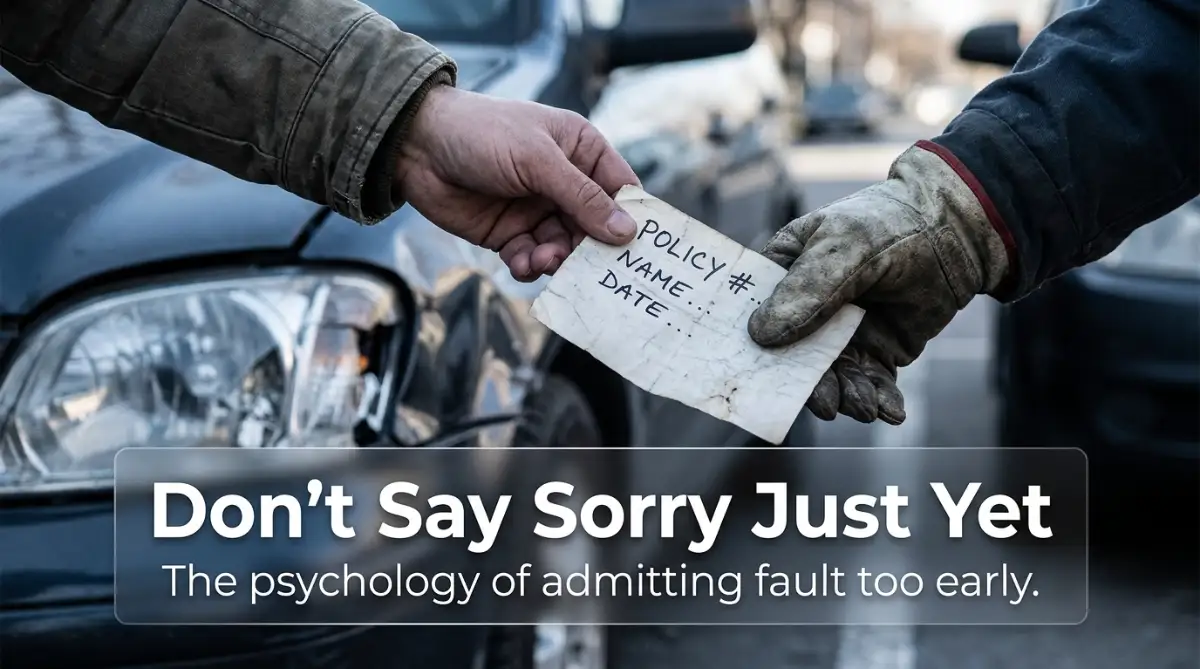
Bottom Line Up Front: What You Need to Know
- Always call the police for a report, even if there is almost zero visible damage.
- Do not apologize or guess what happened; just check if everyone is safe.
- See a doctor within 24 hours because your adrenaline easily hides real injuries.
- Never accept cash on the road or sign early settlement checks from adjusters.
How to Protect Your Wallet and Health After a Crash
We live in a fast-paced society where nobody wants to deal with extra paperwork or legal delays. Because of this, many of us assume that a tiny scratch means we can just shake hands and walk away.
Unfortunately, the legal and insurance systems do not work based on friendly handshakes. These systems are highly rigid, incredibly strict, and entirely based on documented proof.
When you handle an accident scene casually, you are essentially handing the other driver a free pass to change their story later. Let me break down the absolute worst traps people fall into when they try to be "too nice" after a minor collision.
The Myth of the Unnecessary Police Report
You might think that calling the police for a tiny dent is a massive waste of their time. This is a huge misconception that destroys solid insurance claims every single day.
When you leave the scene without an official report, it becomes your word against the other driver's word. The person who was crying and apologizing to you on the street can easily call their insurance company an hour later and blame you for the entire crash.
I have seen countless cases where a friendly driver suddenly claims that you backed into them. Without a police officer there to document the position of the cars and the weather conditions, the insurance companies will often just split the blame evenly.
This means your own insurance rates will skyrocket, and you will have to pay your heavy deductible. An official police report acts as an unbiased, third-party witness that locks the facts in place forever.
Even if the dispatcher says they will not send an officer for a minor crash, you must insist on filing a report at the nearest police station that same day. That simple piece of paper is your strongest shield against fraud and changing stories.
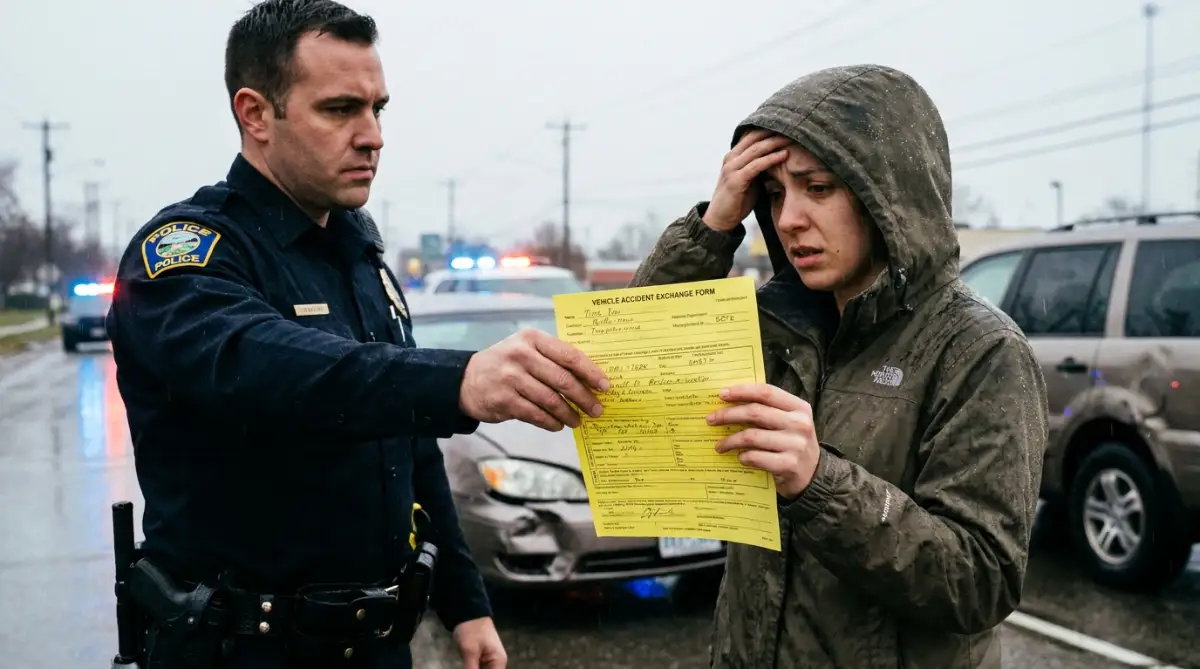
The Danger of the Polite Apology
When we accidentally bump into someone at the grocery store, we naturally say "I am so sorry." It is a basic human reflex to be polite and diffuse tension.
However, using that exact same phrase at an accident scene is a massive legal hazard. To an insurance adjuster, the phrase "I am sorry" translates directly into a legal admission of guilt.
You might just be apologizing that the accident happened at all, or expressing sympathy that their day is ruined. But the other driver's insurance company will twist your good manners and use them against you to deny your claim.
You can absolutely be polite and check to see if the other person is safe and unhurt. Just stick to neutral questions like, "Is everyone okay?" or "Do we need to call an ambulance?"
Never discuss how the accident happened, never guess about the speed you were going, and never take the blame. Let the physical evidence and the police officer determine exactly who was at fault.
Myth vs. Reality: The Apology Trap
- The Myth: Saying "I'm sorry" just shows you are a nice, polite person.
- The Reality: Adjusters code this exact phrase as an "Admission of Fault" in their system.
- What to say instead: "Are you hurt? Do we need to call an ambulance?" Keep it strictly about physical safety, nothing else.
The Adrenaline Illusion and Hidden Physical Trauma
Here is a shocking biological truth that surprises almost everyone: your body actively lies to you immediately after a crash.
When a collision happens, your brain floods your system with adrenaline and endorphins. This is an ancient survival mechanism designed to help you run away from danger, completely masking deep physical pain.
You might step out of your car feeling entirely fine, telling everyone that you are perfectly healthy. But soft tissue injuries like whiplash, micro-tears in your muscles, and even minor concussions often take up to 48 hours to show symptoms.
If you tell the police and the other driver that you have zero injuries, that statement goes into the official record. When you wake up two days later unable to turn your neck, the insurance company will argue that you must have hurt yourself doing something else at home.
I learned this lesson the hard way when I ignored a slight headache after my crash. I realized a week later that I had a mild concussion, but because I refused medical help at the scene, I had zero proof it came from the impact. Always let a real medical doctor evaluate you, because trusting your shocked brain can cost you thousands in unpaid medical bills.
You should always see a doctor or visit an urgent care clinic within the first twenty-four hours, even if you feel like Superman. A quick checkup creates an official medical timeline linking your future pain directly to the accident.
Before you continue reading, take a moment to watch this eye-opening breakdown of how insurance companies use your own words to deny your medical claims.
The Trap of the Quick Cash Settlement
Let's talk about the absolute favorite trick used by aggressive auto insurance adjusters. If the other driver is clearly at fault, their insurance company might call you within twenty-four hours of the crash.
The adjuster will sound incredibly friendly, expressing deep concern for your well-being. They will quickly offer to send you a check for five hundred or a thousand dollars just to "help you out" and close the file quickly.
To a stressed person dealing with a broken car, a quick thousand dollars sounds like a wonderful blessing. But there is a massive, highly calculated catch to this early money.
When you accept that check and sign their release form, your case is permanently closed forever. If you discover a week later that your car needs three thousand dollars in suspension work, you cannot go back and ask for more money.
If you need months of expensive physical therapy for a hidden back injury, you will be paying out of your own pocket. The insurance company offers you a tiny amount today specifically because they know your real expenses will be much higher tomorrow.
Never sign any release forms or accept quick cash until your car is fully inspected by an independent mechanic and your doctor clears your health completely.
The 3-Step "Hold Your Ground" Checklist
- Silence your phone: Do not answer calls from unknown numbers for the first 48 hours. Let the opposing adjuster leave a voicemail so you can think before you speak.
- Get a second opinion: Take your car to a local, independent body shop you trust, not the cheap shop the insurance company tries to force on you.
- Track your physical state: Write down how you feel every single morning in a notebook. Did you wake up with a stiff neck two days later? Write it down.
Relying on the Other Driver's Evidence
When an accident happens, people often just stand around and wait for the police to do all the work. They assume the officer will take photos and talk to everyone who saw the crash.
This is a terrible assumption. Police officers are busy, and for a minor fender bender, they might just take a quick statement and leave.
You must become your own lead investigator the second you step out of your vehicle. Pull out your smartphone and take a massive amount of photos from every possible angle.
Take close-up pictures of the damage on both cars, the license plates, and the debris on the road. Take wide shots that show the weather conditions, the traffic signs, and the intersection layout.
The Silent Power of Independent Witnesses
Do not just focus on the cars; look around at the people standing on the sidewalk. If someone saw the other driver run a red light or text on their phone, you need their voice.
Walk up to them, politely ask for their name, and get their phone number right there on the spot. Independent witnesses are the golden ticket to winning a disputed insurance claim.
The insurance company knows you will favor your side, and the other driver will favor theirs. A neutral bystander who has nothing to gain is the only voice a judge or an adjuster will fully believe.
If you let those witnesses walk away into the crowd, their valuable testimony disappears forever. A five-minute conversation at the scene can literally save you months of legal headaches.
The Hidden Iceberg of Vehicle Damage
We naturally judge the severity of an accident by how the outside of the car looks. If the plastic bumper cover only has a tiny crack, we assume the repair will be incredibly cheap.
Modern cars are actually designed to crumple and absorb energy to keep the passengers safe. This means the plastic bumper might easily pop back into shape, hiding massive destruction underneath.
Behind that cheap plastic cover, your car has expensive safety sensors, backup cameras, and a solid steel impact bar. A minor ten-mile-per-hour bump can bend that steel bar, ruining the structural integrity of your vehicle.
If you agree to accept two hundred dollars from the other driver to just "buff out the scratch," you are making a massive gamble.
A Quick Breakdown of Hidden Costs
To give you a better idea of what is really at stake, look at the difference between what we see and what is actually broken.
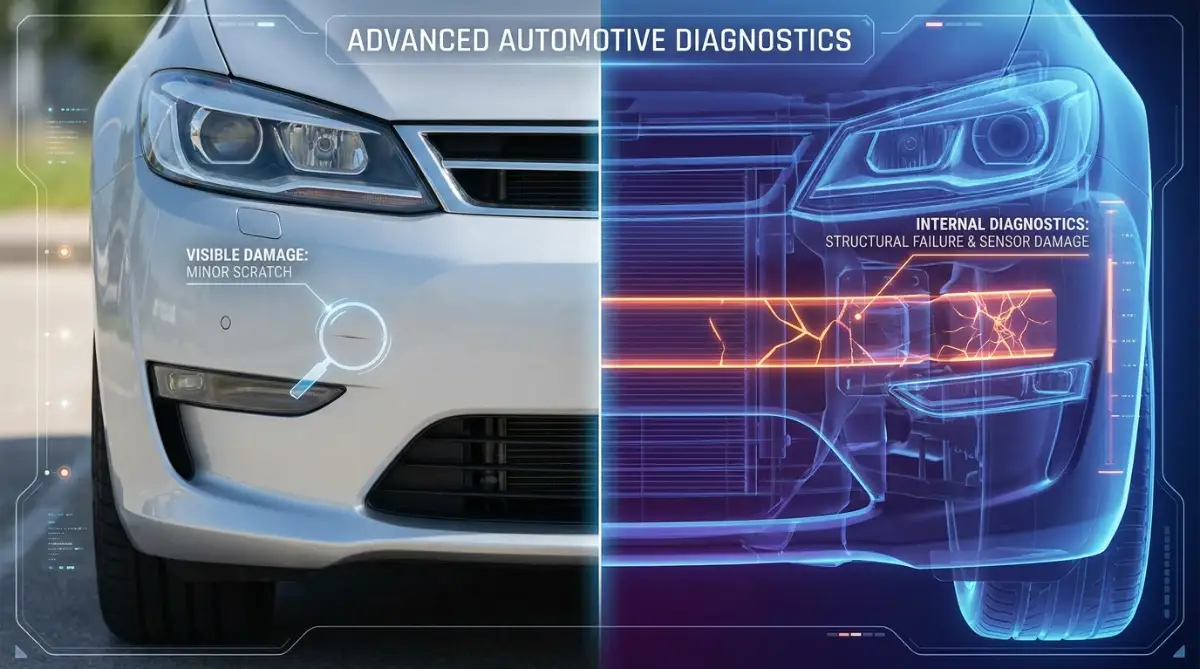
As you can see, the true cost of a minor accident is rarely visible to the naked eye. This is exactly why you must always get a professional estimate from a certified auto body shop before making any financial agreements.
The Mistake of Giving a Recorded Statement
Within a few days of the crash, the other driver's insurance adjuster will call you and ask for a "quick recorded statement." They will tell you this is just standard procedure to get your claim moving faster.
Do not fall for this common industry tactic. You are under absolutely no legal obligation to give a recorded statement to the opposing insurance company.
Adjusters are highly trained professionals whose only job is to save their company money. They will ask you tricky, leading questions designed to make you sound unsure or partially at fault.
For example, they might ask, "So, you didn't see the car coming at all?" If you say yes, they will argue you were not paying proper attention to the road.
If you say your neck hurts "a little bit," they will use that recording later to argue your pain was never severe. It is always best to speak to a legal professional before you ever let an insurance company record your voice.
The Social Media Black Hole
We live in an era where people share every single detail of their day on the internet. When something shocking like a car crash happens, the first instinct for many is to post pictures on Facebook or Instagram.
This is one of the most self-destructive things you can do for your personal injury claim. Insurance investigators actively monitor social media accounts of people who file claims.
If you claim you have severe back pain from a crash, but you post a picture of yourself carrying heavy grocery bags two days later, they will instantly deny your claim. Even a simple comment like, "Just got into a crash but thankfully I am totally fine!" will be screenshotted and used against you.
The insurance company does not care if you were just trying to comfort your worried relatives online. They will take your words literally to prove you are not actually hurt.
Keep your accident completely off the internet. Do not post photos of the damage, do not rant about the other driver, and do not discuss your medical treatments until your case is entirely settled and closed.
Why You Should Never Wait to Call Your Own Insurer
Some drivers hesitate to call their own insurance company because they are terrified their monthly rates will increase. They try to handle the entire situation in secret.
Almost every auto insurance policy has a strict clause requiring you to report any accident within a reasonable timeframe, usually a few days. If you hide the crash and the other driver suddenly decides to sue you weeks later, your insurance company might refuse to protect you.
They will argue that your failure to report the accident violated your contract, leaving you to fight a massive lawsuit entirely on your own. Reporting the accident does not automatically mean your rates will go up, especially if the police report clearly shows you were not at fault.
Your insurance company actually has powerful lawyers and investigators who can fight the other side for you. By keeping them in the dark, you are throwing away the very protection you pay for every single month.
Insider Strategies to Maximize Your Claim After a Crash
Let me share a secret that most insurance companies desperately hope you never figure out. You have much more control over the outcome of your claim than they want you to believe.
The immediate hours after a collision are a high-stakes game of chess, and the insurance adjuster is a grandmaster. To win, you must stop acting purely out of emotion and start treating the accident scene like a literal crime scene.
You need to build an unbreakable wall of evidence before you ever dial your insurance company's phone number.
Why You Must Demand a Full Medical Evaluation Immediately
I cannot stress this enough: your personal feeling of "being fine" is legally worthless. The single most powerful weapon you have against a lowball settlement is a detailed medical chart created on the exact day of the crash.
According to the National Highway Traffic Safety Administration (NHTSA), even low-speed collisions can generate enough G-force to cause severe, long-lasting micro-tears in your neck muscles.
Do not go home and try to sleep off the soreness. Drive directly from the accident scene to an urgent care clinic or your primary care doctor.
Tell the doctor exactly what happened, how fast you were going, and where you feel even the slightest bit of discomfort.
I made a massive error in my twenties by refusing an ambulance after a minor rear-end collision because I was worried about the hospital bill. Three days later, I could barely walk due to a pinched nerve, and the insurance company refused to pay my medical bills because I had a "gap in treatment." Learn from my mistake: let a real doctor document your health immediately.
When you have a medical report dated the exact same day as the police report, you completely destroy the insurance company's argument that you got hurt somewhere else.
Mastering the Art of Silent Documentation
We live in a world where we naturally want to explain ourselves to everyone around us. If you are standing on the side of the highway, you might feel the urge to tell the other driver exactly why you braked so hard.
This is the exact opposite of what you should do. Your only job is to collect information, not to give a long speech about your driving habits.
When you ask the other driver for their insurance information, do it calmly and quietly. Take a clear photo of their driver's license, their insurance card, and their license plate.
Do not ask them why they hit you, and do not let them pressure you into an argument. If they start yelling or acting aggressive, simply roll up your windows, lock your doors, and wait for the police to arrive.
Just like you must be careful with what you say at a crash scene, you must also protect yourself from hidden online threats. If you ever use public networks while waiting for a tow truck, you might want to understand the hidden dangers of using free airport Wi-Fi on vacation to keep your personal data secure.
The Secret Weapon: Your Own Dashboard Camera
If you want to absolutely bulletproof your driving record, you need to spend fifty dollars on a decent quality dashcam today.
Human memory is incredibly flawed, especially after the shock of a collision. Witnesses can get confused, and the other driver will almost always lie to protect their wallet.
A dashcam does not lie, it does not get confused, and it does not forget details. It provides raw, unfiltered video evidence of exactly who ran the red light or who suddenly slammed on their brakes.
When you hand an insurance adjuster clear video footage of their client causing the crash, the negotiation is basically over before it even begins. They know they will lose in court, so they will process your claim significantly faster.

The Catastrophic Mistakes That Will Ruin Your Life
When people try to navigate a car accident without a clear strategy, they often trigger legal disasters they never even knew existed. Let's look closely at the specific missteps that turn a simple fender bender into a lifelong financial burden.
If you want to protect your savings and your sanity, you absolutely must avoid these traps at all costs.
Handshake Deals Are a Guaranteed Scam
It sounds incredibly convenient when the other driver pulls out a wad of cash and says, "Let's just keep the insurance companies out of this." They might offer you five hundred dollars on the spot to just fix the scratch yourself.
Taking that cash is the absolute worst financial decision you can make.
What happens when you take your car to the mechanic the next morning and they quote you two thousand dollars to fix the bent frame? The other driver is long gone, you have no police report, and their insurance information is fake.
You cannot call your own insurance company now because you accepted a private bribe to keep it quiet. You are now entirely responsible for the massive repair bill, and you have zero legal options.
Never, ever accept cash on the side of the road. Always use the official channels, no matter how much the other driver begs you to keep it a secret.
Signing Blank Medical Release Forms
Within a few days of the crash, the opposing insurance company might mail you a massive stack of paperwork to sign. Tucked inside that pile is usually a document called a "Medical Authorization Release."
The friendly adjuster will tell you they just need this form so they can pay the hospital for your recent visit. This is a massive, highly deceptive lie.
If you read the fine print, that form usually gives the insurance company unrestricted access to your entire medical history for the last ten years.
They will dig through your past medical records looking for any old sports injury, a previous car crash, or even a simple doctor's visit for back pain from five years ago.
They will then use your own medical history against you, claiming that your current pain is just a "pre-existing condition" and refusing to pay your current bills.
Never sign a blanket medical release form. If they need a specific bill paid, send them that exact bill yourself or have a legal professional handle the paperwork.
Ignoring legal fine print is always a recipe for disaster. If you run a business, you might already know why signing a business contract alone is a dangerous trap. The exact same logic applies to signing insurance forms without fully understanding the consequences.
Waiting Too Long to Seek Legal Advice
Many people assume that hiring a legal professional is only for massive, multi-car pileups with severe injuries. They think a minor bump is too small for a lawyer to care about.
This hesitation is exactly what the insurance companies rely on. The longer you wait to get professional advice, the more mistakes you will accidentally make on your own.
Every single state has strict deadlines, called statutes of limitations, for filing a personal injury claim. If you spend months arguing with the adjuster on your own and miss that deadline, your case is thrown out permanently.
Most accident attorneys offer a completely free initial consultation. It costs you absolutely nothing to sit down with an expert, explain the crash, and find out if the insurance company is trying to cheat you.
When you have a professional handling the aggressive phone calls and complex paperwork, you can actually focus on healing your body instead of fighting a massive corporation.
Your Ultimate Action Plan for the Road Ahead
When you look closely at all the tricky tactics, hidden vehicle damage, and delayed physical injuries, it becomes completely clear why treating a minor crash casually is a terrible idea. The insurance system was not built to protect your best interests.
It was built by massive corporations whose primary goal is to save their own money by paying you as little as legally possible. When you try to be too friendly or rush the process, you are simply handing them the tools they need to deny your claim.
The real goal of handling an accident scene properly is not just to fix your bumper. The true goal is to build an absolute fortress of evidence that protects your finances, your health, and your peace of mind.
When you take the time to call the police, take detailed photos, and see a doctor immediately, you are taking control of the narrative. You are stopping the other driver from lying, and you are forcing the insurance company to treat you with the respect you deserve.
I finally learned to stop being the "nice guy" at accident scenes, and it completely changed how insurance companies treated me. I stopped apologizing, started taking massive amounts of photos, and let the police handle the arguments. Do not let the stress of a crash force you into making a terrible financial mistake. Print out a basic accident checklist today, put it in your glovebox, and promise yourself that you will follow it step-by-step the next time you hear that terrible crunch of metal.
Real Answers to Your Most Urgent Crash Questions
Can I leave the scene if the other driver promises to pay me later?
Absolutely not. Leaving the scene of an accident without exchanging official information or filing a police report is considered a hit-and-run in many states. Even if they seem trustworthy, you must protect yourself by getting the police involved to document the exact details of the crash.
What if I feel completely fine right after the accident?
You should still get evaluated by a medical professional within twenty-four hours. Adrenaline masks severe soft tissue injuries like whiplash and concussions. Having a doctor document your condition immediately prevents the insurance company from claiming your injuries were caused by something else later in the week.
Do I really need to call my own insurance if it wasn't my fault?
Yes, you must notify your own insurance provider quickly. Most policies have a strict contractual requirement to report any collision within a few days. If the at-fault driver's insurance tries to deny liability, your own company can step in and fight them on your behalf.
How do I handle the other driver's aggressive insurance adjuster?
You are under no legal obligation to give the opposing adjuster a recorded statement or sign any of their release forms right away. Simply tell them you are seeking medical treatment and will forward the police report when it is ready. If they continue to harass you, it is time to consult a legal professional to handle the communication for you.
Disclaimer: This article is strictly for informational and educational purposes only and does not constitute official legal, medical, or financial advice. Laws regarding auto accidents, liability, and insurance claims vary significantly by state and local jurisdiction. Always consult with a licensed attorney and a qualified medical professional immediately following any motor vehicle collision to fully protect your rights and your health.