
The Hidden Nightmare of Unspoken Medical Wishes
Imagine getting a phone call at 2 AM that flips your entire world upside down. That’s exactly what happened to my family when my dad collapsed out of nowhere. We had zero idea what he wanted, and guessing his medical wishes almost ruined my relationship with my brother. Let me show you how to protect your family from the exact nightmare I lived through, without needing a fancy lawyer or spending a fortune.
We all just stared at each other in total panic. He never wrote his wishes down because he thought talking about end-of-life care was simply bad luck.
That single night turned into weeks of bitter, agonizing arguments between me and my brother over life support and feeding tubes. The guilt was completely suffocating because none of us actually knew what he would have preferred. We were forced to make life-or-death choices while completely emotionally drained, second-guessing every single decision we made.
I realized right then that avoiding a piece of paper does not stop bad things from happening to you. It just dumps the absolute worst burden imaginable onto the shoulders of the people you love the most.
Every single day, normal families walk into hospitals assuming they have plenty of time to figure these things out. They assume the doctors will simply know what to do, or that their spouse can easily make every choice without any legal friction.
They think these documents are just for the elderly, the wealthy, or the deeply paranoid. But this simple, widespread misunderstanding completely destroys family relationships and mental peace. People lose their entire life savings keeping a loved one on machines against their unwritten wishes, all because they believed a few common rumors.
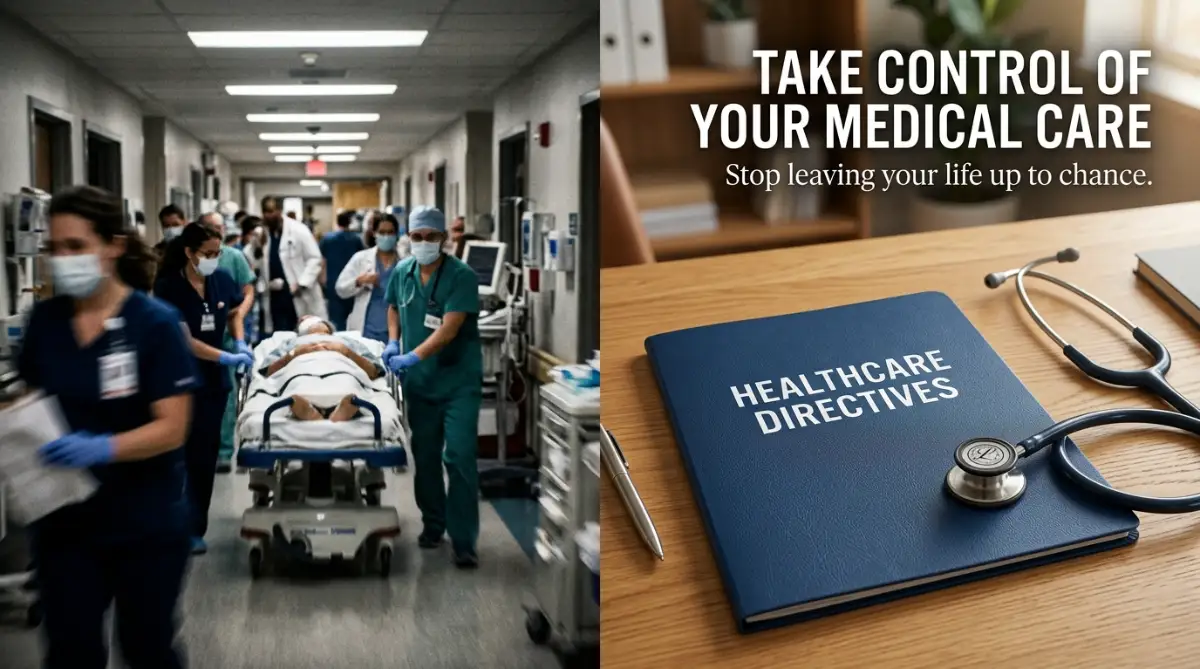
What You'll Get From This Guide (At a Glance):
- Why your family cannot legally make medical choices for you just because they are related to you.
- The real reason a living will doesn't mean doctors stop treating you—it just gives them your personal rulebook.
- Why verbal promises simply do not hold up in a busy hospital.
- How to get this paperwork done for free, without paying expensive legal fees.
Breaking Down the Fiction: What You Actually Need to Know
We live in a world where misinformation spreads like absolute wildfire. When it comes to legal and medical documents, listening to your neighbor's advice can be incredibly dangerous.
The concept of an advance healthcare directive is actually incredibly simple, yet it is surrounded by so much unnecessary fear and confusion. People hear horror stories on television and immediately assume they are signing their own death warrant.
This document is simply an instruction manual for your doctors and your family. It only goes into effect if you are physically or mentally unable to speak for yourself.
Let's carefully pull apart the most dangerous lies people believe about this process. We will look at exactly how the medical system works so you can take full control of your own healthcare journey.
Quick Myth vs. Fact Check
- Myth: Only sick or older folks need to write this down.
- Fact: If you are over 18, doctors legally need your written permission for care, even if you are totally healthy right now.
- Myth: It means "Don't treat me."
- Fact: It simply tells the hospital exactly how you want to be treated.
Lie #1: "I Am Way Too Young and Healthy to Worry About This"
This is easily the most common excuse people make. You hit the gym, eat your vegetables, and feel totally invincible.
You look at legal planning as something you do when you turn seventy, not something to worry about in your prime. However, medical emergencies do not care about your gym routine or your age.
A sudden car crash, an unexpected stroke, or a severe sporting injury can instantly leave anyone unable to communicate. If you are over the age of eighteen, you legally need a documented plan.
Once you are a legal adult, your parents can no longer automatically step in to make your medical decisions without going through massive legal hurdles. I have seen healthy people in their twenties end up in prolonged comas, leaving their parents fighting in court just to get access to their medical records.

Writing your wishes down early is essentially like buying car insurance. You never want to use it, but driving without it is wildly irresponsible.
Lie #2: "If I Sign This, Doctors Will Just Give Up on Me"
There is a massive fear that if a hospital sees you have a living will, they will just throw in the towel and refuse to treat you. People think it is a giant neon sign that says "Do Not Treat Me."
This is a complete Hollywood myth that has zero basis in real medical ethics. Your doctors have a binding ethical oath to save your life.
Your directive is absolutely not a "Do Not Resuscitate" (DNR) order, unless you specifically write it that way. It is a highly detailed menu of your personal boundaries.
You can specifically write down that you want every single life-saving measure possible, including ventilators and feeding tubes. The document simply ensures the doctors follow your exact rules when you cannot speak.
Want to see exactly how doctors interpret these documents in real hospital settings? Watch this incredibly insightful breakdown by a medical professional explaining how your written wishes actually help them save lives better.
Lie #3: "My Family Already Knows What I Want"
You might have had a casual conversation with your spouse over dinner about what you would want if you got really sick. You assume that conversation is totally enough to guide them.
This is a terrible assumption. The fog of deep grief completely alters how the human brain processes information and makes decisions.
When your spouse is crying in an emergency room, the last thing they can do is remember a casual chat from three years ago. Furthermore, the hospital's legal department does not care what your spouse claims you said.
If there is a disagreement among your kids, the hospital will often pause treatments and wait for a court order.
I actually made this exact mistake with my own wife early in our marriage. I told her my wishes verbally, thinking that was enough. My pro tip? Never trust your family's memory during a crisis; the sheer stress of an ICU will make them forget everything you said. Writing it down removes their doubt entirely and protects them from feeling guilty about their choices.
The Reality Check: Verbal Wishes vs. Written Directives
To make this completely clear, let's look at a simple comparison of what happens in the real world. Relying on verbal promises is a massive gamble.
As you can clearly see, a simple piece of paper entirely shifts the power back into your hands. It stops the hospital from guessing and stops your family from fighting.
Lie #4: "I Have to Be Rich to Afford These Legal Documents"
A lot of folks hear the words "estate planning" and immediately picture wealthy people in expensive suits paying thousands of dollars to lawyers. They assume regular working-class families cannot afford this kind of protection.
The truth is that setting up a basic healthcare directive is one of the most affordable legal steps you can ever take. In many places, your local hospital will even provide the standard forms completely free of charge.
You can easily download state-specific templates online, fill them out at your kitchen table, and just get them notarized for a few dollars. While having a lawyer review everything is highly recommended for complex family situations, it is not strictly required.
You do not need a massive bank account to protect your body and your choices. The actual cost of NOT having one is what will bankrupt your family.
Court fees, guardianship hearings, and prolonged stays in the ICU can easily cost hundreds of thousands of dollars. Spending an hour filling out a form today saves your family a financial nightmare tomorrow.
Lie #5: "Once I Write It, I Can Never Change My Mind"
People are often terrified of commitment, especially when it comes to medical choices. They think that signing this document means their choices are permanently locked in stone forever.
They worry that new medical technologies might be invented, or that their personal views on life support might change as they get older. This fear prevents millions of people from ever putting a pen to paper.
Let me assure you, a living will is a highly flexible, living document. You can tear it up, burn it, or rewrite it literally anytime you want.
As long as you are still of sound mind, you are the absolute boss of your own directives. In fact, medical professionals actively encourage you to update your documents after major life events.
If you get married, get divorced, receive a new medical diagnosis, or just change your mind, you simply fill out a new form. You just need to make sure you give the newest copy to your doctors and destroy the old ones.
Lie #6: "A Regular Will Already Covers My Medical Choices"
This is a very dangerous mix-up of legal terms. Many people sit down, write a Last Will and Testament to distribute their money, and assume their medical choices are covered too.
A Last Will and Testament only goes into effect after you pass away. It handles your house, your bank accounts, and your physical belongings.
It does absolutely nothing to help you while you are still alive but incapacitated in a hospital bed. A living will is entirely separate; it only functions while your heart is still beating.
You need both documents to have a truly secure life plan. One protects your hard-earned assets after you are gone, and the other protects your physical body right now.
Do not let confusing legal names leave you vulnerable. Always ensure you have a specific, separate document entirely dedicated to your healthcare wishes.
Lie #7: "My Healthcare Agent Can Override My Written Wishes"
Sometimes you appoint a trusted friend or family member as your medical power of attorney (also known as a healthcare proxy). People often fear that this person can just ignore the living will and make their own choices.
They worry their proxy might get emotional and tell the doctor to do the exact opposite of what the document says. This is highly legally inaccurate.
Your written directive is the ultimate authority. Your healthcare proxy is simply there to enforce what you wrote down, not to rewrite your rules.
If a doctor asks a question that is not specifically covered in your document, your proxy will use their best judgment to answer it based on your values. But they cannot legally contradict a clear, written instruction you have provided.
This is exactly why you need to choose your proxy very carefully. Pick someone who is strong enough to look a doctor in the eye and advocate for your exact wishes, even if they are crying while doing it.
Smart Strategies for Long-Term Medical Security
Writing down your medical boundaries is only the first step in the process. A piece of paper sitting quietly in a desk drawer will not automatically jump up and speak for you during an emergency.
To make sure your healthcare directive actually works when you need it most, you have to treat it like an active, living strategy. You must build a solid communication system around your documents so your family is never left guessing.
I want to share some incredibly practical habits that separate a prepared family from a panicked family. These are the exact steps medical professionals wish every single patient would take.
The Power of the "Kitchen Table" Conversation
You cannot just sign a legal form and keep it a secret from your loved ones. You need to sit down with your family at the kitchen table and explain exactly what you decided.
I know talking about hospital beds and life support is incredibly uncomfortable for everyone. However, having this awkward chat over coffee today prevents a massive emotional breakdown in the ICU tomorrow.
You simply tell them, "I made these choices so you never have to feel guilty about making them for me." This framing completely changes the mood of the conversation.

It stops being a scary talk about mortality and becomes a beautiful act of love and protection. When your family understands the deep reasoning behind your choices, they will fight hard to honor them.
Avoiding the Safe Deposit Box Trap
One of the absolute worst places to store your healthcare documents is inside a locked bank vault. Medical crises do not wait for regular banking hours.
If you suffer a massive stroke on a Saturday night, a safe deposit box is completely useless to the emergency room doctors. You need these instructions to be instantly accessible at all times.
Instead, keep the original physical copies in a fireproof box at home, and clearly tell your proxy exactly where the key is. You should also keep a printed copy in your car's glove compartment.
If you happen to get injured in an unexpected medical emergency like a minor car collision, emergency responders often check the glovebox for registration and identification. Finding your healthcare proxy information right there saves them incredible amounts of time.
My Personal "Glovebox Survival Kit" Checklist:
- A single printed copy of your signed directive.
- The name and direct cell number of your healthcare proxy.
- A sticky note listing your primary doctor's phone number.
- (Keep this in a cheap plastic folder in your car right next to your insurance card!)
Going Digital with Your Health Records
We manage our bank accounts, our groceries, and our friendships online, so your medical planning should be digital too. Scan your signed documents and save them as a secure PDF file on your smartphone.
You can easily email this file directly to your primary care physician to keep in your permanent digital health file. According to advance care planning guidelines from the National Institute on Aging, making sure your primary doctor has a copy on file is one of the most effective ways to guarantee your wishes are followed across different hospital systems.
Just be careful about how you send these files. If you are traveling and need to send a copy to a relative, avoid emailing sensitive healthcare documents over public networks to prevent your personal data from being intercepted.
The Rule of the "Five D's"
Your thoughts on medical treatments will naturally change as you experience different seasons of life. A medical directive is never a "set it and forget it" kind of thing.
Lawyers and doctors recommend reviewing your paperwork whenever you hit one of the "Five D's."
- Decade: Every time you enter a new decade of life, your physical health and priorities shift.
- Death: If a loved one passes away, especially your named proxy, you must immediately update your forms.
- Divorce: A major family split completely changes who you want making your personal choices.
- Diagnosis: Receiving news of a chronic illness should instantly trigger a review of your care boundaries.
- Decline: Any major drop in your daily mobility or independence requires a fresh look at your plans.
By checking in on your documents regularly, you ensure they always reflect the person you are today.

Catastrophic Errors That Will Ruin Your Healthcare Plan
Even with the best intentions, people constantly shoot themselves in the foot when drafting their medical wishes. They rush through the forms, use bad language, or pick the wrong people to help them.
When you make a mistake on a standard contract, you might lose a little bit of money. When you make a mistake on your healthcare directive, you lose control over your own physical body.
These are the most painful and common blunders I see families make every single day. If you want to protect your dignity, you absolutely must avoid these specific traps.
Picking a Proxy Based Only on Guilt
Choosing your healthcare proxy is the most important decision you will make in this entire process. People often just pick their oldest child or their spouse automatically, simply out of a sense of obligation.
They worry that picking someone else will hurt feelings and cause family drama. This is an incredibly dangerous way to make a life-altering choice.
Your spouse might love you deeply, but they might be far too emotional to ever tell a doctor to stop a medical treatment. If they cannot bear the thought of letting you go, they might ignore your written wishes completely.
You need to pick someone who acts like a bulldog when it comes to defending your boundaries. As recommended by the American Bar Association regarding healthcare decision-making, your ideal agent must be someone who can separate their own personal grief from your specific legal instructions.
Choose the person who stays calm under pressure, asks doctors hard questions, and respects your values unconditionally.
Using Vague, Unenforceable Language
Many people try to write their own custom instructions on a blank piece of paper to save time. They write things like, "I do not want any heroic measures," or "Just let me pass away naturally."
While this sounds poetic, it is a complete nightmare for a medical team to interpret. What exactly counts as a "heroic measure" to you?
Does a simple blood transfusion count as heroic, or do you strictly mean a mechanical ventilator? If your instructions are fuzzy, the hospital's legal team will step in and demand more clarity, which usually stalls your care.
This is exactly why signing complex legal paperwork without proper guidance often backfires on well-meaning families. You must use precise medical terms like "artificial nutrition," "CPR," and "dialysis" so the hospital knows exactly what treatments you accept or reject.
Hiding the Documents from Your Own Doctor
It blows my mind how many people will pay a professional to draft a beautiful, legally binding living will, and then never give a copy to their doctor. They assume the hospital will magically know they have a plan in place.
Medical databases are incredibly fragmented, and your primary doctor cannot read your mind. If your forms are sitting at home on your desk, the emergency room staff will operate under the default legal assumption that you want everything possible done to keep you alive.
Hand-deliver a hard copy to your doctor's receptionist and physically watch them scan it into your electronic chart. You have to take personal responsibility for distributing your own legal armor.
Falling for Free Online Scams
In our rush to get things done cheaply, people often search for free templates online. They click the first link they find and download a generic, poorly written form.
Many of these shady websites are not actually providing legal documents; they are just harvesting your personal information to sell to marketers. You end up giving away your address, full name, and family details to total strangers.
You have to be incredibly proactive about protecting your personal identity and sensitive data when searching for legal help on the internet. Always use trusted, verified sources like your state's official government website or a recognized medical association to download your forms.
Procrastinating Until It Is Too Late
The absolute biggest mistake you can make is simply doing nothing at all. People constantly say they will get around to it "next month" or after the holidays.
A medical crisis does not send you a polite calendar invite before it happens. Every day you wait is a massive gamble with your family's emotional stability.
Your Personal Blueprint for Medical Independence
When you strip away all the complicated legal jargon and scary rumors, this entire topic comes down to one single word: control. You are simply taking control of your own narrative before an illness tries to steal it from you.
The medical system is a massive, confusing machine that naturally defaults to keeping patients alive at any cost. Without your specific, written guidance, that machine will run right over your personal values and drain your family's emotional reserves.
By taking the time to document your wishes today, you are giving your loved ones the ultimate gift. You are lifting an impossible burden off their shoulders so they can focus entirely on holding your hand, rather than fighting with doctors.
If you need help starting this conversation with your relatives, check out the incredible family communication resources provided by AARP, which offer brilliant scripts for breaking the ice.
I finally stopped making excuses and filled out my own forms last year, and the sense of absolute relief was immediate. Grab a pen, make your choices known, and give yourself the profound peace of mind that comes with being truly prepared.
Clear Answers to Your Biggest Healthcare Planning Doubts
Do I really need to hire an expensive lawyer to write this?
No, you absolutely do not need an attorney for a basic, standard advance directive. Every single state provides highly specific, legally binding templates online that you can fill out yourself for free. However, if you have an incredibly complex family dynamic or massive disagreements among your children, paying a professional for an hour of their time is a very smart move.
What happens if I change my mind while lying in the hospital?
As long as you are conscious and can communicate clearly, your spoken words override the written document every single time. The paper only takes your voice if you lose the physical ability to speak or think clearly. You are always the boss of your own body right up until the moment you cannot communicate.
Does my living will give my family access to my bank accounts?
Absolutely not, and this is a very common point of confusion. A healthcare directive and a medical proxy only grant authority over your physical medical treatments. If you want someone to pay your bills or access your money while you are in the hospital, you need a completely separate document called a Financial Power of Attorney.
Can an emergency room doctor refuse to follow my written instructions?
In highly rare cases, a doctor might hesitate if your instructions are incredibly vague or if your requests directly violate their specific hospital policies. However, by law, they must immediately transfer your care to another physician or facility that will honor your documented wishes. This is exactly why being highly specific and clear in your writing is so important.
Is my document still valid if I move to a completely different state?
Generally, most states will legally recognize a healthcare document that was properly filled out in another state. However, laws and standard medical terminology do vary across state lines. If you permanently relocate, it is highly recommended to fill out the specific forms for your new home state just to prevent any delays in the emergency room.
Disclaimer: This article is provided strictly for educational and informational purposes only and does not constitute official legal, medical, or financial advice. Laws regarding advance healthcare directives, living wills, and medical proxies vary significantly by state and local jurisdiction. Always consult with a licensed attorney and your primary care physician to ensure your documents are legally binding and perfectly suited to your specific personal needs.