The Day I Almost Lost My Dream Over a Few Pages of Paper
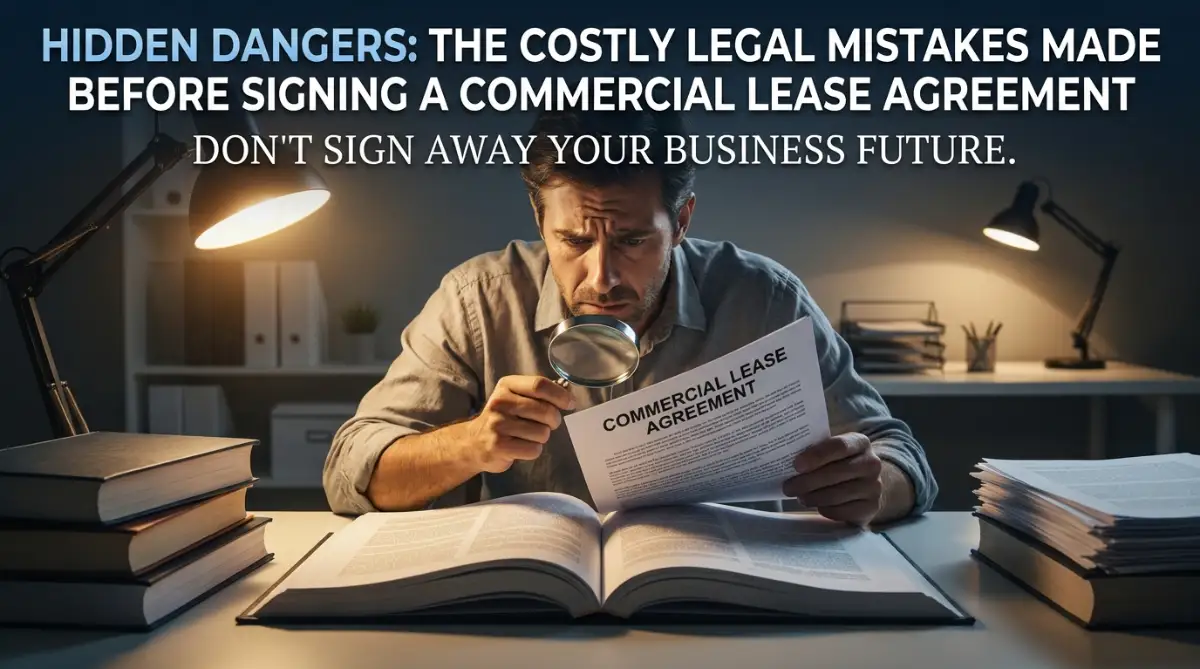
Let me guess: you finally found the perfect spot for your business, the landlord handed you a thick stack of papers, and you just want to sign it so you can get the keys. Stop right there. I have seen too many smart business owners wipe out their entire life savings because they did not read the fine print. Before you pick up that pen, let's talk about the hidden traps inside that contract and exactly how you can protect your money.
Every single day, passionate entrepreneurs walk into leasing offices with big dreams and a lot of hope. They have the perfect business plan, the right inventory, and the best marketing strategy. But they completely ignore the legal paperwork that ties them to a massive financial commitment.
Imagine waking up to a surprise bill from your landlord for thousands of dollars to fix a roof you do not even own. Imagine the panic setting in when you realize your personal home and family savings are on the line if your business goes under.
What You Need to Know Right Now:
- A standard commercial lease always favors the landlord, never you.
- Triple Net (NNN) leases hide unpredictable and expensive maintenance costs.
- Signing a personal guarantee puts your family home and bank accounts at risk if the business fails.
- Never assume the landlord will fix a broken AC unit—check your contract first.
Decoding the Legal Maze: Protecting Your Business Future
To stop this from happening to you, we need to break down exactly what hides inside those confusing legal documents. You do not need a law degree to protect yourself. You just need to know exactly where the traps are hidden and how to ask the right questions.
Let's look at the most dangerous mistakes people make and how you can completely avoid them before putting your pen to paper.
Overlooking the "Triple Net" and CAM Fee Disasters
One of the most common reasons new businesses run out of cash is a deep misunderstanding of how lease types work. Most commercial landlords use a structure called a Triple Net Lease (NNN).
In a standard residential lease, you just pay your rent, and the landlord handles the taxes, insurance, and property repairs. Commercial real estate is a completely different game. In a Triple Net Lease, the base rent might look amazingly affordable.
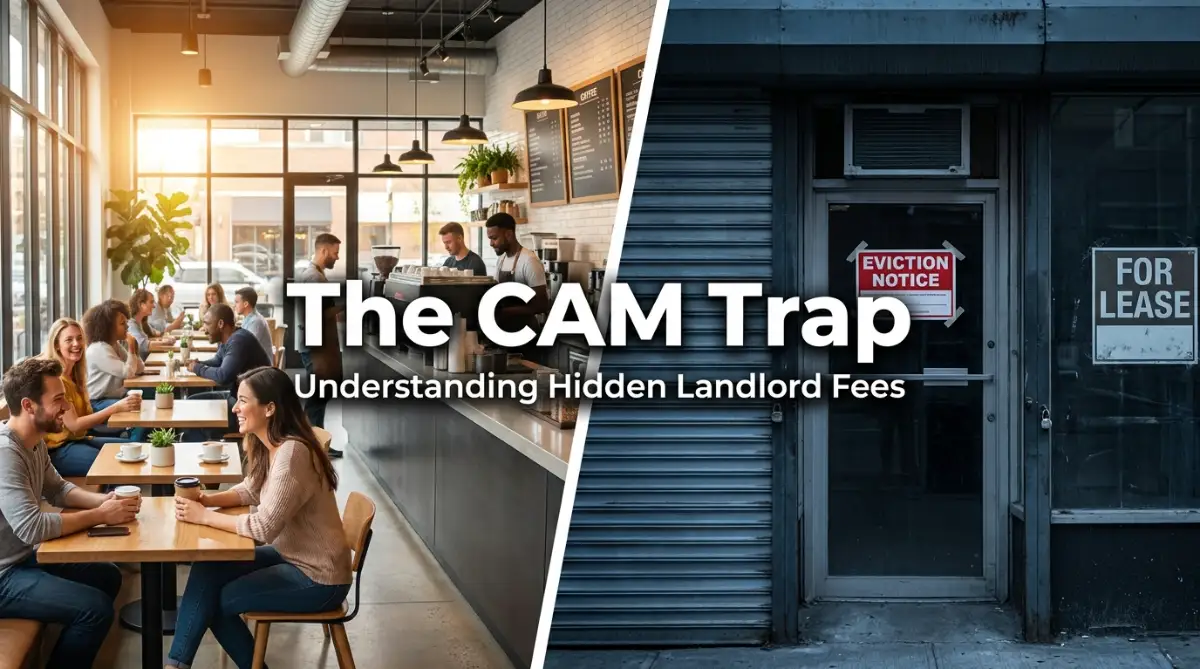
However, you are also responsible for paying the building's property taxes, the building's insurance, and the Common Area Maintenance (CAM) fees. These CAM fees are exactly where landlords hide massive, unpredictable costs.
CAM fees cover things like parking lot repairs, landscaping, snow removal, and even the salary of the property manager. If the parking lot needs a massive repaving job, the landlord simply passes that high cost down to you and the other tenants.
Pro Tip from My Own Experience: When I signed my first lease, I had no idea CAM fees could change every year. I got a surprise $4,000 bill at the end of the year because the landlord decided to upgrade the building's exterior. Always negotiate a "cap" on your CAM fees so they can never increase beyond a small, predictable percentage each year.
Common Myth vs. Harsh Reality: CAM Fees
Myth: The landlord pays for building repairs because they own the building.
Reality: If you sign a Triple Net (NNN) lease, you pay for the roof, the parking lot, and even the lawn care. Always ask for a "CAM fee cap," so your rent does not double overnight just because the landlord wanted to plant new trees.
You must ask for a detailed history of the building's CAM charges over the last three years. If the landlord refuses to show you those records, you need to walk away immediately.
Watch This Before You Read Any Further:
If you are feeling completely overwhelmed by lease types, this short video breaks down the exact difference between gross leases and net leases in plain English.
The Danger of the Personal Guarantee
When you form a Limited Liability Company (LLC) or a Corporation, you do so to separate your personal assets from your business liabilities. You want to protect your house, your car, and your family's savings if the business fails.
Commercial landlords know this. Because a new LLC has no credit history, landlords will almost always force you to sign a "Personal Guarantee."
By signing this specific clause, you are legally promising that if your business goes bankrupt and cannot pay the rent, the landlord can sue you personally. They can come after your personal bank accounts and your family home to collect the remaining rent for the entire lease term.
This completely bypasses the legal protection your LLC was supposed to provide. If you sign a five-year lease and your business closes after one year, you are personally on the hook to pay the rent for the next four years.

Corporate Liability vs. Personal Liability
To fix this problem, you need to negotiate a "Good Guy Clause." This legal concept means that if your business fails, but you leave the property in good condition and give plenty of notice, your personal guarantee is cancelled. You will lose your security deposit, but your personal life will remain safe.
Falling for Vague "Use and Exclusive" Clauses
Imagine opening a specialty coffee shop. You spend thousands of dollars on equipment, marketing, and interior design. Six months later, the landlord rents the empty space right next door to a massive, well-known coffee franchise.
Your business gets crushed almost instantly. How is this legally possible? It happens because the tenant failed to negotiate an "Exclusive Use" clause.
An exclusive use clause is a legal promise from the landlord that they will not rent any other space in the same shopping center to a direct competitor. If you sell pizza, no one else in that building can sell pizza.
On the flip side, you also have to watch out for a highly restrictive "Permitted Use" clause. Landlords often try to limit exactly what you are allowed to sell.
Let's say your permitted use says you can only sell "gourmet cupcakes." Two years later, cupcakes are no longer popular, and you want to start selling fresh bread and sandwiches to survive. If your lease is too restrictive, the landlord can legally block you from changing your menu.
Always negotiate a broad permitted use clause. Instead of "gourmet cupcakes," fight for the phrase "retail bakery and any other lawful food sales." This gives your business the flexibility to adapt to changing market trends without begging for the landlord's permission.
Misunderstanding Build-Outs and Alteration Rules

When you rent a commercial space, it is usually an empty shell with concrete floors and bare walls. You will need to spend money to build walls, add lighting, install plumbing, and make it look like a real business.
This process is called the tenant build-out. Landlords will sometimes offer a "Tenant Improvement Allowance" (TIA), which is a specific amount of cash to help you pay for these renovations.
The hidden trap here is who actually owns those improvements once the lease is over. Most standard leases state that anything permanently attached to the building becomes the landlord's property.
If you spend $50,000 installing a heavy-duty commercial kitchen exhaust system, you cannot take it with you when you leave. You are essentially paying to upgrade the landlord's property for free.
Furthermore, standard leases often require you to return the space to its "original condition" at the end of your term. This means you have to pay money to build the space, and then pay money again five years later to tear it all down.
You must carefully negotiate the restoration clause. Make sure the lease clearly states that you can leave your authorized alterations in place when you move out.
The Subleasing and Assignment Trap
Life is highly unpredictable. You might get sick, you might need to move to another state, or your business might grow so fast that you need a much larger building.
When you need to get out of a lease early, your best option is usually assigning the lease to someone else or subletting the space to a new tenant.
However, almost all commercial leases include a section that says you cannot assign or sublease without the landlord's "written consent." The danger lies in how much power the landlord has to say no.
If the lease does not specify that the landlord must act reasonably, they can deny your request for absolutely no reason at all. You could find the perfect replacement tenant with amazing credit, and the landlord could just say no because they feel like it.
You are then trapped paying rent for an empty building. To protect yourself, ensure the lease states that the landlord's consent "shall not be unreasonably withheld, conditioned, or delayed."
This small string of legal words forces the landlord to accept your new tenant unless they have a solid, documented financial reason to refuse. It is your ultimate escape hatch if things go wrong.
The HVAC Maintenance and Replacement Nightmare
Heating, Ventilation, and Air Conditioning (HVAC) systems are incredibly expensive. A full replacement of a commercial rooftop unit can easily cost between $10,000 and $20,000.
Most beginner business owners assume that if the AC breaks down, the landlord will fix it, just like in an apartment. This is a massive mistake.
In many commercial agreements, the tenant is entirely responsible for maintaining, repairing, and even completely replacing the HVAC unit if it dies during their lease term.
Imagine renting a space for three years, and in the second month, a twenty-year-old AC unit completely stops working. Because of the contract you signed, you just bought your landlord a brand-new $15,000 unit.
You are basically buying a used car and agreeing to buy the previous owner a brand-new engine if the old one blows up. It makes absolutely no logical sense.
My 3-Step HVAC Survival Checklist:
- Hire your own inspector to check the AC unit before you sign anything.
- If the system is over 10 years old, demand the landlord replaces it first.
- Add this exact line to your contract: "Tenant HVAC repair costs shall not exceed $500 annually."
To prevent this financial disaster, always hire a professional inspector to check the HVAC system before signing anything. If the unit is old, demand that the landlord replace it first.
At the very least, negotiate a clause that caps your repair costs at a small amount, like $500 per year. Anything beyond that cap should legally fall on the landlord's shoulders.
Unfair Default Clauses and Cure Periods
No one plans to miss a rent payment. But sometimes, a massive storm hits, your inventory gets delayed, and cash flow dries up for a few weeks.
In a fair contract, if you are late on rent, the landlord gives you a written warning. This warning gives you a certain number of days to find the money and pay up. This timeframe is called a "Cure Period."
However, many aggressive landlord-friendly leases have incredibly harsh default clauses. They might state that if your rent is late by just one single day, you are immediately in default.
Once you are in default, the landlord can legally change the locks, seize all your valuable equipment, and terminate your business overnight. They can do all of this without ever sending you a warning letter or picking up the phone.
You must carefully review the default section of your agreement. Demand a mandatory written notice for any default. You should get at least five to ten business days to cure a financial mistake (like late rent).
You should also demand at least thirty days to cure a non-financial mistake (like leaving boxes in the shared hallway by accident). Mistakes happen, and your business should not be destroyed over a minor, correctable error.
By taking the time to understand these hidden clauses, you gain immense power. You stop being a vulnerable target and become a smart, prepared negotiator.
Always remember that every single word in a lease draft is designed to protect
Master-Level Negotiation Tactics for Business Owners
Taking control of your commercial agreement requires a completely different mindset. Most landlords expect you to just accept their first draft without asking any difficult questions. We are going to change that dynamic completely right now.
To win this game, you must understand the true power of a Letter of Intent (LOI). This is your ultimate secret weapon in the commercial real estate world. Before you ever look at a massive, confusing legal contract, you should always negotiate an LOI first.
An LOI is a simple, plain-English document that outlines the basic terms you want to agree on. It includes essential things like the rent price, the length of your stay, and exactly who pays for maintenance. Because it is usually a non-binding document, you can argue over these major points without feeling intense legal pressure.
Once the LOI is agreed upon, the landlord’s attorney will draft the massive formal contract based on those simple terms. If they try to sneak in extra fees later, you can easily point back to the LOI. This simple step saves you hours of expensive legal arguments.
Another advanced strategy is demanding a strict "Audit Right" for your yearly expenses. Remember those unpredictable maintenance fees we discussed earlier? You need a guaranteed way to verify that the landlord's math is actually correct.
You must insist on an annual right to audit the landlord's financial books regarding your building. Sometimes property managers make mistakes and accidentally overcharge you for unexpected commercial building repairs. If you have audit rights in your contract, you can hire an independent accountant to check their expense reports.
If your accountant finds a mistake, the landlord must refund your money immediately. Smart tenants use this tactic to save thousands of dollars every single year. You can learn more about the complex process of auditing landlord expenses from professional real estate institutes.
Finally, you need to understand the concept of a "Co-Tenancy Clause" if you are renting in a shopping center. Imagine you open a small boutique right next to a massive, famous department store. You chose that exact spot because the big store brings thousands of walking customers past your window every day.
What happens if that massive anchor store goes bankrupt and leaves the shopping center? Suddenly, your foot traffic drops to zero, and your sales completely dry up. You are still trapped paying expensive rent, but the value of the location is completely gone.
A co-tenancy clause protects you from this specific nightmare scenario. This rule states that if the main anchor tenant leaves, you automatically get a massive discount on your rent. It also gives you the legal right to break your agreement early if the landlord cannot find a replacement anchor tenant within a few months.
Negotiating these advanced clauses takes patience and a deep understanding of basic principles of contract law. You should always hire an experienced commercial real estate attorney to help you draft these specific protections. A good lawyer will easily pay for themselves by preventing future financial disasters.

The Heartbreaking Traps That Destroy New Entrepreneurs
Seeing passionate business owners lose everything because of a bad contract is truly heartbreaking. People pour their life savings, their sweat, and their tears into a dream, only to watch it collapse over a few pages of legal jargon. One of the most devastating mistakes I see is trusting verbal promises from a friendly landlord.
During the property tour, the landlord might smile and say, "Oh, do not worry about that strict repair clause; I will never actually enforce it." They might seem like the nicest person in the world. However, signing a binding financial document based on a verbal promise is a recipe for absolute disaster.
In the legal system, there is a concept called the "Four Corners Rule." If a dispute goes to court, the judge will only look at the words printed within the four corners of your contract. They do not care what the landlord verbally promised you over a cup of coffee. If it is not written down on the paper, it simply does not exist.
Another massive pitfall is rushing the timeline out of pure desperation. Many entrepreneurs set a hard opening date for their store before the paperwork is even finished. As the opening day gets closer, the stress levels skyrocket.
The landlord knows you are desperate to get the keys and start setting up your shop. They will intentionally drag their feet on the paperwork to make you panic. In that state of deep anxiety, you might sign a terrible deal just to keep your business plan on track.
Never let a timeline force you into draining your personal savings over a bad deal. You must always have a backup location in mind. If you are willing to walk away from the table, you hold all the negotiating power.
Failing to verify local zoning laws is another mistake that completely ruins lives. I once met a passionate baker who signed a five-year commitment for a beautiful corner shop. She spent all her money on new ovens and display cases.
A week before opening, the city inspector arrived and shut her down immediately. The building was not legally zoned for heavy food production, and the landlord never bothered to tell her. Because she did not check the local government zoning maps herself, she was stuck paying rent for a building she could not legally use.
Before you sign anything, you must personally visit your local city planning office. You need written proof that your specific type of business is legally allowed to operate in that exact building. If you plan on running an online e-commerce counterpart from the same building, make sure warehousing and shipping activities are also permitted.
You also need to watch out for the "Relocation Clause" trap. Some landlords hide a sneaky paragraph that gives them the right to move your business to a different unit inside the same shopping center. They usually do this if a larger, richer tenant wants your specific corner spot.
Moving your entire store unexpectedly can destroy your customer flow and cost you thousands of dollars in moving expenses. If you cannot remove this clause completely, you must demand that the landlord pays for 100% of your moving costs, new signs, and lost profits during the transition.
Finally, do not forget about basic digital security when setting up your new office network. While you are busy reviewing paper contracts, you must also think about how you will protect your company data. Whether you are working from a local coffee shop or securing sensitive business data remotely while traveling, your business protection must extend beyond physical walls.
For the most reliable guidance on property regulations and tenant rights, you should frequently consult resources provided by the U.S. Small Business Administration. They offer free, trustworthy advice for navigating commercial property challenges safely.
Your Blueprint for a Secure Business Future
Building a successful company from the ground up is one of the bravest things a person can do. You are stepping into the unknown, creating jobs, and chasing financial freedom. Do not let a poorly written document steal that beautiful future away from you.
Renting a commercial space doesn't have to be a terrifying mystery. By identifying the hidden fees, understanding personal guarantees, and demanding fair exit strategies, you build an invisible fortress around your finances. You transform yourself from an easy target into a highly educated negotiator.
Take a deep breath and read every single word of your drafts. Ask an uncomfortable amount of questions and never apologize for protecting your own money. When you handle your paperwork with confidence, your landlord will respect you, and your business will have a solid foundation to grow upon.
My journey into the business world started with fear and a lot of near-disasters. But the moment I stopped rushing and started demanding fair terms, everything completely changed for me. I know you have the strength to protect your dreams, so take your time, trust your gut, and refuse to settle for anything less than a safe, equitable deal.
Frequently Asked Questions About Commercial Leasing Risks
Can a landlord increase my commercial rent unexpectedly?
In a standard commercial agreement, your landlord cannot raise the base rent unless the specific increase is written into your contract. However, if you are on a Triple Net (NNN) structure, your monthly payments can suddenly jump if property taxes or building insurance rates go up. Always read the section on "escalations" to see exactly how and when your costs might change.
What happens if I break my commercial lease early?
Breaking a commercial contract early without a legal exit clause can trigger massive financial penalties. The landlord can usually sue you for the remaining rent due on the entire term, plus expensive legal fees. To avoid this disaster, always negotiate a sublet clause or an early termination option before you sign the initial paperwork.
Do I really need to hire an attorney for a small office space?
Yes, hiring a specialized real estate attorney is highly recommended regardless of the office size. Commercial contracts are entirely different from residential agreements, and they do not offer the same consumer protection laws. A good lawyer will easily spot hidden fees and unfair clauses that an average person would completely overlook.
What is a 'Good Guy Guarantee' in simple terms?
A Good Guy Guarantee is a legal compromise that limits your personal financial risk. It means that if your business fails and you need to leave, your personal assets are safe as long as you hand the keys back and leave the property in good condition. You will still lose your business deposit, but the landlord cannot seize your personal family home.
Who pays for property damage in a commercial building?
Responsibility for property damage depends entirely on how your specific contract is written. Unlike apartment rentals, many commercial contracts place the burden of interior repairs, plumbing, and even HVAC replacement solely on the tenant. Clearly define repair responsibilities in writing to avoid paying for pre-existing building issues. If a dispute arises, resources from the American Bar Association can help you understand your legal standing.
Disclaimer: The information provided in this blog post is for educational and informational purposes only and does not constitute legal, financial, or real estate advice. Commercial real estate laws vary significantly by location and individual circumstances. Always consult with a licensed commercial real estate attorney and a qualified financial advisor before signing any legally binding contracts or making major business decisions.